
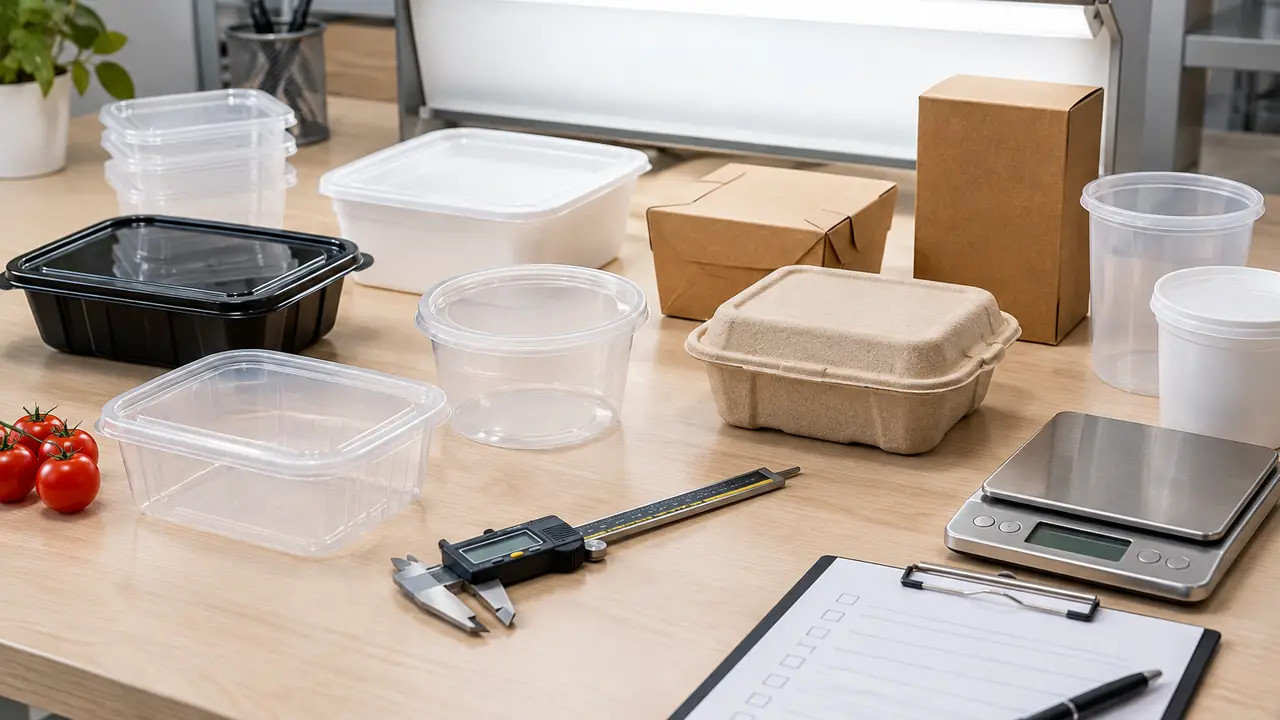
What quality means for a container
A food container fails in a small number of predictable ways. The lid pops off in a delivery bag or is too tight to open. A corner cracks when the box is stacked or frozen. The wall is thinner than the sample and the box buckles with hot food. The print rubs off the lid. A storage box arrives scratched, or a carton of paper boxes is crushed at the bottom of a pallet. Quality control for this range is built around those failures, and around one reference: the golden sample that the buyer has approved and signed.
Lidwell is a sourcing desk, so quality control is how the desk makes sure that what a partner plant ships is what the buyer approved. The plant runs its own checks; the desk sets the checkpoints, inspects against the specification and keeps the records.
The golden sample and the specification
Every item has a specification with outer size, capacity, gram weight, material of each part, colour, print and packing, and a golden sample that matches it. For the 750 ml reference PP box, that is 170x115x51 mm and 19.6 g. The golden sample is kept by the plant and a counterpart by the desk or the buyer, so a disagreement on colour, rim finish or lid fit can be settled against a physical piece rather than a photo. When the specification changes, for example a new colour or a heavier wall, a new golden sample is approved and the old one is withdrawn, so there is only ever one reference per item in the program file.
Checkpoints through production
| Checkpoint | What is checked | Typical defects caught |
|---|---|---|
| Incoming material | Resin or sheet grade, board grade, masterbatch, labels against declarations | Wrong grade, undeclared regrind, wrong board weight |
| First pieces | Size, weight, colour, lid fit against the golden sample | Mold set-up errors, colour drift |
| In-process | Wall and weight drift, trim quality, print position | Thin walls, sharp edges, misprint |
| Pre-shipment | AQL sample from finished cartons, agreed tests, packing and marks | Cracks, warping, lid fit, count, crushed cartons |
| Loading | Carton count, condition, container stuffing | Short shipment, water damage |
Defect classes
Defects are classed before production so that the inspection result is not a matter of opinion. Critical defects are those that affect food safety or use: contamination, wrong material, cracks that leak, sharp edges. Major defects affect function or saleability: poor lid fit, warping, visible weight drift, print defects on a branded lid. Minor defects are cosmetic: small flow marks, slight trim marks inside agreed limits. The acceptance levels for each class are set in the sampling plan for the order.
Pre-shipment inspection
Before a lot leaves, the desk or an appointed inspector draws a sample from finished cartons, using an AQL-based plan agreed for the order. The sample is measured and weighed, checked visually, and put through the tests agreed for that line, such as lid fit, tilt and inversion with liquid, drop and freezer checks. The test list and the working default for each test are on testing and inspection. Packing is checked for count, sleeve or bag condition, carton marks and barcodes.
Records and repeat orders
Each inspection produces a report with measurements, photos, test results and the decision: release, rework or hold. Reports go into the program file with the golden sample reference and the audit findings, so a repeat order is inspected against the same standard and trends, such as a mold that is slowly losing weight on one cavity, can be seen across lots.
When a lot fails
- The lot is held at the plant and the buyer is informed with the report.
- The cause is identified with the plant: material, mold, process or packing.
- The lot is sorted or reworked, and re-inspected on the same plan.
- The corrective action is written into the specification for the next order.
Food contact documents sit alongside these checks; see compliance and certifications. To set up a program with your own inspection requirements, send them through the quote form.