
How to read these ranges
Every figure on this page is a typical reference range, not an offer. The ranges are inferred from partner plant carton counts and from the terms plants publish on trade platforms, and they move with the item, the size, the mold, the print and the season. For each program the desk obtains the actual minimum quantity and timeline from the matched partner plant and confirms both in writing before a deposit. If a figure on a quotation differs from these ranges, the written confirmation is the one that counts.
Minimum order quantities by route
| Route | Typical starting quantity | What drives it |
|---|---|---|
| Stock mold, plain | 1-10 cartons, mixed, about a few thousand pieces | Carton count of each item |
| Printed logo on lid, cup body or paper sleeve | 10,000-50,000 pieces per item | Print setup, plates, ink changes |
| New mold | 50,000-100,000 pieces per item; platform plants quote 5,000-50,000 pieces by category | Mold cost, cavities, process |
| Printed paper boxes | 5,000-10,000 boxes per design | Printing and die-cutting setup |
| Storage and organizer boxes | 1,000-3,000 pieces per item (inferred) | Size, mold, color change |
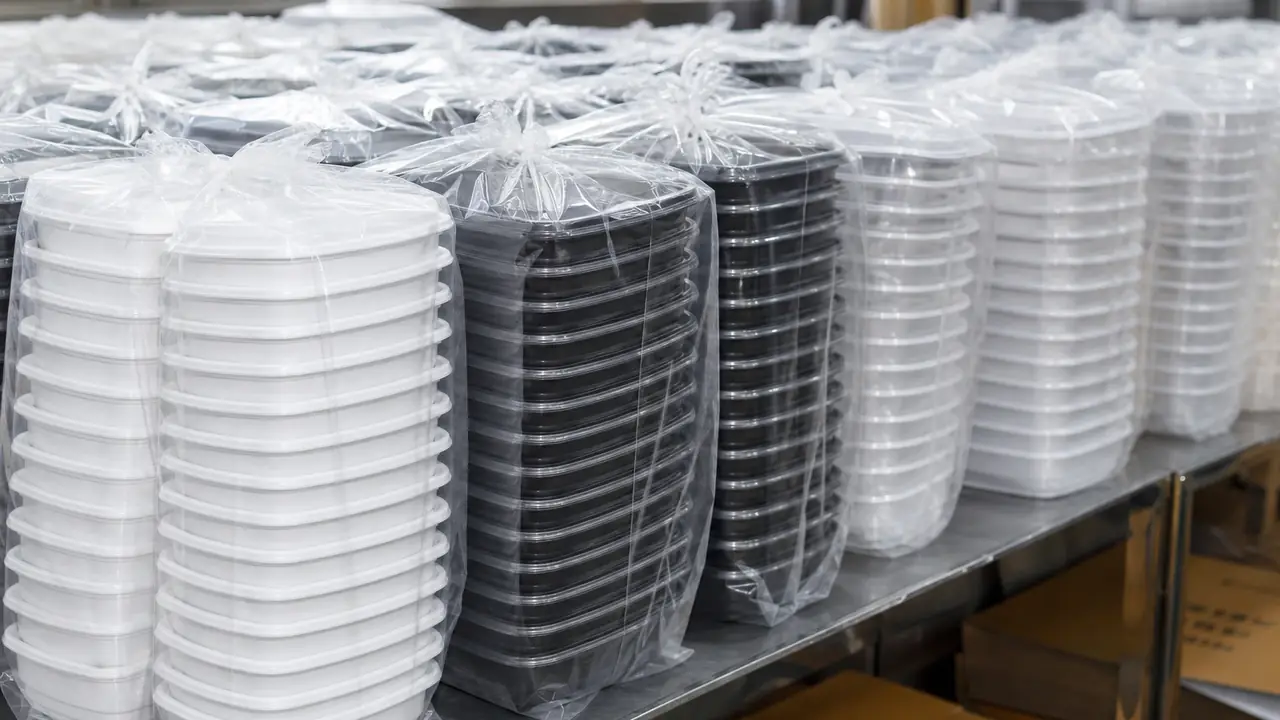
Stock routes start at whole cartons, because plants ship in their own packing. Partner plants pack thermoformed PP boxes, soup cups and starch-based ware 200-300 sets per carton, injection molded cups 300-500 pieces, PET cold cups 1,000 pieces and portion cups 2,000-5,000 pieces, so a few cartons can already mean several thousand pieces. See packaging and palletizing.
Sample lead times
| Sample type | Typical time | Then |
|---|---|---|
| Stock samples | 3-7 working days | Courier, typically 5-8 days |
| Printed samples | 7-15 working days | Color and adhesion check, then courier |
| New mold, T1 trial | 25-45 days (mold cycle, inferred) | Corrections, then golden sample |
Samples are checked against the specification before they leave: size and gram weight, lid fit, and for food ware a tilt test with liquid. A new mold rarely passes at T1; a second trial after corrections is normal and is built into the plan rather than treated as a delay.
Bulk production lead times
| Order type | Typical production time | Note |
|---|---|---|
| Stock items | 7-15 days | Subject to plant stock and schedule |
| Printed or customised | 15-30 days | After print approval |
| New mold, first order | 45-60 days | Including the mold |
Add inspection, consolidation and sea freight to reach a landed date: typical sea time is 15-25 days to the US West Coast and 30-45 days to Europe, as set out in logistics and shipping.
What moves the numbers
- Season. Takeout and gift packaging plants get busy ahead of holiday peaks; book capacity early.
- Color and resin. A special color or a material change adds a purge and a minimum run.
- Print. Each extra color or a second print position adds setup and sometimes a separate minimum.
- Documents. A third-party migration test to EU 10/2011 adds lab time before shipment; plan it in parallel with production.
- Mixed items. Several capacities on one footprint can share a run of lids and lower the effective minimum.
Typical starting points by buyer
A marketplace seller testing a fridge bin or shoe box usually starts on a stock mold with a retail pack and a barcode, at the storage line range of 1,000-3,000 pieces per item. A restaurant group or a foodservice distributor starts on stock PP boxes in mixed cartons and moves to printed lids once a footprint is settled. A brand owner with a new storage or vacuum line plans a custom mold and a first order of 45-60 days. A wholesaler buys stock depth across sizes and cares most about carton counts. The buyer pages set out each route in detail.
Confirmed in writing for each program
For each item the order confirmation states the quantity, the route, the sample and bulk timelines, the inspection plan and the documents. Changes after approval, such as a new print or a color change, are confirmed again in writing with any effect on quantity or date. The desk does not quote prices on this site; pricing follows the matched route and specification. The note container MOQ explained walks through examples, and the sourcing process shows where each step sits. Send your list of items, quantities and target date through the quote form.