
Four lines, one takeout program
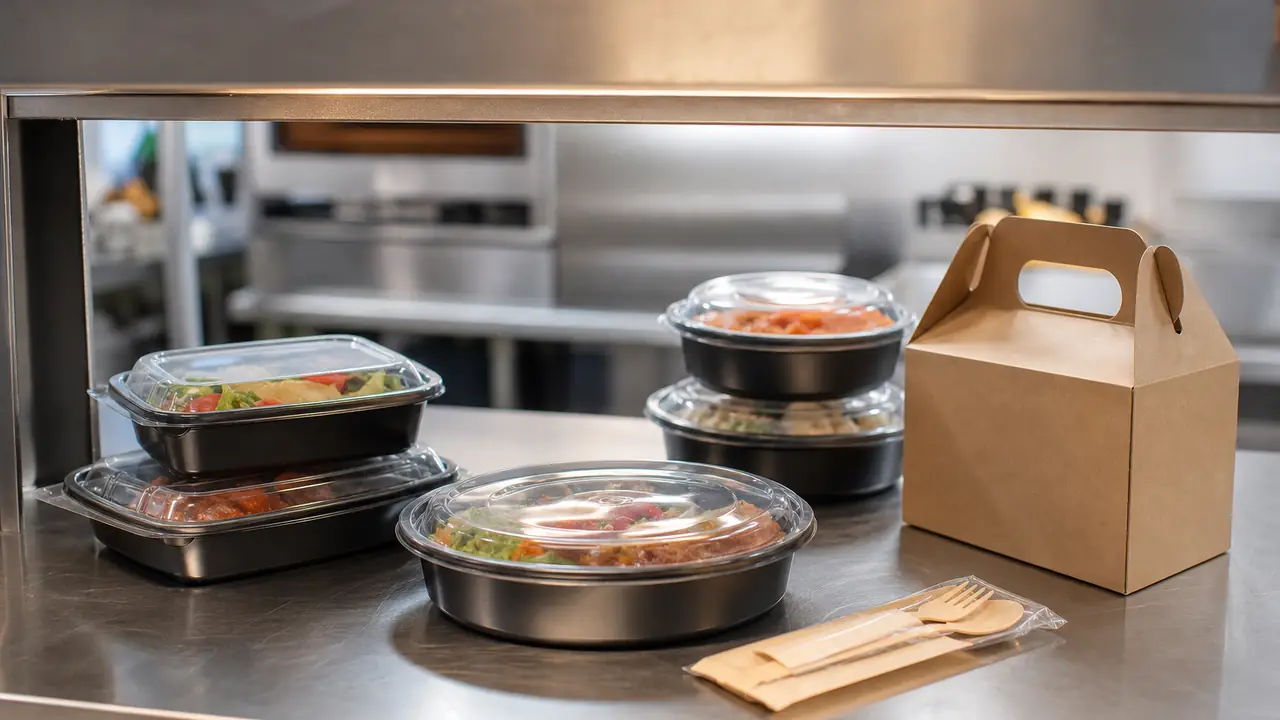
A takeout or delivery program rarely buys one item. A restaurant group needs boxes for hot mains, bowls for rice and salads, a cutlery kit in every bag and a paper box for desserts or bakery. These items come from different materials, different processes and usually different clusters of plants. Lidwell groups them as one family, takeaway packaging, so that a buyer can plan the range, the documents and the shipment together instead of running four separate supplier searches.
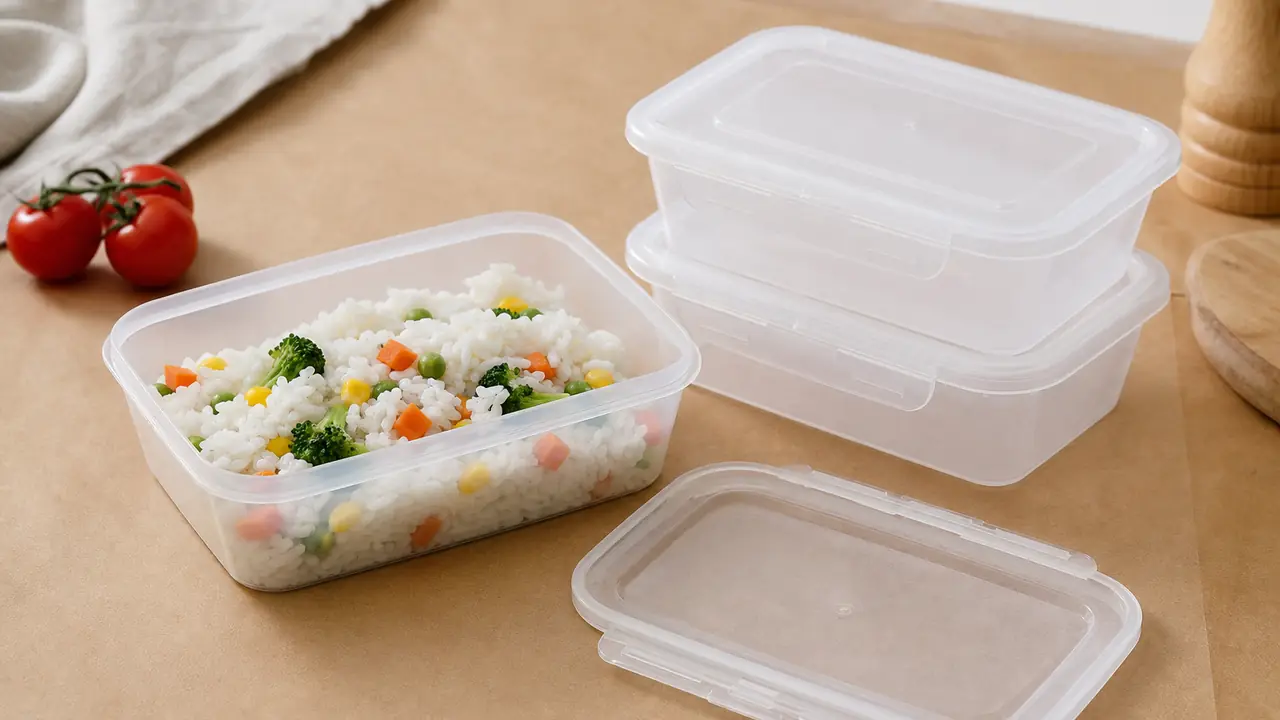
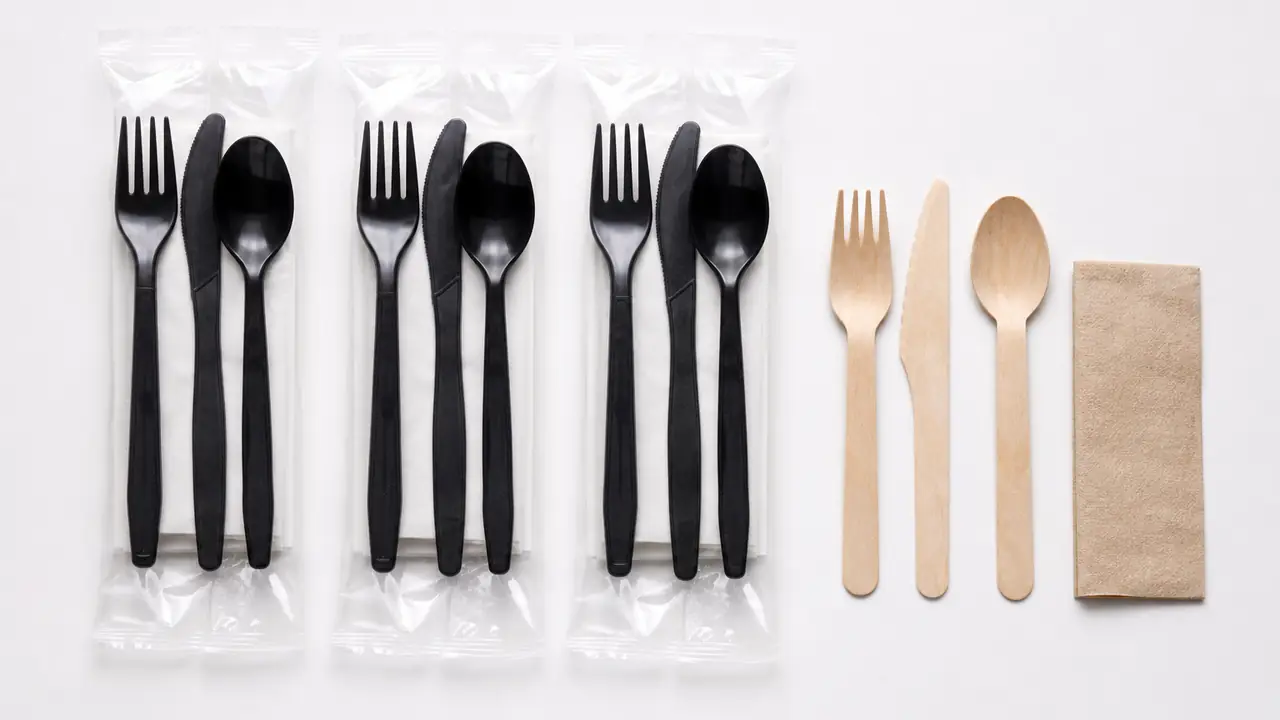
The four lines are PP food containers, starch-based food containers, disposable cutlery sets and folding gift and bakery boxes. Each line has its own cut sheet with a real reference model from a partner plant, its outer size, capacity or gram weight, and the material of every part. The table below sets them side by side.
The lines side by side
| Line | Material | Reference model | Typical use |
|---|---|---|---|
| PP food containers | PP base and lid; PET lid for cold only | 750 ml box, 170x115x51 mm, 19.6 g | Hot takeout, meal prep, soups |
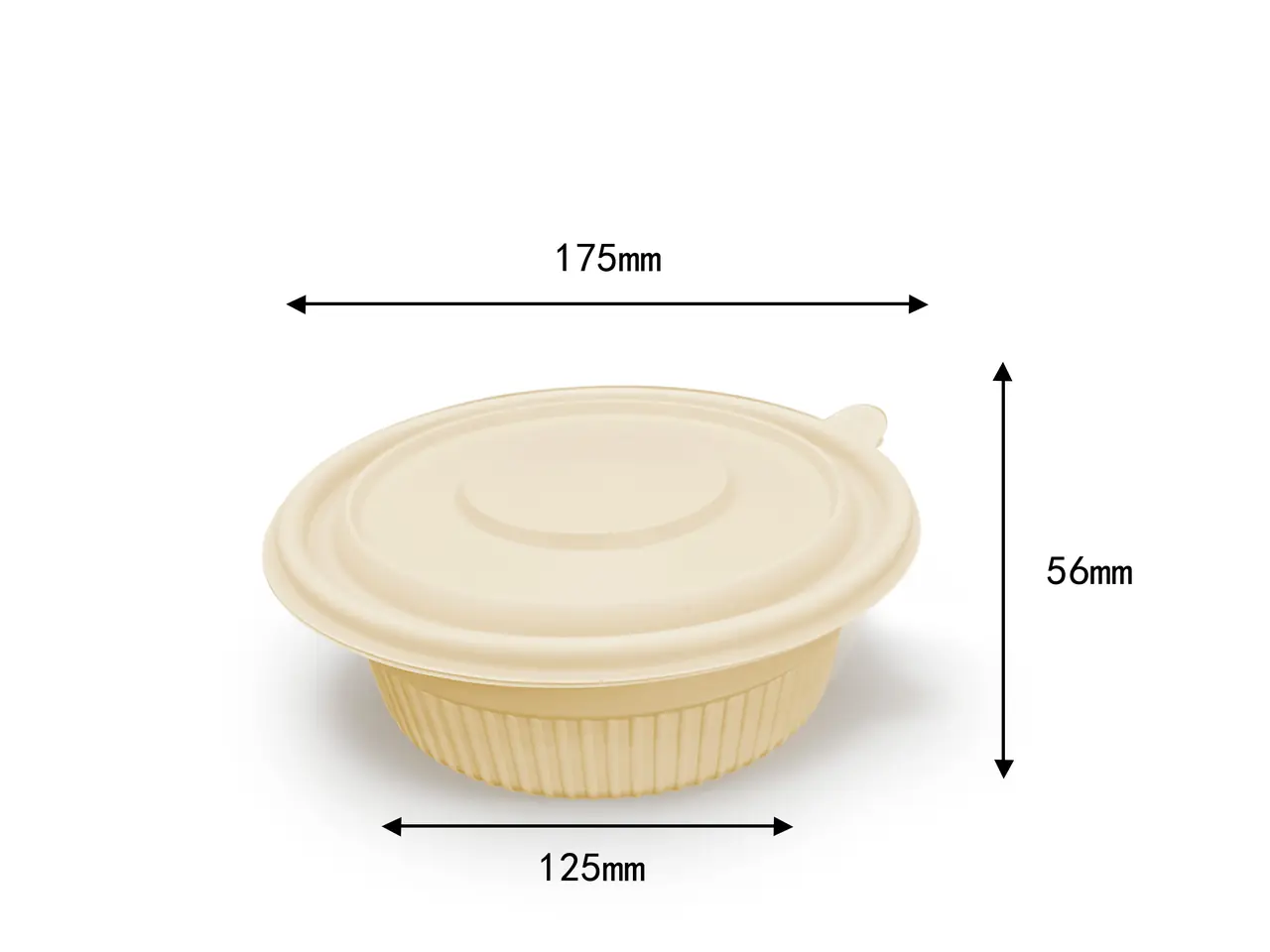
| Starch-based food containers | Corn starch blended with PP, ratio per spec | 800 ml round bowl with lid, 175x125x56 mm | Rice bowls, noodles, meal sets |
| Disposable cutlery sets | PP; wooden route for the EU | Spoon 136x32 mm, 1.6 g | Delivery bags, catering kits |
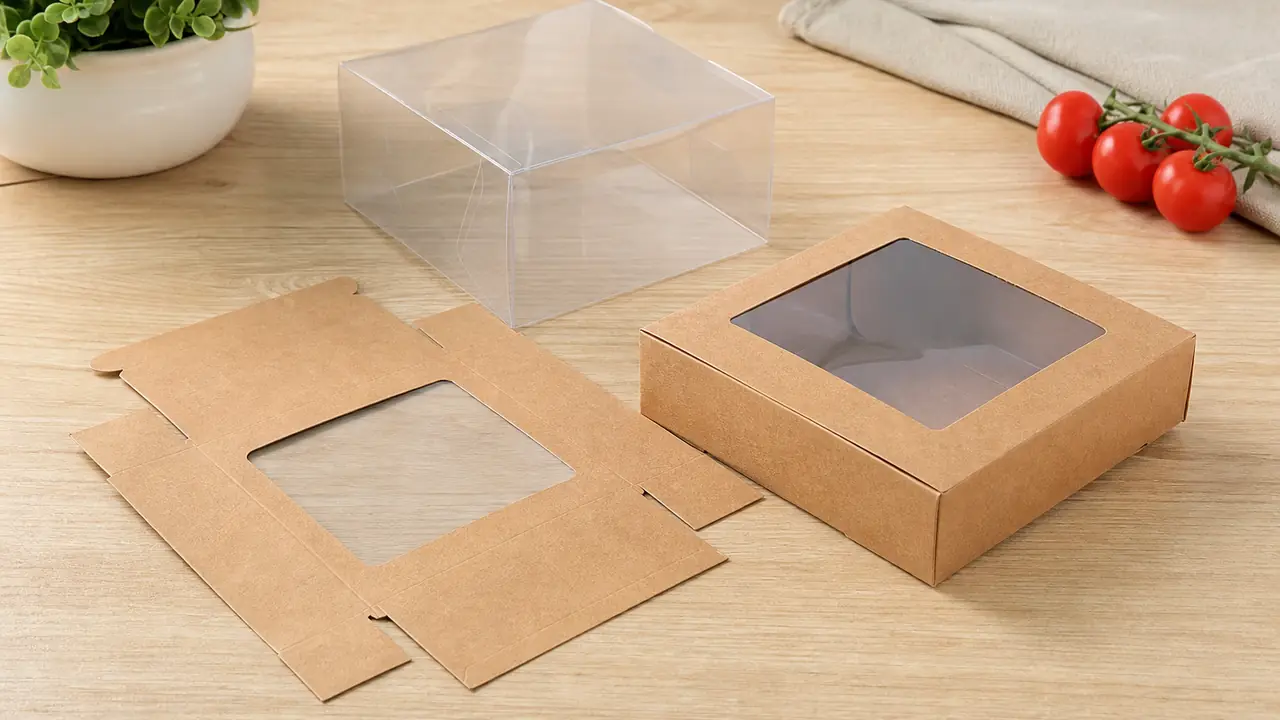
| Folding gift and bakery boxes | Kraft or white card; PET or PVC window | Bakery box 190x85x35 mm | Bakery, desserts, gifts, pizza |
Sizes are measured by the partner plants by hand and are checked against the physical sample before an order is confirmed.
Choosing by food and temperature
The first question is not the shape but the temperature. Hot food and reheating call for PP, which keeps its form with hot rice, curry or soup and tolerates the microwave where the supplier marking allows it, usually with the lid removed or vented. Cold display, salads and fruit can use clear PET, which is clearer but not used for hot food. Paper boxes suit dry and bakery items, and pizza. PVC has no place as a food container in this range; it appears only as a clear window or lid on paper and gift boxes, which are not heated and do not touch hot food. The material guide sets out the logic for each part.
Starch-based containers sit next to PP. The partner plant literature describes them as corn starch, filed under PP thermoforming, so the desk treats them as a starch and PP blend and describes them that way. They offer lower plastic content and a different look, cream coloured and matte, but they are not presented as biodegradable or compostable unless a named certification to EN 13432 or ASTM D6400 applies to the exact item.
Which cluster makes what
PP takeout boxes, soup cups, divided trays and starch blend bowls come from thermoforming and injection plants in Guangdong, with partner plants in Huizhou and Foshan among them. Paper bakery boxes, click-lock boxes and printed gift boxes come from the paper packaging and printing cluster around Longgang near Wenzhou, which local press reporting in 2024 put at about 20 billion yuan of printing and packaging output. Cutlery kits are assembled from molded PP or wooden pieces, napkins and wrap. The desk coordinates the plants, aligns lead times and consolidates the order; see industry clusters.
Compliance by market
For the United States, plastic items need a supplier declaration to FDA 21 CFR, with 21 CFR 177.1520 covering PP; FDA does not approve finished containers. Paper and plant fibre packaging falls under state PFAS rules: California AB 1200 has banned intentionally added PFAS in plant fibre food packaging since 1 January 2023, and at least 13 states restrict PFAS in food packaging in some form. For the European Union, Regulation 1935/2004 and Regulation (EU) 10/2011 apply to plastics, and the Single-Use Plastics Directive 2019/904 has banned single-use plastic cutlery and plates since 3 July 2021, including PLA, so EU kits go the wooden route. For China, GB 4806.7-2023 covers plastics and GB 4806.8 covers paper. Declarations and reports are issued to partner plants or your brand per project and verified by the desk; confirm market rules with your test lab or counsel. The compliance guide lists what to request.
Packing, MOQ and private label
Takeaway items are light and bulky, so nesting decides the cost of freight. PP and starch blend containers pack 200-300 sets per carton; paper boxes ship flat and are folded at the point of use. Typical starting points are 1-10 mixed cartons from stock molds, 10,000-50,000 pieces per item for printed lids or sleeves, 5,000-10,000 per design for printed paper boxes and from 50,000-100,000 pieces for a new mold, all confirmed in writing for each program. Lead times are typically 7-15 days from stock and 15-30 days printed. The details are on MOQ and lead time.
Send the menu, the foods served hot or cold, the destination market and the quantities through the quote form. The desk returns matched reference models with real sizes and weights, the documents each market needs and a packing plan.