
Why audit per program
A plant that thermoforms good PP takeout boxes may not be the right plant for a vacuum container with a valve and a silicone seal, and a printing plant that runs excellent kraft boxes may not have the hygiene controls needed for a box that touches bakery products. The desk therefore audits each partner plant against the program it is about to run: the material, the process, the market and the documents the buyer will need. Lidwell is a sourcing desk, so the audit is how we decide which partner plant runs which line, and what has to be checked more closely once production starts.
The audit is not a certificate. It is a written record of what was seen, what was asked for and what has to change before mass production. It is kept in the program file and reused for repeat orders, so the next order starts from known facts.
What the audit covers
| Area | What is checked | Why it matters |
|---|---|---|
| Process and equipment | Injection molding machines, thermoforming lines, sheet extrusion, printing and die-cutting, by tonnage or format class | The line has to match the part size, wall and output |
| Molds and tooling | Mold ownership, cavity count, maintenance records, storage | Lid fit and repeatability depend on the tool |
| Resin and board control | Incoming resin grades, supplier declarations, regrind policy, board grades | Food contact documents only hold if the named grade is used |
| Hygiene | Clean area for food contact parts, packing area, pest control, staff practice | Contamination is a food contact risk, not a cosmetic one |
| Quality control | Incoming, in-process and final checks; gauges; retained samples | Sets how much the desk must inspect itself |
| Documents | Business license, food contact test reports, declarations, export history | Reports are issued to the plant or brand and verified per project |
| Capacity and packing | Shifts, current load, carton and pallet practice, warehouse | Decides whether the lead time is realistic |
Process and equipment
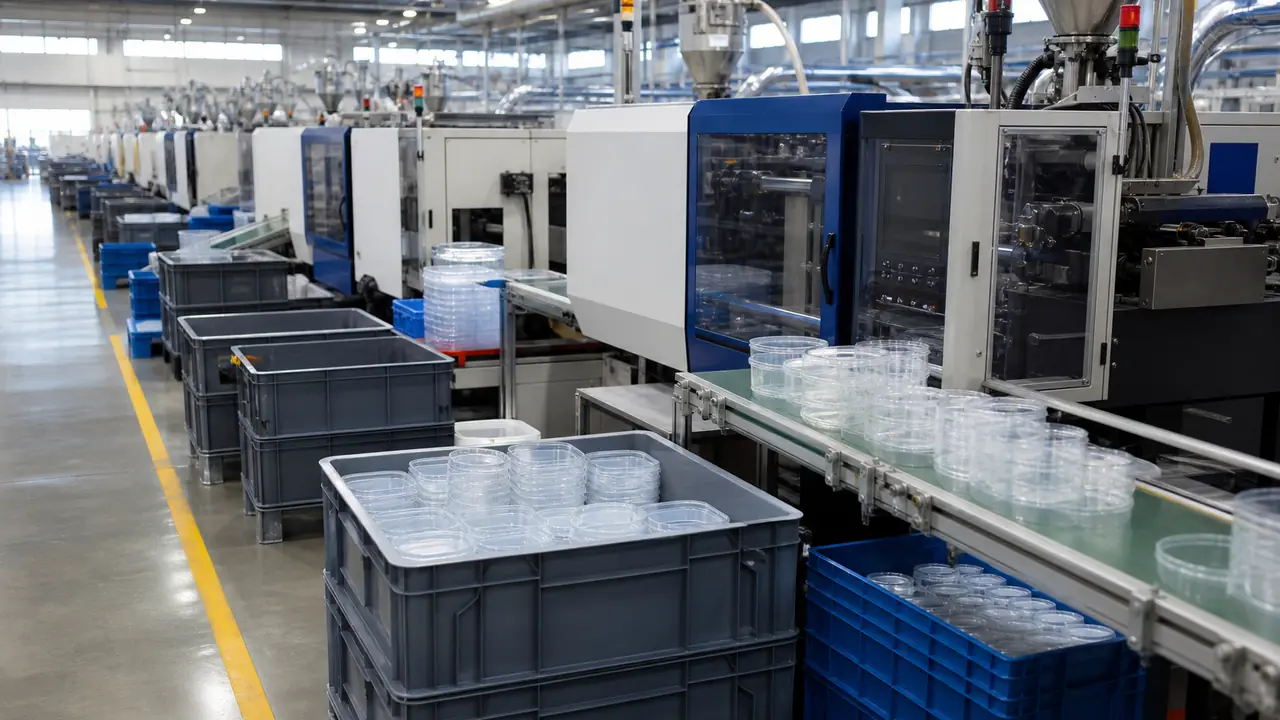
The audit starts on the shop floor. For injection molded storage boxes, fridge bins and food storage containers, the desk checks that the machines are in the clamp force class the part needs and that molds are maintained and stored properly. For thermoformed takeout boxes, soup cups and divided trays, it checks the sheet source, the forming and trimming line and how the plant controls sheet thickness, because the gram weight per piece depends on it. For paper and gift boxes, it checks printing, coating, die-cutting and gluing. The equipment is described in the file by type and class; brand names of machines do not decide anything.
Resin control and food contact
Most food contact problems start before the resin reaches the machine. The desk asks which PP, PET or PS grades the plant buys, whether the resin supplier issues a declaration to FDA 21 CFR 177.1520 or EU 10/2011, how regrind is handled, and how colour masterbatch is documented. Recycled content is only used where the program and the market allow it and the documents support it. For starch-based containers, the plant is asked what the starch is blended with, because the material name on the specification must be accurate. The food contact safety page explains why the grade on the declaration has to match the grade in the hopper.
Hygiene and packing
Food contact parts should be molded, trimmed and packed in a clean area, handled with gloves and sleeved or bagged before they reach the carton. The audit looks at floors, open bins of parts, pest control and where cartons are stored. These are simple points, and they are the ones end users notice first when a box arrives dusty.
Quality control and documents
The desk reviews how the plant checks incoming material, what it measures during a run and what it checks before packing: dimensions, gram weight, lid fit, visual defects. Where a plant's own checks are strong, the desk's inspection can focus on the agreed tests; where they are weak, the desk adds in-process visits. Test reports and declarations are read for the issuing lab, the sample tested, the date and the standard, and checked against the product being ordered. They are issued to the partner plant or to your brand, never held by Lidwell.
After the audit
- Findings are written up with the corrective actions agreed with the plant.
- Samples are made on the line that will run the order.
- The test plan in testing and inspection is set from the findings.
- Quantities and timing are confirmed in writing; see MOQ and lead time.
If you have your own audit checklist or a social compliance requirement, send it with your brief through the quote form and the desk will add it to the scope.