
How the range is organised
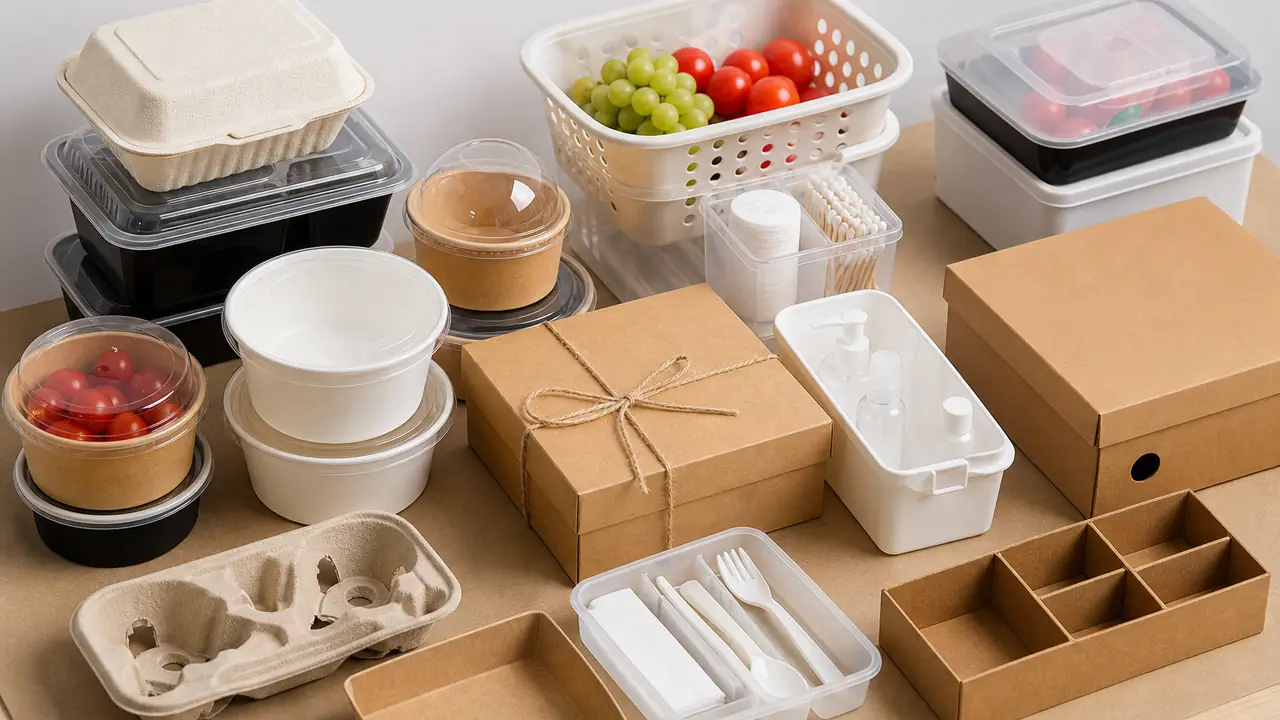
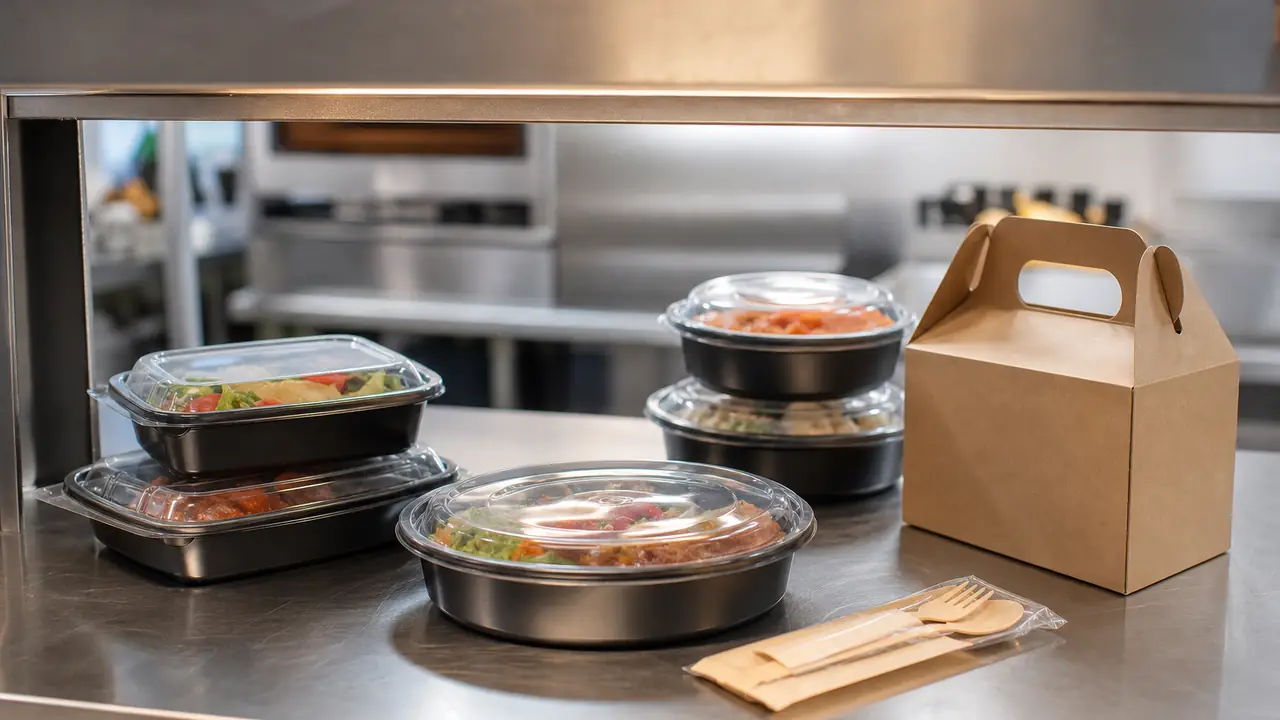
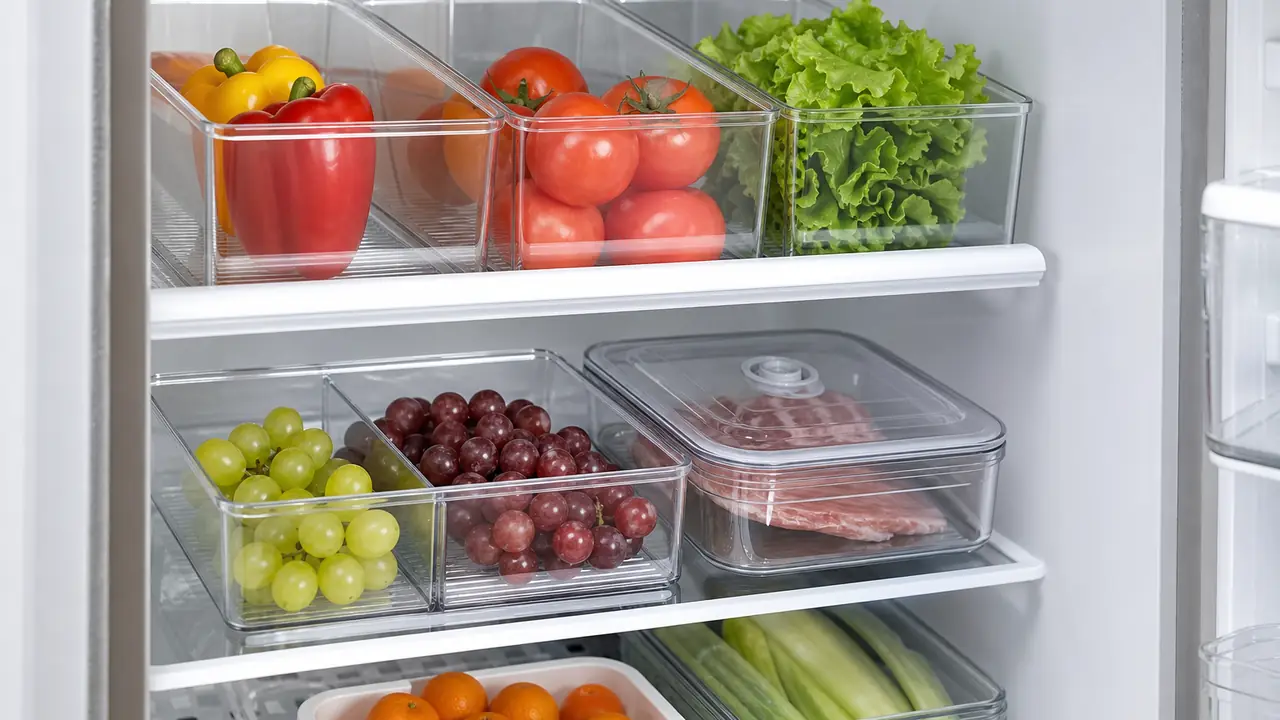
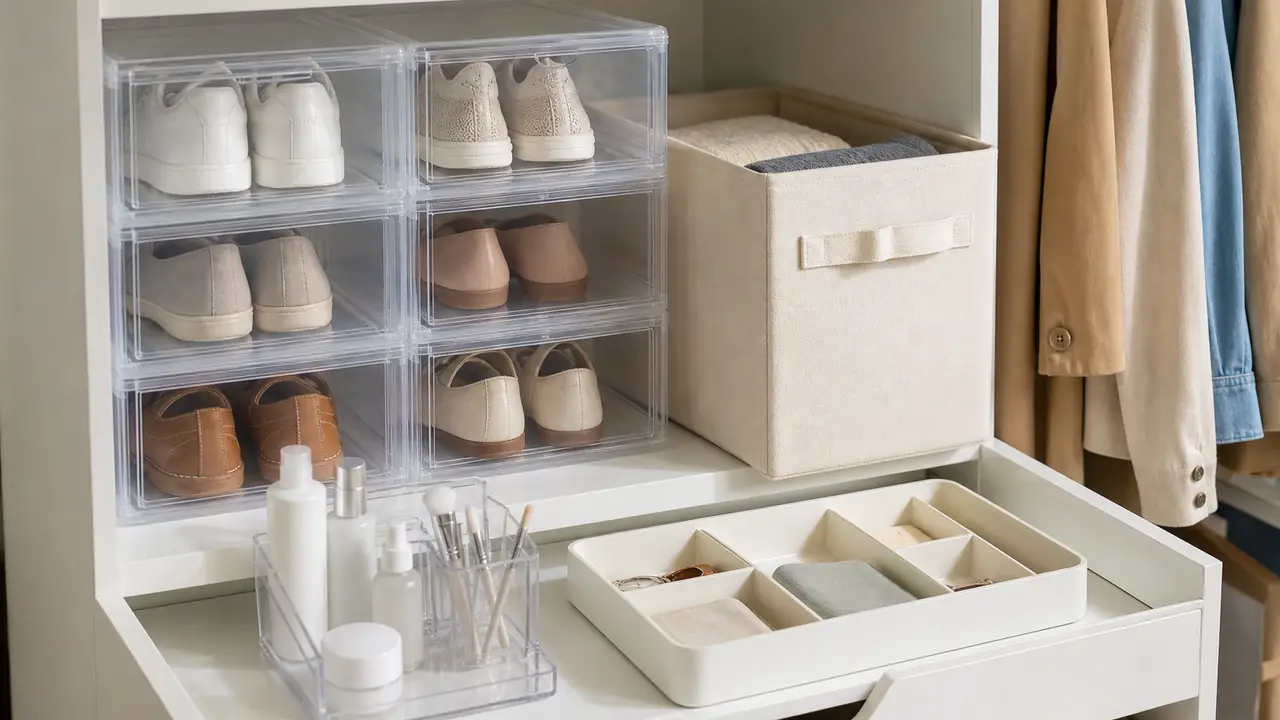
Lidwell sources twelve lines of food containers, packaging and storage boxes. They fall into three families because each family is bought differently, made in a different cluster and checked against different rules. Takeaway packaging is single-use and sold by the carton: PP boxes and bowls, starch-PP blend bowls, cutlery sets and paper boxes, mostly from plants in Guangdong and from the printing cluster around Longgang near Wenzhou. Food storage is reusable and sold by the set: divided fruit containers, vacuum containers, fridge bins and pet food bins. Home organizers do not touch food at all and are sold on the shelf: collapsible boxes, cosmetic organizers, shoe and clothes boxes and desk trays, mostly from the household plastics plants of Taizhou and Ningbo in Zhejiang.
A fourth page, containers and boxes, explains the vocabulary that runs across all three families: what makes a container a food contact article, why a box with a PVC window is acceptable for a bakery item and not for hot food, and how capacity, footprint and nesting interact.
The twelve lines at a glance
The table lists each line with its usual material and its reference size. Where a partner plant has supplied a real model, the size is that model, measured by the plant by hand and checked against the physical sample before an order is confirmed. Where no partner model exists yet, the size is a common public listing size for the category, given as a reference only.
| Line | Family | Usual material | Reference size |
|---|---|---|---|
| PP food containers | Takeaway | PP base and lid | 750 ml, 170x115x51 mm, 19.6 g (partner plant) |
| Starch-based food containers | Takeaway | Starch blended with PP | 800 ml lidded bowl, 175x125x56 mm (partner plant) |
| Disposable cutlery sets | Takeaway | PP, wood or bamboo by market | Spoon 136x32 mm, 1.6 g (partner plant) |
| Folding gift boxes | Takeaway | Kraft or white card, PET or PVC window | Bakery box 190x85x35 mm (partner plant) |
| Divided fruit containers | Food storage | Clear PP, or PET for cold display | Three compartments, 218x188x42 mm, 1,000 ml (partner plant) |
| Vacuum food containers | Food storage | PP or copolyester, silicone seal | 1.4 L, 233x156x90 mm (public listing) |
| Fridge organizer bins | Food storage | Clear PET or PP | About 315x157x89 mm (public listing) |
| Pet food storage containers | Food storage | PP or HDPE, gasket | 20 lb bin, about 410x240x425 mm (public listing) |
| Collapsible storage boxes | Home organizers | PP with hinged walls | 30 L, about 440x330x230 mm (public listing) |
| Cosmetic organizers | Home organizers | PS, acrylic or PET | Drawer unit, about 318x213x92 mm (public listing) |
| Shoe and clothes storage boxes | Home organizers | PP, PET or ABS with PP | Folding shoe box, 330x230x140 mm (public listing) |
| Desk organizer boxes | Home organizers | PS, PP or acrylic | Seven-compartment tray, about 359x232x52 mm (public listing) |
Takeaway packaging
PP food containers carry most of the volume: rectangular boxes on a 170x115 mm footprint from 500 to 1,000 ml, larger 217x149 mm boxes, round tubs from 1,250 to 2,000 ml and soup cups from 350 to 950 ml, packed 200-300 sets per carton. PP is chosen because it keeps its shape with hot food and tolerates reheating where the supplier marking allows it. Starch-based containers are bowls, boxes and divided trays described by the plant as corn starch; they sit in its PP thermoforming range, so we describe them as starch blended with PP and make no biodegradable or compostable claim unless a named certification applies. Cutlery sets combine a spoon or fork with napkin and toothpick in one wrap; for the EU, where single-use plastic cutlery has been banned since 3 July 2021, the route is wooden cutlery. Paper boxes in kraft and white card come with clear lids or windows in PET or PVC, which is acceptable because the window is not heated and does not hold hot food.
Food storage
Storage lines are reused, so the comparison shifts from gram weight to lid seal, clarity and stacking. Divided fruit containers from a partner plant run from the three-compartment 218x188x42 mm tray to a large five-compartment 232x232x47 mm tray at 1,500 ml. Vacuum containers use a manual or electric pump and a one-way valve in the lid, with single pieces of 0.5-2.0 L in common sets. Fridge bins are sized to a standard shelf, typically 10-12.5 inches long and 3-4 inches high. Pet food bins are sized by the bag they hold, from about 20 lb to 40 lb, with wheels, a scoop and a gasketed lid on many models. See food storage for the family overview.
Home organizers
Organizers are bought for the shelf and the home, not the kitchen, so the questions are fit, stacking, clarity and retail packaging. Collapsible PP boxes fold down to about 4-9 cm; their inner size is typically 2-4 cm smaller than the outer size, which is the number a listing should state. Cosmetic organizers are usually clear PS, acrylic or PET; PVC appears only as soft clear pouches for small items. Shoe and clothes boxes run from a 10.6 L folding box to rigid magnetic-door boxes of about 15-27 L. Desk trays are shallow multi-compartment boxes in PS, PP or acrylic. See home organizers.
How to start a program
- Pick the lines and the foods or items each will hold, hot, cold or dry.
- Confirm the material of every part against that use with the desk.
- Choose stock models with real sizes, or brief a custom mold.
- Agree documents for the destination market and the test plan per order.
- Confirm quantities, samples and lead times in writing.
Typical reference ranges are a few mixed cartons from stock molds, 10,000-50,000 pieces per item for printed lids or sleeves, 5,000-10,000 pieces per design for printed paper boxes, 1,000-3,000 pieces per item for storage boxes and from 50,000-100,000 pieces for a new food container mold, always confirmed in writing for each program. Details are on MOQ and lead time; to begin, send your list through the quote form.