
What the food storage family covers
Takeaway packaging is bought by the pallet and used once. Food storage is different: the containers are kept in a kitchen, a fridge or a pantry, opened and closed many times, and judged by the end user on the seal, the clarity and how well they stack. That changes the sourcing questions. Gram weight and pack count still matter, but lid seal, material choice by use and the retail packaging carry more weight in the decision.
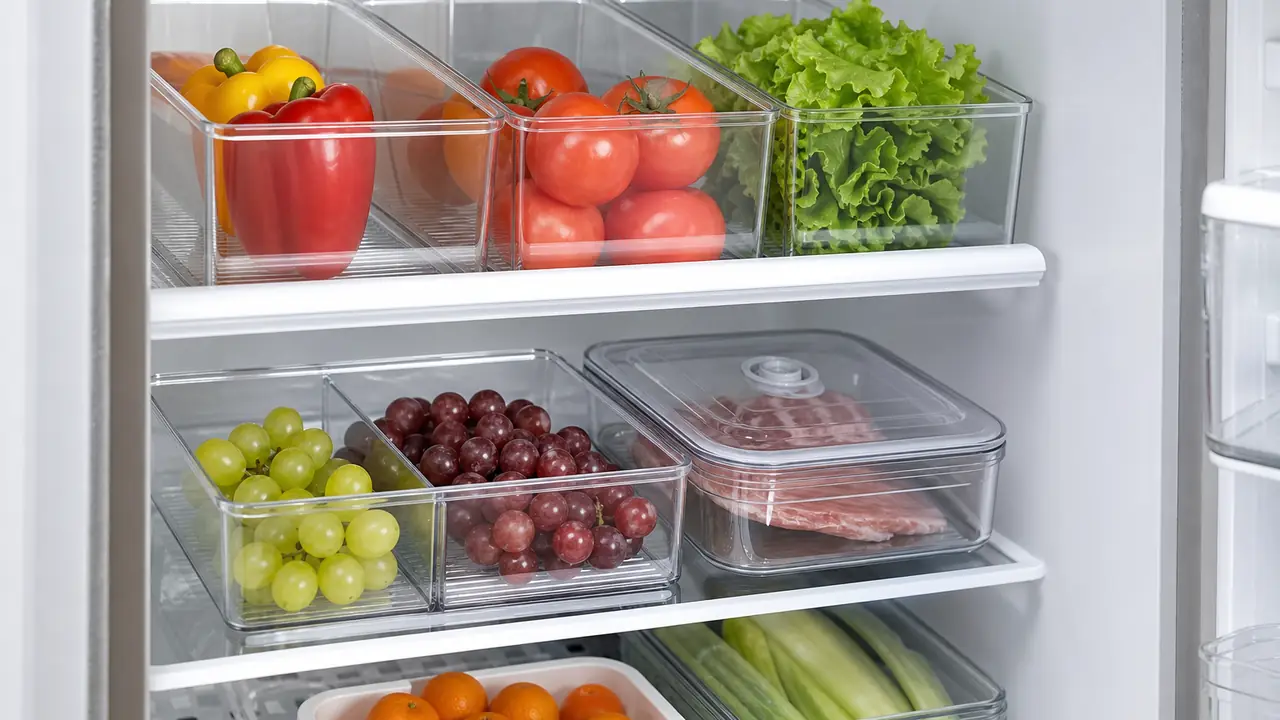
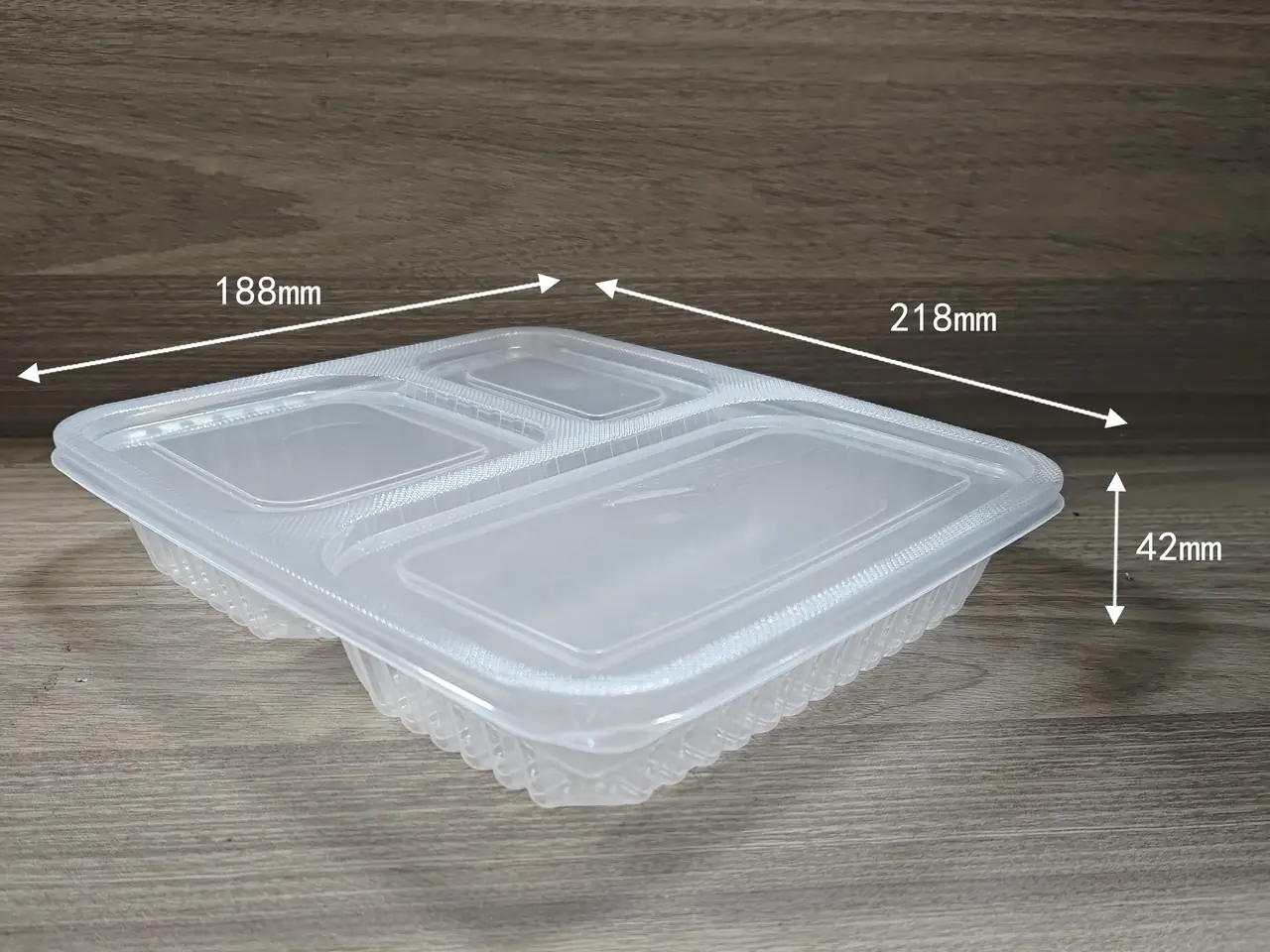
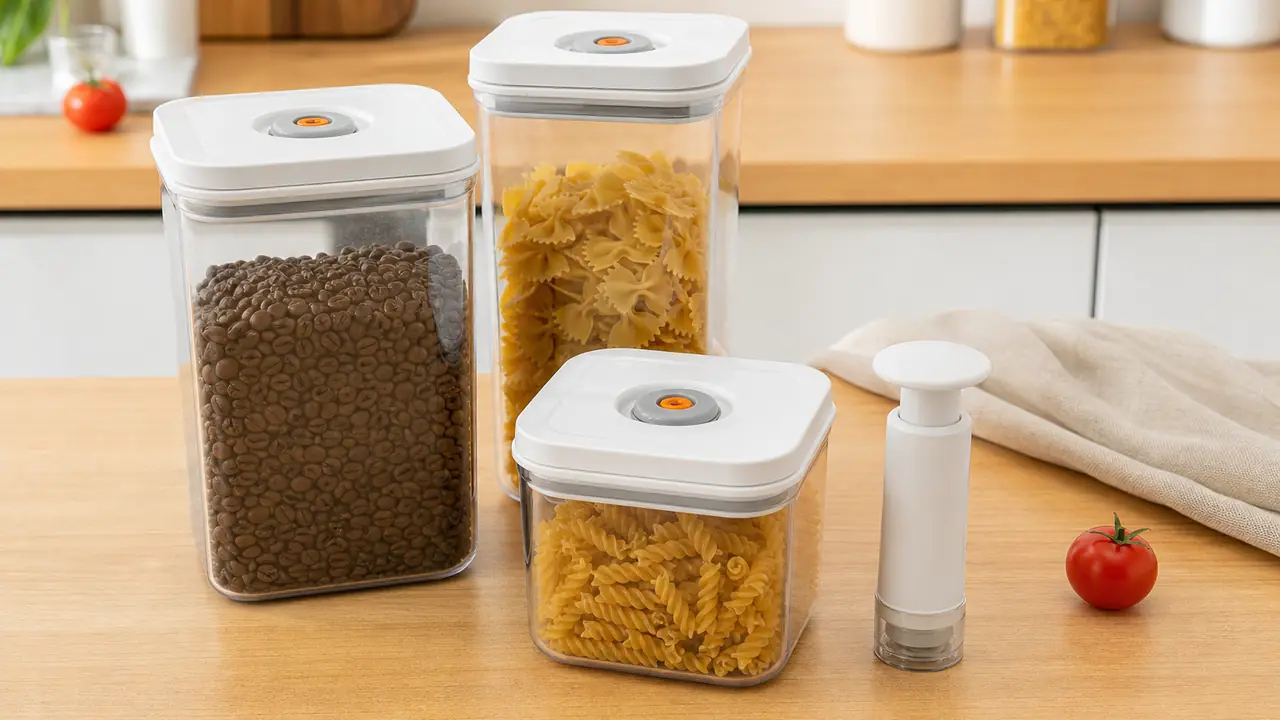
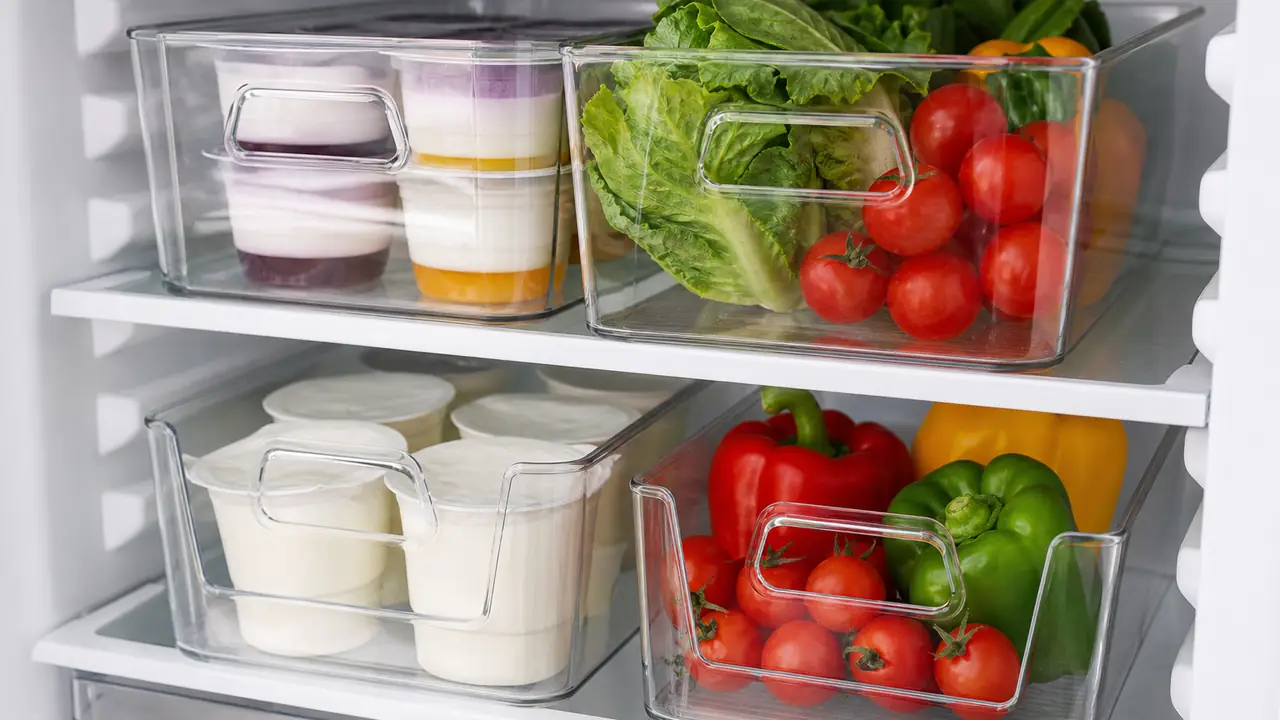
The family has four lines. Divided fruit containers are thermoformed trays for cut fruit, snacks and meal sets, and the only line here with real reference models from a partner plant. Vacuum food containers use a pump and a one-way valve to draw air out of a sealed box. Fridge organizer bins are open or lidded clear bins sized for standard shelves. Pet food storage containers are large airtight bins for dry food bags. For the last three lines no partner plant reference model is on file, so the cut sheets use public listing reference sizes as category guides, and the final size is set from the sample.
The four lines side by side
| Line | Reference size | Usual material | Process | Size source |
|---|---|---|---|---|
| Divided fruit container | 218x188x42 mm, 1,000 ml, three compartments | Clear PP; PET for cold display | Thermoformed | Partner plant model |
| Vacuum food container | 233x156x90 mm, 1.4 L | PP or copolyester, silicone seal | Injection molded | Public listing reference |
| Fridge organizer bin | 315x157x89 mm (12.4x6.2x3.5 in) | Clear PET or PP | Injection molded | Public listing reference |
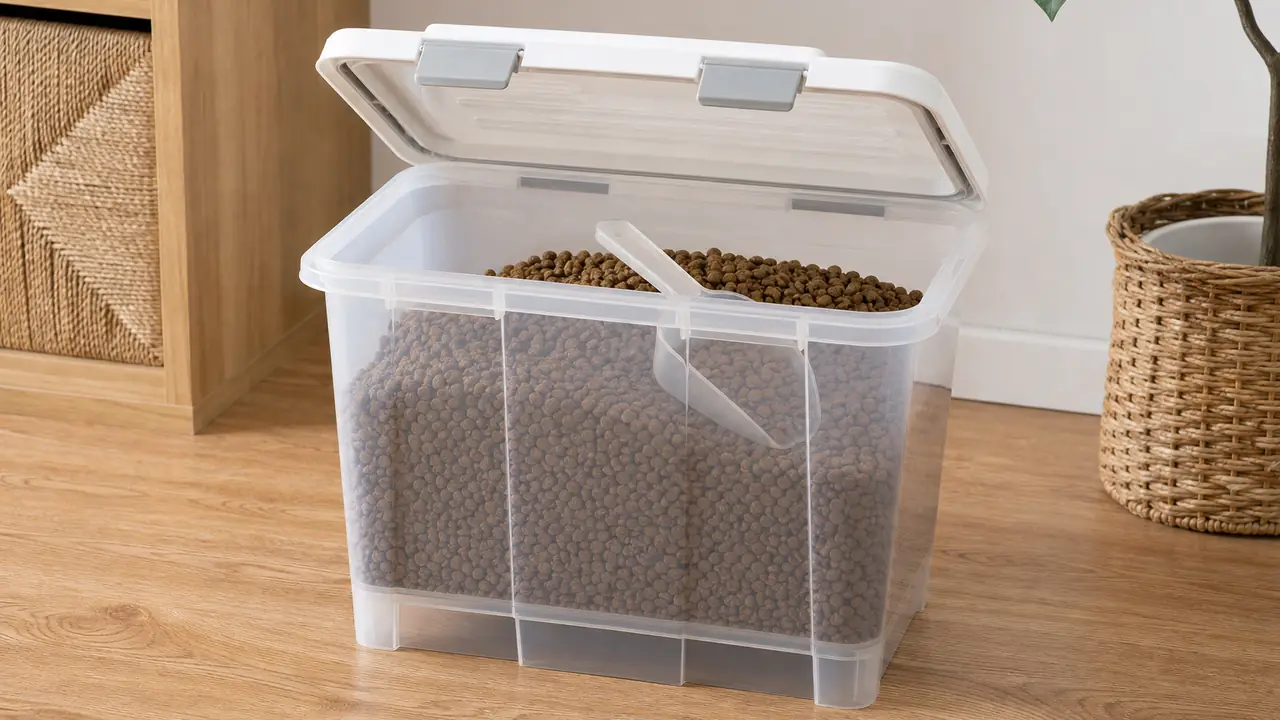
| Pet food storage container | 410x240x425 mm, 20 lb / 23 qt | PP or HDPE, seal ring | Molded, per model | Public listing reference |
The table shows why one desk handles the family as a set rather than four separate purchases. The fruit box comes from the thermoforming plants of Guangdong that also make PP takeout trays; the vacuum containers, fridge bins and pet bins come from the injection molding plants of Taizhou and Ningbo in Zhejiang, where Huangyan is known as a mold town. A brand that sells a kitchen storage set usually needs both clusters, one set of documents and one consolidated shipment. The cluster map sets out who makes what.
Material by use, not by habit
The material question is the same one that runs through the whole site: what touches the food, at what temperature, and how often. Clear PP handles reheating where the supplier marking allows it and tolerates repeated washing; it is slightly hazy. PET gives the clearest view of fruit and is chosen for chilled display, but it is used cold only. Copolyester is a clear, tough material used for reusable storage such as vacuum containers. HDPE is opaque and common for large bins. PVC does not appear in any food storage line in this range.
- Divided fruit containers: PP when the box is reheated or reused, PET when it is only chilled and displayed.
- Vacuum containers: PP or copolyester body and lid, a silicone seal, and a valve whose material is named on the spec sheet.
- Fridge bins: clear PET or PP; the bin may hold food directly or only packaged food, which decides the documents needed.
- Pet food bins: PP or HDPE, with a seal ring and often a scoop and wheels; each part is named separately.
The material guide compares the resins in more detail.
Seals, lids and the checks that matter
A storage container fails at the lid. Fruit boxes fail when the snap lid lifts at a corner after chilling; vacuum containers fail when the valve or seal lets air back in; pet bins fail when the lid stops closing after the bin flexes under a full load. The desk agrees checks that match each failure: lid fit after a freezer cycle at -18 degrees C where the use requires it, a hold test on vacuum lids, drop and stacking checks on large bins, and a tilt test with liquid where a container is sold for wet food. Results are written as tested per order, never as absolute claims. See lids and seals and testing and inspection.
Food contact documents for storage
Storage containers touch food repeatedly, so migration testing for repeated use is a common request. For the US, buyers ask for supplier declarations to FDA 21 CFR 174-178, with 21 CFR 177.1520 covering PP and HDPE. For the EU, a declaration of compliance to Regulation 1935/2004 and Regulation (EU) 10/2011 backed by a third-party migration report, and in Germany often LFGB test reports. For China, GB 4806.7-2023. Silicone seals and valves are separate materials and need their own declarations. Documents are issued to partner plants or to your brand per project and verified by the desk; the compliance guide lists what to request.
Ordering a storage program
Thermoformed fruit boxes on stock molds start from a few mixed cartons. Injection molded storage lines typically start at 1,000-3,000 pieces per item depending on size and mold, and printed or private label packaging adds its own minimum; all quantities are confirmed in writing for each program. Retail storage sets also need a decision on the gift box or sleeve, the barcode and the carton drop test. Send the set composition, target market and channel through the quote form, and read MOQ and lead time for typical sample and batch timings.