
What this family covers
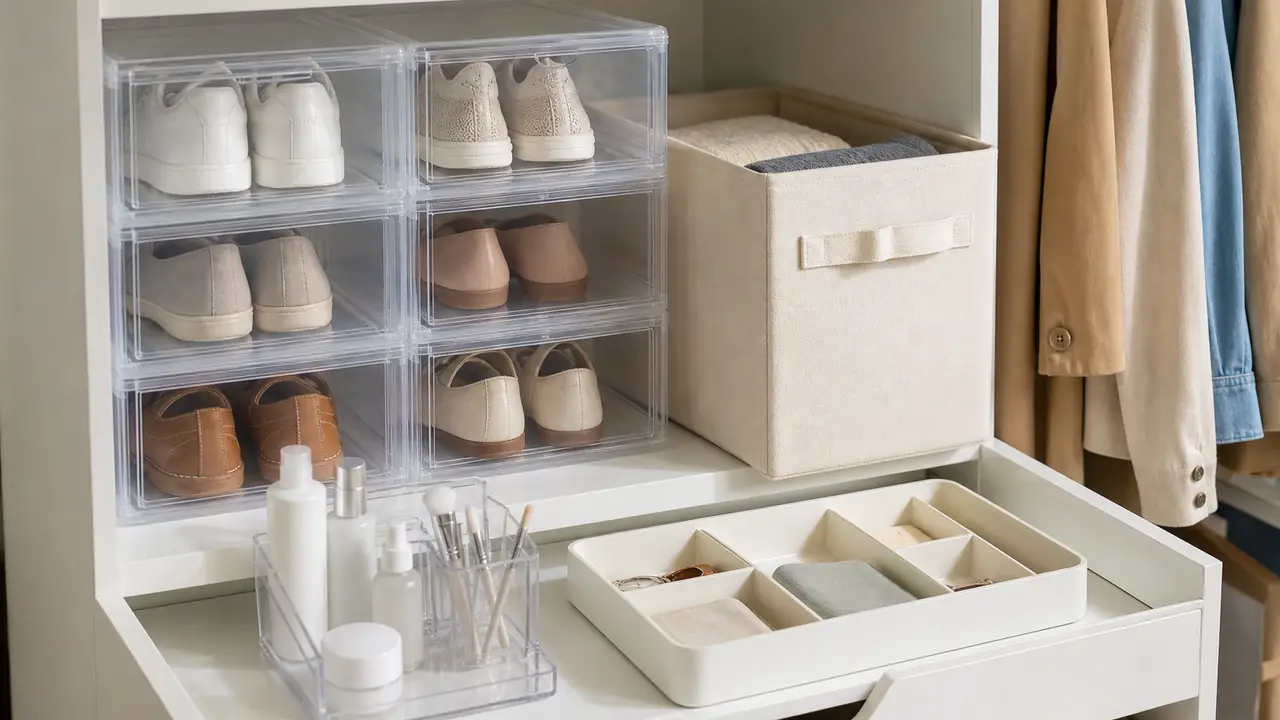
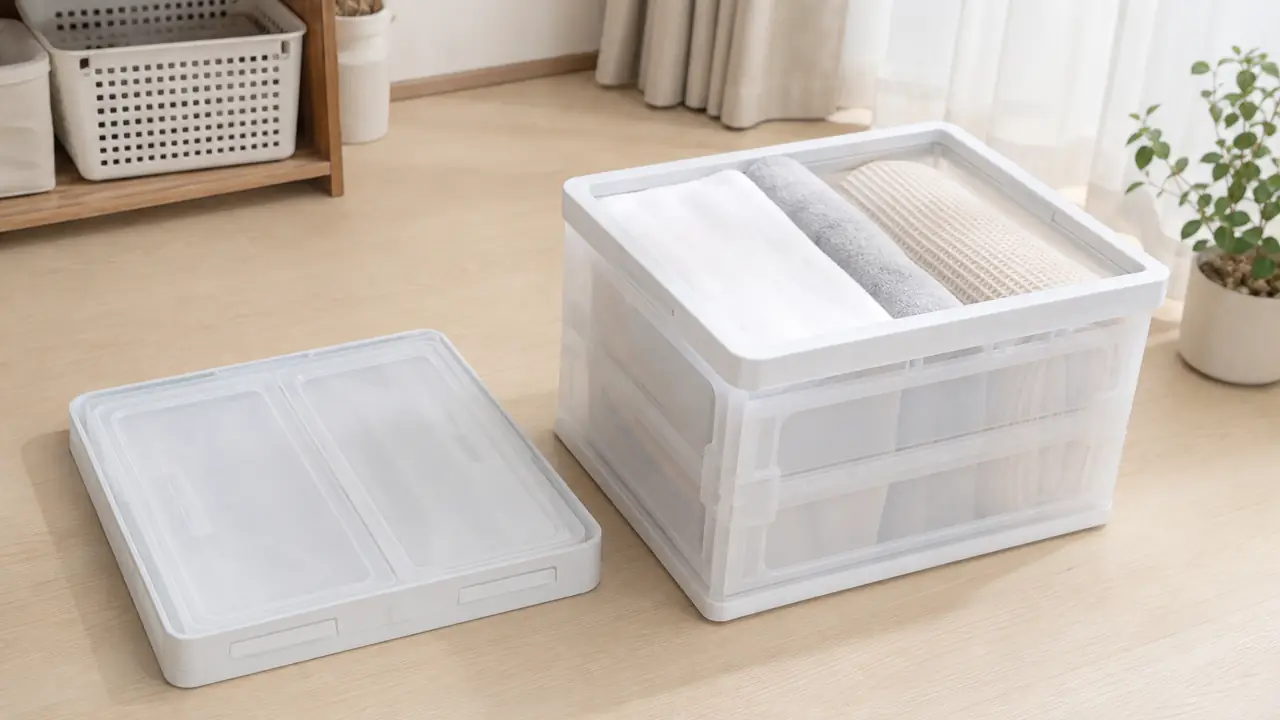
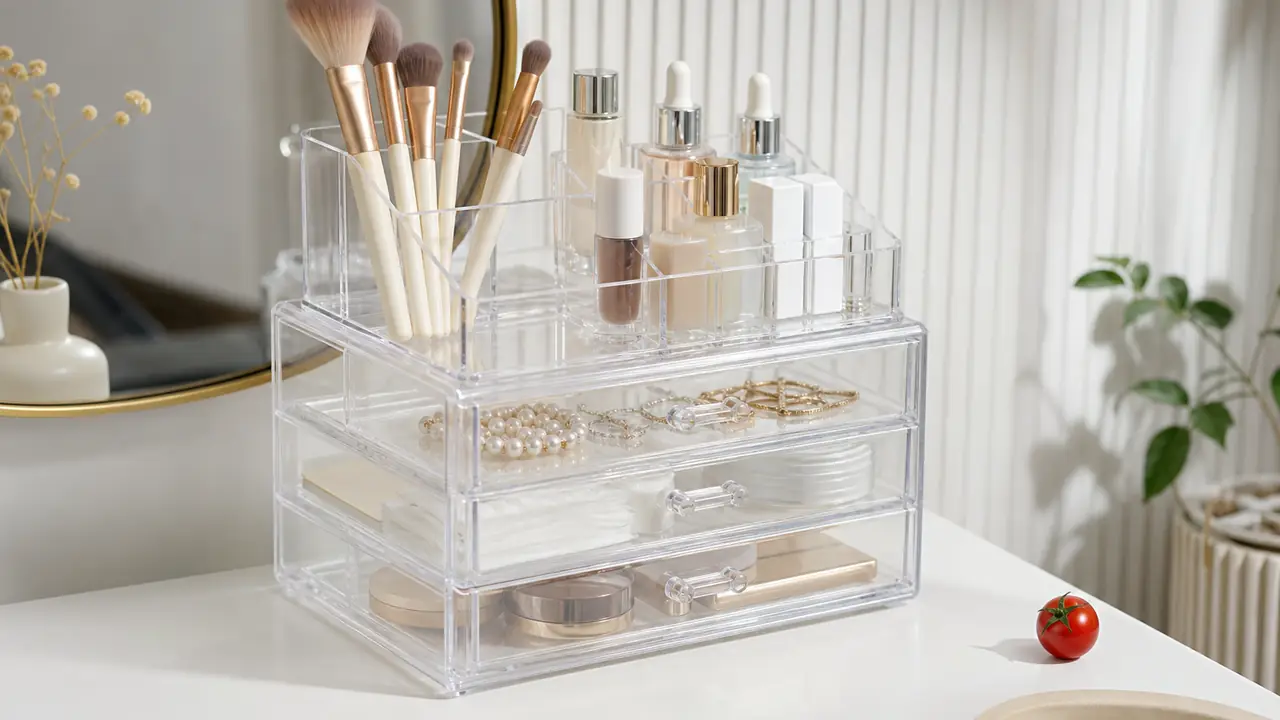
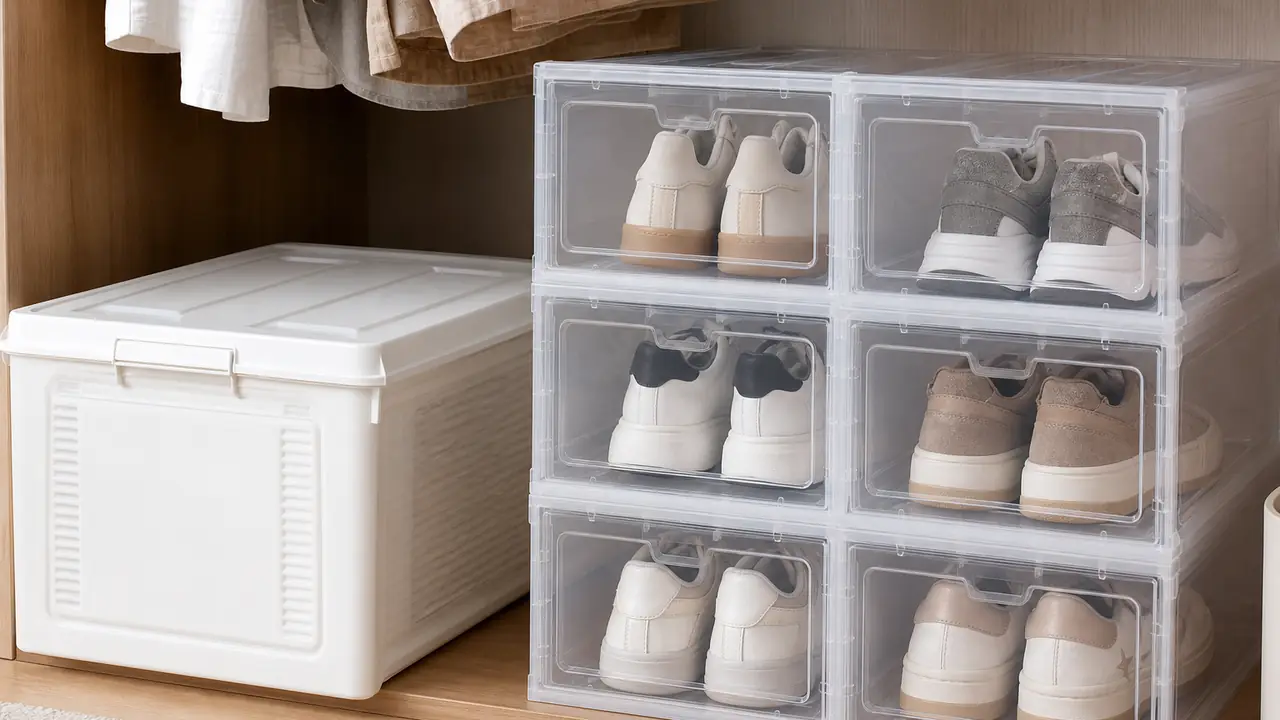
Home organizers are the boxes people buy to sort a home rather than to carry food: crates that fold flat when empty, clear drawer units for cosmetics, boxes that stack shoes and clothes, and trays that divide a desk drawer. They sell on retail shelves and marketplaces, where the size printed on the listing has to match the box in the customer's hand and the carton has to survive a fulfilment centre. This hub groups the four lines and shows how they differ in material, process and packing.
No partner plant reference models exist yet for these lines. The sizes on each cut sheet are public listing reference sizes from retail listings, used to define the category and set the starting point of a brief. The desk replaces them with the measured size of the partner plant's sample before an order is confirmed.
The four lines side by side
| Line | Reference size | Usual material | What decides the choice |
|---|---|---|---|
| Collapsible storage boxes | 440x330x230 mm, 30 L, folds to about 47 mm | PP with molded hinges | Hinge life, folded height, load when stacked |
| Cosmetic organizers | 318x213x92 mm drawer unit | PS, acrylic (PMMA), PET | Clarity, scratch resistance, drawer slide |
| Shoe and clothes boxes | 330x230x140 mm, about 10.6 L | PP, PET, ABS with PP | Door type, ventilation, stacking height |
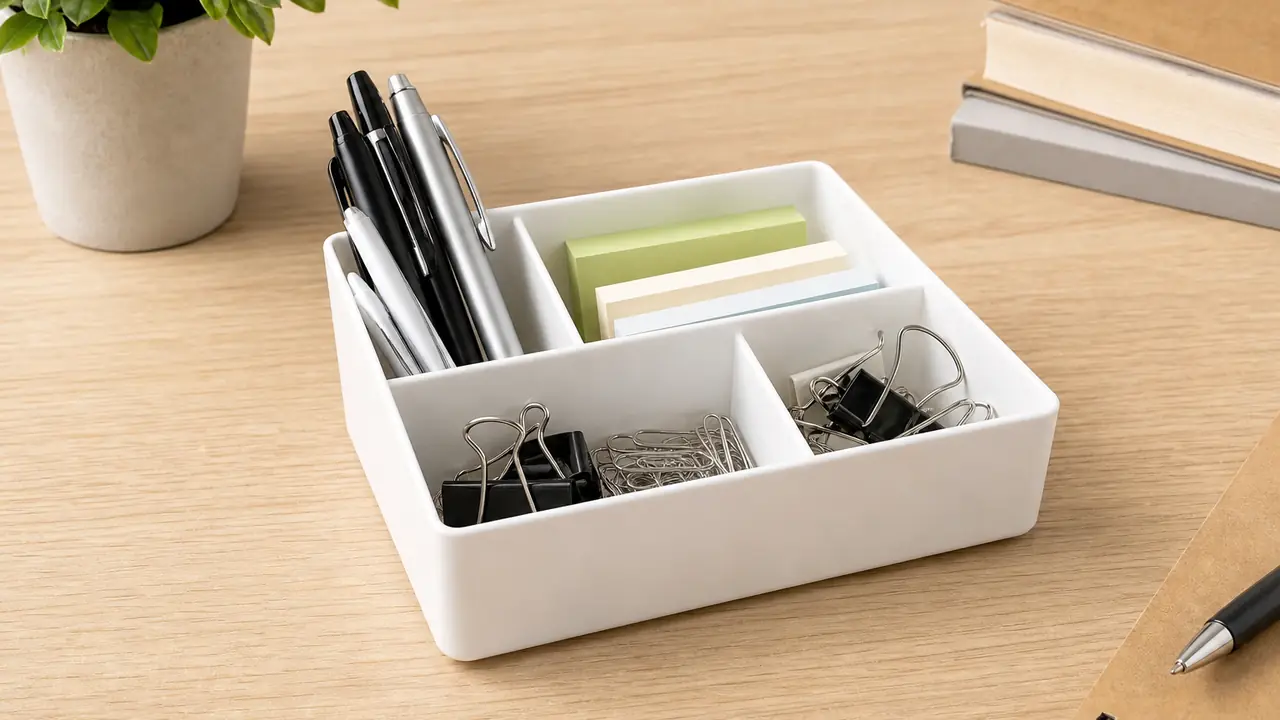
| Desk organizer boxes | 359x232x52 mm, 7 compartments | PS, PP, acrylic | Drawer fit, compartment layout, finish |
The lines share a buyer and a shelf, but not a material. A collapsible crate has to flex at the hinge thousands of times, so it is PP. A cosmetic drawer is bought for how it looks, so it is often PS or acrylic, which are clearer and stiffer but more brittle. A shoe box sits between the two. The storage box buying guide walks through the trade-offs.
Where these boxes are made
Most of China's household storage products come from two neighbouring clusters in Zhejiang. Taizhou, around Huangyan and Luqiao, counted more than 12,000 plastics producers with an output of over 60 billion yuan and more than 250,000 workers in 2018, according to China Trade Remedies Information reporting in 2019. Different press reports put Taizhou's share of China's plastic household goods market at about 60-70 percent, and Chao News reported in September 2024 that storage products were among the categories growing fastest there.
Huangyan is also China's mold town: Zhejiang News reported in June 2025 that its 142 mold makers above designated size produce about 30 percent of China's injection molds, 40 percent of blow molds and 80 percent of extrusion molds. For a storage brand that means the plant and the toolmaker are often a short drive apart, which shortens the loop between a sample mold, a T1 trial and a corrected tool. Next door, the China Plastics City in Yuyao, Ningbo, hosts more than 3,000 firms and traded 7.15 million tonnes of resin and plastics worth 78.5 billion yuan in 2023, per Zhejiang News and CNR. The desk works with partner plants in both clusters; see the cluster map.
Material honesty for organizers
Each part is named by material on the cut sheet. PP (resin code 5) carries hinges, crates and lids. PS (code 6) and acrylic, PMMA, give glass-like clarity for drawer units and desk trays. PET (code 1) is clear and tougher than PS, used for shoe boxes and some cosmetic boxes. PVC (code 3) appears only as soft clear cases or pouches for small items, never as a food container. When an organizer is marketed for the pantry or fridge, it moves into food contact and needs the documents in the compliance guide; otherwise a material declaration from the supplier and a lot inspection report are the usual file.
Packing decides the landed cost
Storage boxes are light and bulky, so freight is charged by volume and the packing method matters as much as the box. Collapsible crates ship flat at a fraction of their open height. Open trays and bins nest if their walls have enough draft. Drawer units and rigid shoe boxes do not nest, so they ship assembled in shelf packaging or flat-packed for assembly at home. The desk sets the carton plan with the partner plant before the quote is final; see packaging and palletizing.
Ordering a range
Typical starting points for storage lines are about 1,000-3,000 pieces per item, depending on size and mold, with stock models available from mixed cartons and a new mold taking 45-60 days to the first batch. Quantities are confirmed in writing for each program; the reference ranges are on MOQ and lead time. Send the rooms, the products the boxes must hold and the channel you sell through, and the desk returns matched models with measured sizes.