
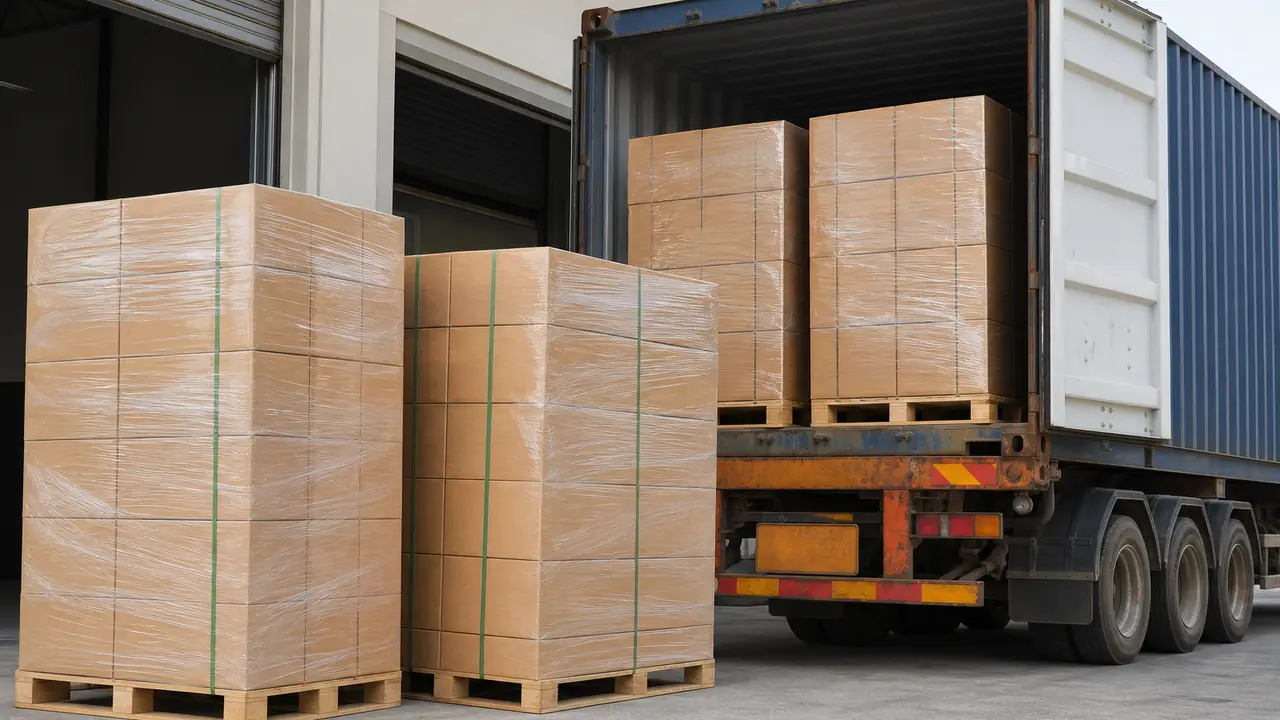
What makes container freight different
Food containers and storage boxes are general cargo with no batteries, no liquids and no special handling, so they move on ordinary sea and courier services. Their difficulty is density. A carton of thermoformed PP boxes, nested 200-300 sets, weighs little; a carton of collapsible storage boxes or pet food bins is mostly air. Freight is therefore charged on volume for almost every line in the range, and the decisions that matter are made before the goods reach the port: how parts nest, what carton size the plant uses and how cartons fill a container. Those are set out in packaging and palletizing.
FCL or LCL
A full container load (FCL) is booked for your goods alone, sealed at the plant or the consolidation point and opened at destination. A less than container load (LCL) shares a container with other shippers and is charged per cubic metre, with handling at both ends. The table compares the two for this category.
| Factor | FCL | LCL |
|---|---|---|
| Best for | Repeat programs, mixed lines filling a container | First orders, samples in bulk, top-ups |
| Charging | Per container | Per cubic metre, with minimums |
| Handling | Loaded once, opened at destination | Handled at the consolidation and deconsolidation warehouses |
| Carton risk | Lower; stacking under your control | Higher; cartons stacked with other cargo |
| Transit, typical | 15-25 days to the US West Coast, 30-45 days to Europe | Similar sea time plus consolidation days |
Transit ranges are typical port-to-port sea times and change with season, routing and carrier schedules; they are confirmed with your forwarder per booking. Because these goods are bulky, the point where FCL becomes cheaper than LCL comes earlier than for dense cargo, so the desk calculates both once the carton list is fixed.
Volumetric freight and how to lower it
Volumetric charging means you pay for the space a carton takes up. For takeout ware the levers are nesting depth, carton count and lid packing; for storage lines they are folding, nesting sets of different sizes inside each other and retail pack size. A few practical rules:
- Compare offers on pieces per cubic metre, not just unit price.
- Keep one footprint per type so lids are shared and cartons are uniform.
- Avoid oversize retail boxes with air around the product.
- Choose collapsible or nesting designs where the use allows it.
- Fix the carton size before the order so the load plan is real.
Consolidating several plants
A typical program draws on more than one cluster: PP takeout boxes from Guangdong, storage boxes from Taizhou or Ningbo, printed paper boxes from Longgang near Wenzhou. The desk aligns ready dates, collects the goods at a consolidation point or books a pickup route, checks carton marks against the packing list and ships them under one booking. That keeps one set of documents and one arrival, which matters more to a distributor or a restaurant group than a few days of transit. See the cluster map.
Samples by courier
Samples travel by express courier, typically 5-8 days door to door. Stock samples are ready in 3-7 working days and printed samples in 7-15 working days, so a sample round usually takes two to three weeks from brief to your desk. Sample costs and courier terms are agreed per request.
Documents and customs
Each shipment carries a commercial invoice, a packing list with carton counts and weights, and the bill of lading, plus a certificate of origin where your market or a trade agreement uses one. HS references used for this range are 3924.10 for tableware and kitchenware, which usually covers food storage containers; 3924.90 for other plastic household articles such as general storage boxes; 3923 for plastic packaging containers; and 4819 for paper boxes. Classification, duty and any additional tariffs are confirmed with your customs broker, as rates change with policy. Food contact declarations and test reports travel with the program file, as set out in the compliance guide.
Incoterms and handover
Most programs ship FOB a Chinese port, with your forwarder booking the sea leg, or on terms agreed with the desk where you prefer a single contact to destination. The terms, the handover point and who books insurance are written into the order confirmation. Send the destination and expected volume through the quote form, and check MOQ and lead time to place the ship date.