
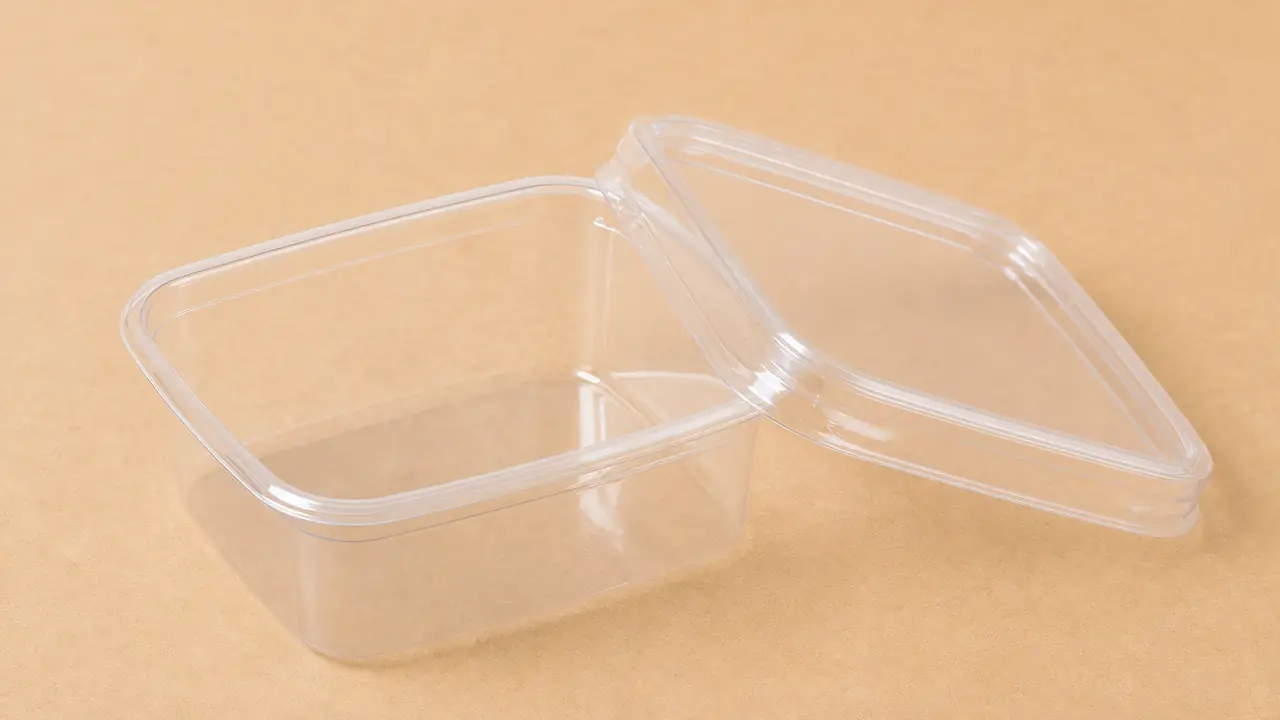
How storage boxes differ from food containers
A takeout container is used once or a few times and judged mostly on cost, weight and lid fit. A storage box is used for years. Buyers and end customers judge it on how clear it is, how well it stacks, whether the lid stays put, whether the walls bow when the box is lifted full, and whether it fits the shelf, drawer or closet it was bought for. Most storage boxes are injection molded rather than thermoformed, they weigh more and cost more per piece, and they are sold by room: kitchen, fridge, pantry, closet, entryway, bathroom and desk.
In China, the heart of this category is Taizhou in Zhejiang, with Huangyan and Luqiao districts known for household plastics, storage boxes and molds, and Ningbo's Yuyao nearby as a major plastics trading market. Taizhou has more than 12,000 plastics producers according to a 2019 report by China's trade remedies information service, citing 2018 figures.
Materials and where each fits
| Material | Look and feel | Typical lines | Note |
|---|---|---|---|
| PP | Slightly cloudy or opaque, flexible, tough | Collapsible boxes, clothes boxes, fridge bins, pet food bins | Takes hinges and impact well |
| PET | Very clear, stiffer | Fridge bins, shoe boxes, clear organizers | Clarity for display |
| PS | Glass-like clarity, rigid, more brittle | Cosmetic organizers, drawer trays, desk boxes | Scratches and cracks under impact |
| Acrylic (PMMA) | High clarity, premium feel | Cosmetic and display organizers | Higher cost |
| ABS with PP | Rigid panels | Hard shoe boxes with doors | Per listing description |
| PVC | Clear, flexible sheet | Soft clear pouches and small-item packaging | Not for food contact or heat |
| HDPE | Opaque, tough | Pet food bins | Alternative to PP |
Two material points matter most. First, a storage box that will hold food, such as fridge bins, pantry boxes or vacuum containers, needs food contact documents for its material, typically PP or PET, and an HS classification that may differ from general storage. Second, PVC belongs only in non-food, non-heated storage, such as soft clear pouches for small items. See the storage box buying guide and the container material guide.
Reference sizes by line
Partner plant reference models for storage lines are not yet published on this site, so the sizes below are public listing sizes for the category. They show what end customers expect and where shelves and drawers set limits.
- Fridge bins: the most common 8-piece set measures about 315x157x89 mm; standard fridge shelves suit bins about 10-12.5 in long and 3-4 in high. See fridge organizer bins.
- Shoe boxes: a folding clear shoe box at 330x230x140 mm, about 10.6 L, fits shoes about 31 cm long and 13 cm high; rigid magnetic-door boxes run from about 34x25x19 cm to 38x30x24 cm.
- Collapsible boxes: a 30 L folding box at about 440x330x230 mm folds to around 47 mm; 45 L at about 525x355x300 mm.
- Cosmetic organizers: a clear drawer unit at about 318x213x92 mm; a 21-compartment countertop unit at about 295x235x140 mm.
- Desk trays: a 7-compartment drawer tray at about 359x232x52 mm.
- Pet food bins: a 20 lb, 23 qt airtight bin at about 410x240x425 mm.
Lids and closures
Storage boxes use a wider range of closures than takeout containers: loose lift-off lids for clothes boxes, clip-locking lids for pantry and pet food, front drop doors on shoe boxes so stacked boxes open without unstacking, hinged lids on collapsible crates, and pump-and-valve lids on vacuum containers. The parts that wear are clips, hinges and seals, so the desk agrees a repeated opening check on the sample, and a seal check for airtight lines. See lid types.
Stacking and load
Stackability is a selling point for storage. Lids with recesses that locate the box above, walls that do not bow and a stable footprint matter more than gram weight. Rigid boxes barely nest, so they ship bulky; collapsible designs fold flat and cut freight per piece. A stacking load check on the sample, with the load and duration agreed per order, shows whether the walls and lid hold. See stackability and nesting.
Clarity and surface
Clear boxes sell because customers can see what is inside, but clear PET, PS and acrylic show scratches, scuffs and dust. Protective film, sleeves and carton dividers reduce damage in transit, and static can attract dust in dry warehouses. These are packing details worth agreeing before the first order, not after the first complaint.
Planning a range by room
Storage ranges sell best when they are planned around a room rather than a catalog page. A kitchen and fridge set might combine clear PET fridge bins, PP pantry boxes and a vacuum set for dry goods; a closet set, collapsible PP crates and lidded clothes boxes sized to shelf depth; an entryway set, stackable clear shoe boxes with front doors; a bathroom or dressing table set, PS or acrylic cosmetic drawers; a desk set, shallow compartment trays that fit a standard drawer. Within each room, keep to one material and one design language, so the pieces look like a family on the shelf and in product photos. The home organizers hub groups the lines this way.
Private label and retail packaging
Storage boxes are usually sold individually or in small sets, so retail packaging matters more than for takeout. Common routes are a printed color box or sleeve, a hang tag or label with barcode, and a logo molded or printed on the lid in a custom program. Each adds its own starting quantity and lead time, and the packing count per export carton changes with retail packaging, so it is agreed together with the product.
Ordering basics
Storage lines typically start at lower quantities per item than takeout lines, because each piece is larger and higher in value: around 1,000-3,000 pieces per item is a typical reference range, depending on size and mold, confirmed in writing per program. Stock samples typically take 3-7 working days. For customs, general plastic storage boxes are often classified under HS 3924.90 and food storage containers under 3924.10; confirm with your customs broker. Starting quantities and lead times are on MOQ and lead time. Send the rooms and sizes you are planning through the quote form and the desk will shortlist models from partner plants in the Taizhou and Ningbo clusters.