
What DTC brands usually struggle with
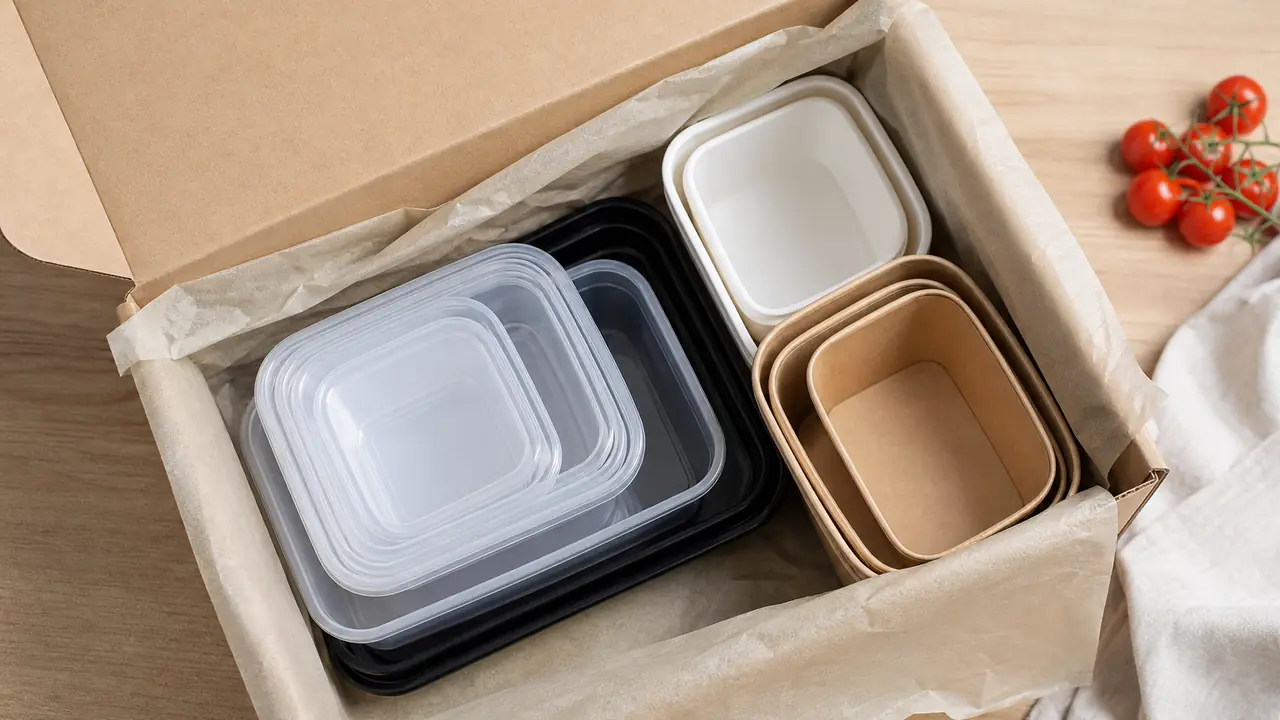
A DTC brand rarely sells one container. It sells a set: three vacuum containers in rising sizes, eight fridge bins, a desk tray with matching inserts. The set has to make sense as a system, with pieces that nest, stack and share lids, and it has to arrive in a box that feels like the brand. Then the set travels in a parcel network that drops, squeezes and turns it over. The complaints that follow are predictable: a lid that does not close properly, a corner cracked in transit, a fridge bin that is a few millimetres too tall for the shelf the listing promised. Every one of those becomes a return, a refund and a review.
The desk designs the program around those three issues: set building, unboxing and returns.
Recommended lines and reference sizes
| Line | Reference size | Material | Set logic |
|---|---|---|---|
| Vacuum food containers | 1.4 L, 233x156x90 mm (public listing size) | PP or copolyester, silicone seal | 0.5-2.0 L pieces, one pump per set |
| Fridge organizer bins | 315x157x89 mm (public listing size) | Clear PET or PP | Eight-piece sets, front handle, stackable |
| Desk organizer boxes | 359x232x52 mm seven-compartment tray (public listing size) | PS, PP or acrylic | Trays and inserts on one grid |
There are no partner plant reference models for these three lines yet, so the cut sheets use public listing sizes and the desk measures the partner plant sample before the size goes on your page. Standard fridge shelves suit bins about 10-12.5 inches long and 3-4 inches high, which is why that fit belongs on the spec. See vacuum food containers, fridge organizer bins and desk organizer boxes.
Quantities and lead times
Storage and organizer items typically start at 1,000-3,000 pieces per item, depending on size and mold; printed set boxes and mailers typically start at 5,000-10,000 per design. Stock samples take 3-7 working days and printed samples 7-15. Stock production runs 7-15 days and printed or customised orders 15-30 days. A new mold, for a private lid or a bin with your own handle, typically starts from 50,000-100,000 pieces with a first order in 45-60 days. All figures are typical reference ranges, confirmed in writing for each program.
Documents
Vacuum containers and fridge bins touch food, so they need a food contact basis for the market: a supplier declaration referring to FDA 21 CFR 177.1520 for PP in the United States, or a declaration to Regulation 1935/2004 and Regulation (EU) 10/2011 with a migration report for the European Union. Copolyester and PET have their own entries in the same rules, so the declaration must name the actual resin of each part, including the seal. Desk organizers are not food contact items. Documents are issued to partner plants or your brand per project and verified by the desk.
Checkpoints against returns
- Lid closure and opening force on every piece of the set; seal seated after transport vibration.
- Vacuum hold on the valve after pumping, checked on a sample batch.
- Corner and hinge check after a drop test in the packed mailer; see lid cracking.
- Freezer at -18 degrees C then opening, for pieces sold for freezing.
- Measured outer size against the listing, in millimetres and inches.
- Scuff protection for clear pieces: sleeves or separators inside the set box.
An illustrative example
This example is illustrative and anonymous. A DTC kitchen brand wants a starter set: three vacuum containers between 0.5 and 2.0 L with one pump, and a fridge bin set. The desk shortlists a Taizhou partner plant for both, matches the seal and valve material to the declaration, and designs a set box with separators so the clear lids do not rub. The first lot enters at the low end of the 1,000-3,000 piece range per item. A drop test in the mailer shows where the corners need protection before mass production, and the measured sizes go onto the listing.
How to start
Send the set composition, target sizes, markets, packing idea and quantity through the quote form. The desk returns reference models, a document list and a sample plan. If the set will also be sold through marketplaces, say so at the start, because carton marks, pack labels and listing sizes are then fixed in the same specification. The OEM and private label guide covers artwork and packing files.