
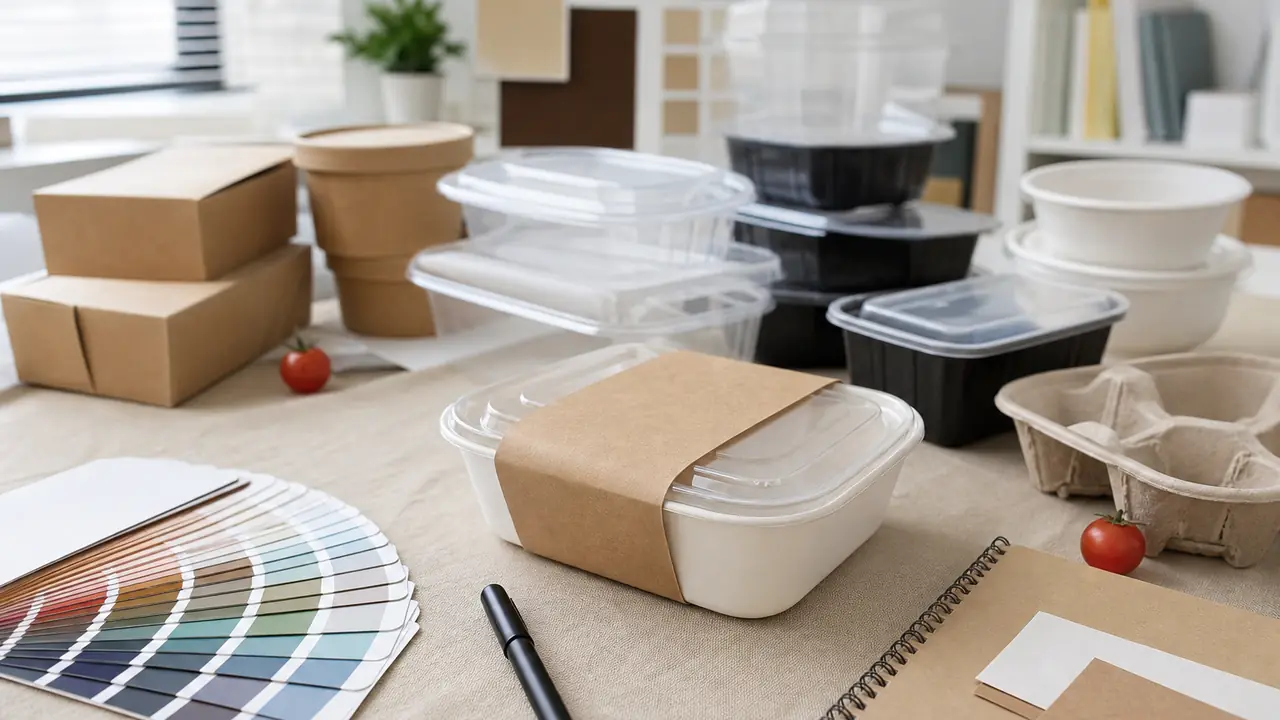
Three routes to a private label range
A private label container range does not have to start with a new mold. Most brands begin with stock molds from partner plants and add their identity in packaging or print, moving to their own mold only when volume, a distinctive shape or a protected design justifies it. The three routes differ in quantity, time, cost of tooling and the risk carried by the brand.
- Stock mold, private packaging. A catalogue model in a plain or standard color, sold in your sleeve, label, insert card or master carton.
- Stock mold, private print. The same model with your logo printed on the lid, cup wall or a paper sleeve, or a custom color where the plant allows it.
- New mold. Your own footprint, shape, emboss or lid design, cut as a new tool at a partner plant, typically in the mold cluster around Huangyan in Taizhou.
The routes compared
| Route | Typical MOQ | Samples | Bulk lead time | Best for |
|---|---|---|---|---|
| Stock mold, private packaging | From 1-10 cartons mixed, a few thousand pieces | 3-7 working days | 7-15 days | Launches, marketplace tests, wholesalers |
| Stock mold, printed lid or sleeve | 10,000-50,000 pieces per item | 7-15 working days | 15-30 days | Restaurant groups, meal prep brands |
| Printed paper box | 5,000-10,000 pieces per item | 7-15 working days | 15-30 days | Bakeries, gift and seasonal ranges |
| Storage box, custom color or pack | 1,000-3,000 pieces per item | 3-15 working days | 15-30 days | Retailers, DTC home brands |
| New mold | From 50,000-100,000 pieces per item | T1 trial 25-45 days | 45-60 days for the first order | Brand owners with volume or a signature shape |
Platform plants publicly quote new-mold starting points from 5,000 to 50,000 pieces depending on the category, so the figure for a given item is always set in writing for the program. No prices are given here; tooling and unit cost depend on size, cavities, material and print.
What to decide before a new mold
A new mold fixes decisions for years, so it should follow the stock route, not replace it. Before cutting steel, the brand should have sold the item in a stock version, confirmed the footprint and capacity on real portions, chosen the material for each part and decided whether lids will be shared across depths. Ownership of the mold, where it is stored and how it can be moved should be written into the agreement. The note on mold cost and ownership covers tooling terms.
Process decides the tool
Thermoformed PP boxes, soup cups and divided trays are formed from sheet on tools that are simpler and faster to make; the parts are light and nest tightly, which suits single-use takeout. Injection molded boxes, lids and storage containers need steel molds with more complex cooling and ejection, take longer to cut and produce thicker, heavier parts suited to reuse. The cavity count, steel and expected output all change the tooling decision, so the route is chosen with the process in view. See injection molding and thermoforming.
Print and decoration options
Lids can be printed, embossed in the mold or labelled; cups can be printed on the wall or carry in-mold labels; paper sleeves and cartons are printed in the Longgang cluster near Wenzhou, which grew its printing and packaging output to about 20 billion yuan according to Xinhua reporting in 2024. Print adhesion and rub resistance are checked on the sample and on each lot. See printing and labeling.
Steps from brief to first shipment
- Brief: items, uses (hot, cold, reheated, storage), target markets, quantities and channels.
- Shortlist: the desk matches stock models from partner plants with real sizes and weights.
- Stock samples: checked for fit, capacity, lid closure and material marking.
- Artwork or mold design: print files or drawings, with tolerances and material per part.
- Printed sample, or sample mold and T1 trial for a new tool, followed by corrections.
- Golden sample signed and documents collected for the destination market.
- Bulk production with in-process checks and a pre-shipment inspection.
- Packing, consolidation and shipment, with the program file kept for reorders.
Documents and responsibility
Food contact declarations and test reports are issued to partner plants or to your brand per project and verified by the desk. When your brand name is on the pack, you are usually the party responsible for the claims on it, so wording follows the compliance guide and the sustainable packaging guide. Send your brief through the quote form; the desk returns a route, matched models and the quantities confirmed for each item.