
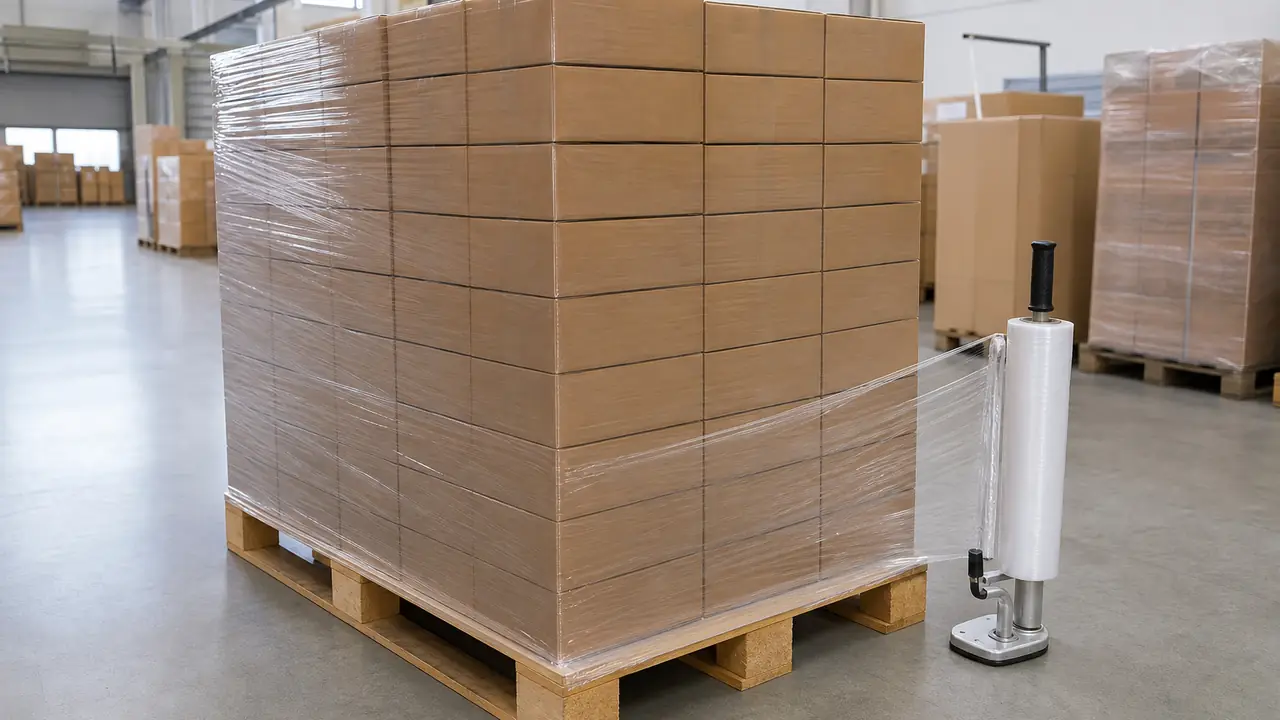
Why packing decides the landed cost
A 750 ml PP takeout box weighs 19.6 g. A carton of them weighs little and fills a lot of space, so sea freight is charged on volume, not weight, and the number of pieces per carton is the number that drives cost per unit delivered. Two quotes for the same box can differ mainly because one plant nests 300 sets in a carton and another packs 200 with loose lids. The desk asks for the carton count, carton size and gross weight on every quotation and compares offers on pieces per cubic metre, not just on unit price.
Carton counts from partner plants
The figures below are the packing stated by partner plants for their reference lines. They are the starting point for a packing specification, and the final count is confirmed per order once lids, inserts and print are fixed.
| Product type | Typical packing | Inner packing | Note |
|---|---|---|---|
| Thermoformed PP takeout boxes | 200-300 sets per carton | Nested sleeves, lids sleeved separately | A Foshan plant packs its 650-1,000 ml boxes 300 sets per carton |
| PP soup cups | 200 sets per carton | Cups and lids nested in sleeves | 350-950 ml export series |
| Divided PP trays | 200 sets per carton | Nested sleeves | Three to five compartments |
| Starch-based bowls and boxes | 200-300 sets per carton | Nested sleeves | Starch blended with PP |
| Injection molded PP cups | 300-500 pieces per carton | Nested stacks | For example 500 pieces in a 41x32x48 cm carton |
| PET cold cups | 1,000 pieces per carton | Nested sleeves | Cold use only |
| Portion and sauce cups | 2,000-5,000 pieces per carton | Nested sleeves | By capacity |
A set is a base with its lid. Where the lid is packed in the same carton as the base, the carton count is in sets; where lids ship in their own cartons, both counts appear on the packing list so a kitchen can reorder them separately.
Nesting and sleeves
Nesting is the main lever. Tapered thermoformed boxes and cups stack inside each other with only a few millimetres of rise per piece, so hundreds fit in a sleeve. Injection molded storage boxes with straight walls nest less well or not at all, and collapsible boxes save space by folding instead: the 30 L reference folds to about 47 mm from 230 mm high. Sleeves are usually PE or OPP bags of 25-50 pieces, which keep parts clean and let a kitchen open one sleeve at a time. A nesting check on the sample, done by stacking a full sleeve and checking that parts separate without sticking or cracking, belongs in the specification. See thermoforming for why the draft angle matters.
Retail packs and storage lines
Storage boxes, fridge bins, vacuum containers, cosmetic organizers and desk trays are often sold one by one or in sets, so they need a retail pack as well as a shipping carton: a printed box, a sleeve with a barcode, or a polybag with a warning and an insert card. Marketplace sellers need packs that survive a fulfilment centre and a parcel network, which usually means a five-panel or mailer box and a drop check on the packed unit. Retailers need shelf-ready packs and barcodes in the format their system accepts. The storage box buying guide covers pack choices by channel.
Carton marks and labels
Each export carton carries the item code, description, quantity, carton number, gross and net weight, carton size and country of origin, plus any marks the importer or a retailer requires. Food contact items can carry the glass-and-fork symbol on the pack for the EU where the documents support it. The desk sends a carton mark drawing for approval before bulk, because relabelling at a warehouse costs more than printing the right mark at the plant.
Pallets and container loading logic
Whether to palletize depends on the destination. Floor-loaded cartons fill a container best and suit importers who unload by hand; palletized loads lose some volume to the pallet and the gap above it but unload in a fraction of the time and suit distribution centres. Pallets follow the standard of the destination and, for wooden pallets, ISPM 15 heat treatment marks. The loading logic is simple and worth doing on paper before an order is confirmed:
- Fix the carton size and count from the packed sample.
- Work out cartons per layer and layers per pallet within a safe stack height.
- Check the bottom carton against the stack load with a compression or stacking check.
- Calculate cartons per container, floor-loaded or palletized.
- Adjust carton size or count if the last row leaves a large gap.
Freight modes and transit ranges are covered in logistics and shipping; quantities and timelines in MOQ and lead time. Send your channel and destination through the quote form and the desk will propose a packing specification.