
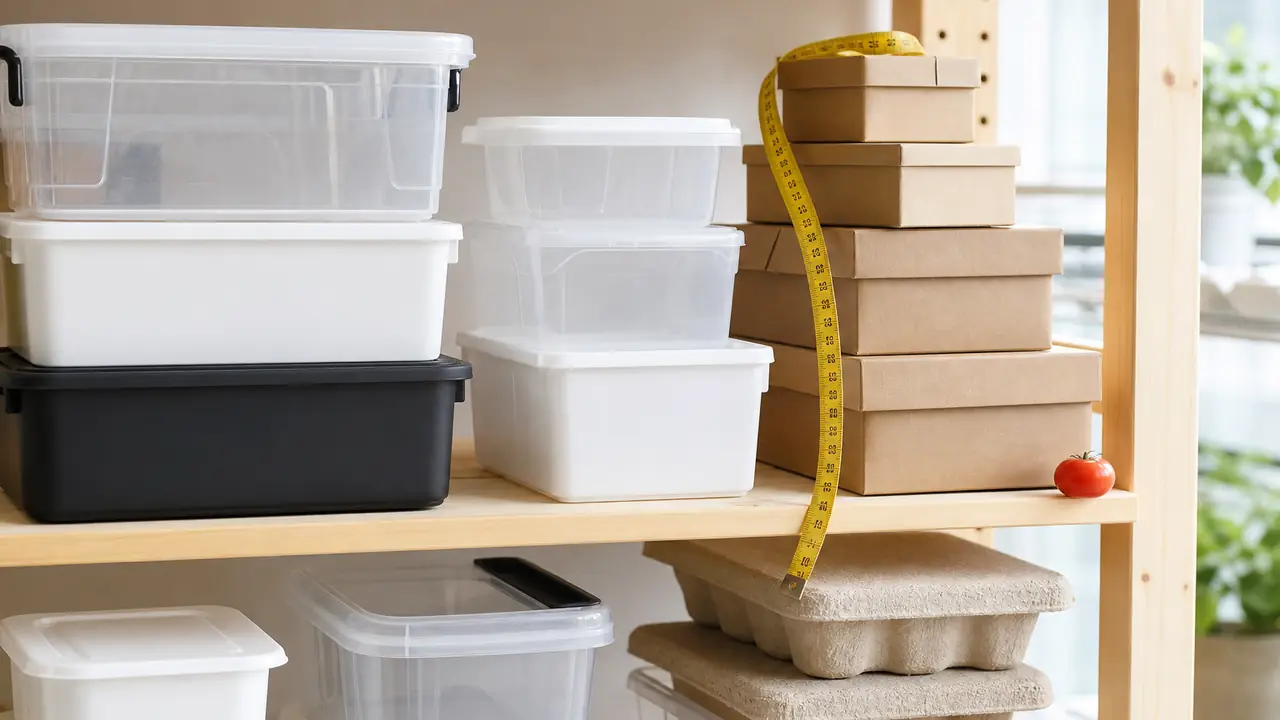
What a storage box has to do
A food container is judged in one trip from kitchen to table. A storage box is judged for years in a wardrobe, a garage or under a bathroom sink. That changes the specification. Gram weight matters less than stacking strength, hinge and door life, clarity after cleaning and whether the size on the pack matches what fits inside. Most returns in this category are about those points: a box that bows when stacked, a folding hinge that cracks, a door that will not stay shut or a shoe that does not fit.
The household plastics cluster in Taizhou and Ningbo, Zhejiang, makes most storage boxes and the molds behind them. Taizhou counted more than 12,000 plastics producers in 2018, according to China Trade Remedies Information reporting in 2019, and Huangyan district in Taizhou is known as a mold-making town. The desk shortlists partner plants there by box type and process.
Reference sizes across the category
Lidwell does not yet hold partner plant reference models for the storage lines, so the sizes below are typical of public retail listings and serve as starting points for a specification.
| Type | Typical outer size | Notes | Usual material |
|---|---|---|---|
| Collapsible box, 30 L | About 440x330x230 mm | About 47 mm folded; 45 L about 525x355x300 mm | PP with hinged walls |
| Clear folding shoe box | 330x230x140 mm, about 10.6 L | Fits shoes about 31 cm long and 13 cm high | PP or PET |
| Rigid shoe box with drop door | About 34x25x19 to 38x30x24 cm | About 15-27 L, magnetic door | ABS with PP per listing |
| Drawer cosmetic organizer | About 318x213x92 mm | Counter models about 295x235x140 mm | PS, acrylic or PET |
| Desk drawer tray, 7 cells | About 359x232x52 mm | Deeper trays available | PS, PP or acrylic |
| Fridge bin | About 315x157x89 mm | Shelf depth about 10-12.5 in | PET or PP |
Inner size, outer size and the pack
Retail buyers compare the size on the pack with the item they want to store. Collapsible boxes are typically 2-4 cm smaller inside than outside, because of wall thickness, ribs and hinge lines. Shoe boxes need the inner length and height, not the outer. The specification should therefore carry both inner and outer dimensions, the capacity in litres and the measured folded height for collapsible models, and the same figures must appear on the listing and on the retail pack.
Materials and what they trade
- PP: tough and flexible, the usual material for collapsible walls and living hinges, slightly cloudy.
- PET: very clear and stiff, used for fridge bins and clear shoe boxes, less forgiving at folds.
- PS: clear and rigid for drawer trays and organizers, can crack at corners under impact.
- Acrylic: the clearest option for display and cosmetic organizers, scratches with abrasive cleaning.
- PVC: soft clear pouches and small item packaging only, never heated and not used where food is stored.
Fridge bins and pet food bins hold food directly, so they follow food contact rules even though they look like organizers; see the compliance guide. The material guide covers each material in more depth.
Lids, hinges, doors and stacking
Four mechanical details decide how a storage box ages. The lid should seat without force and stay seated when the box is lifted by the lid edge. Folding hinges on collapsible boxes are tested by repeated folding on the sample. Drop doors on shoe boxes need a magnet or latch that holds when the stack is moved. Stacking strength depends on wall ribs, lid design and material, so the desk agrees a stacking load check per order, with the number of boxes and the load written into the specification. These checks are stated working defaults, confirmed per order. See collapsible storage boxes and shoe and clothes storage boxes.
Retail packaging and shipping volume
Storage boxes are light and bulky, and freight is charged by volume. Collapsible and nesting designs reduce shipping volume sharply; rigid boxes that do not nest fill a container quickly. The retail pack, barcode, insert card and master carton should be fixed with the box, because they decide shelf presentation and carton crush in transit.
Ordering a range
Storage lines typically start from 1,000-3,000 pieces per item, depending on size and mold, with samples in 3-7 working days from stock and printed or custom work in 15-30 days, all confirmed in writing for each program. Send the room, the items to store, the target sizes and the channel through the quote form.