
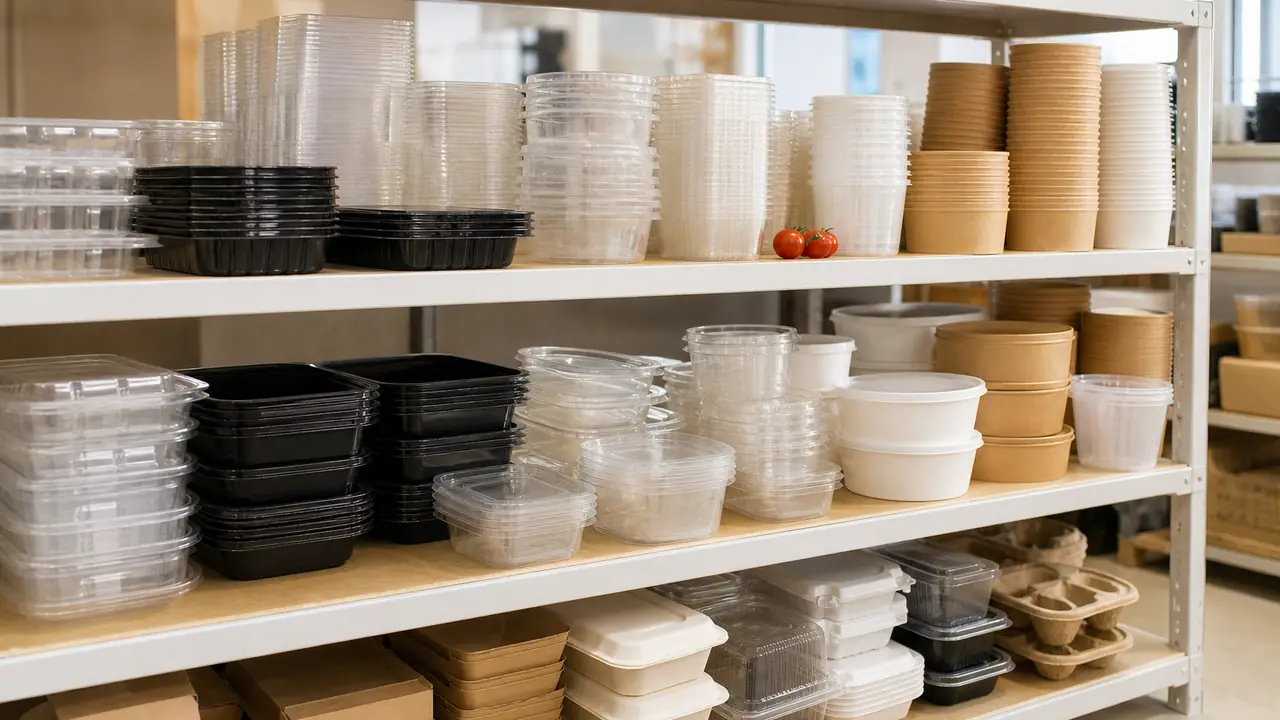
What wholesalers usually struggle with
A wholesaler sells what is on the shelf today. The value is in stock depth: the common sizes in quantity, ready to ship to caterers, shops and smaller distributors without a custom lead time. That depends on buying stock molds that partner plants run continuously, in mixed cartons so slower sizes do not tie up cash. The second issue is pack count. A wholesaler sells by the carton and the sleeve, so the count per carton, the carton size and the gross weight have to be known before ordering and stay the same afterwards. The third is market rules on single-use items, which vary by destination and can turn a fast-moving item into dead stock.
Recommended lines and pack counts
| Line | Reference model | Material | Pack count |
|---|---|---|---|
| PP rectangular boxes | 750 ml, 170x115x51 mm, 19.6 g | PP | 200-300 sets per carton; 300 sets for thermoformed 650-1,000 ml |
| PP soup cups | 350-950 ml, about 116 mm class | PP, code 5 molded in base | 200 sets per carton |
| Disposable cutlery sets | Spoon 136x32 mm, 1.6 g; 115x31 mm, 1.1 g | PP, or wood for the EU | Per kit and wrap |
| Folding and bakery boxes | 190x85x35 mm kraft box with clear lid | Kraft or white card, PET or PVC window | Flat packed, per board grade |
| Sauce and portion cups | Per model | PP | 2,000-5,000 per carton |
Pack counts come from partner plant documents and are confirmed on the order. Injection molded PP cups typically pack 300-500 per carton, for example 500 in a 41x32x48 cm carton, and PET cold cups 1,000 per carton. Click-lock paper boxes run from 350 to 2,880 ml in kraft, white card or white card with a foil lining. See disposable cutlery sets and folding gift boxes.
Market rules that decide the cutlery line
Since 3 July 2021 the EU Single-Use Plastics Directive 2019/904 has banned single-use plastic cutlery, plates and straws, and expanded polystyrene food containers and cups, from the EU market. PLA and other chemically modified bioplastics count as plastic under the directive. A wholesaler selling into the EU therefore carries wooden cutlery kits or other compliant routes instead of PP kits. For paper and plant fibre packaging sold in the United States, at least 13 states restrict intentionally added PFAS; California's AB 1200 has applied to plant fibre food packaging since 1 January 2023. Confirm the current rules for each market with your counsel; the SUPD note sets out the scope.
Quantities and lead times
Stock molds typically start from 1-10 mixed cartons, about several thousand pieces, which lets a wholesaler cover a wide range. Printed paper boxes start at 5,000-10,000 per design, and printed lids or sleeves at 10,000-50,000 pieces per item. Stock samples take 3-7 working days. Stock production runs 7-15 days and printed orders 15-30 days. Nested ware is light and bulky, so carton design decides how many fit in a container. All figures are typical reference ranges, confirmed in writing for each program.
Checkpoints for wholesale lots
- Pieces per sleeve and per carton counted on the lot.
- Gram weight against the cut sheet, so a lighter part is not substituted.
- Lid fit across mixed sizes on the same footprint.
- Carton marks, gross weight and carton stacking.
- Denesting of stacked containers; see nested containers sticking.
An illustrative example
This example is illustrative and anonymous. A catering supply wholesaler wants to deepen its takeout range for the EU. The desk builds a mixed order of stock PP boxes on the 170x115 mm footprint and soup cups from Guangdong partner plants, plus kraft bakery boxes from the Longgang cluster, each item from a few cartons. Because the market is the EU, wooden cutlery kits replace the PP kits. Carton counts and weights go into the order confirmation so the wholesaler can list them before the goods arrive.
How to start
Send the item list, monthly volume by size, destination market and carton requirements through the quote form. The desk returns matched stock models with pack counts and carton data. If part of the range should later carry your own print, say so early: a printed sleeve or label on a stock item is usually the simplest first step, and the stock vs custom note compares the routes.