
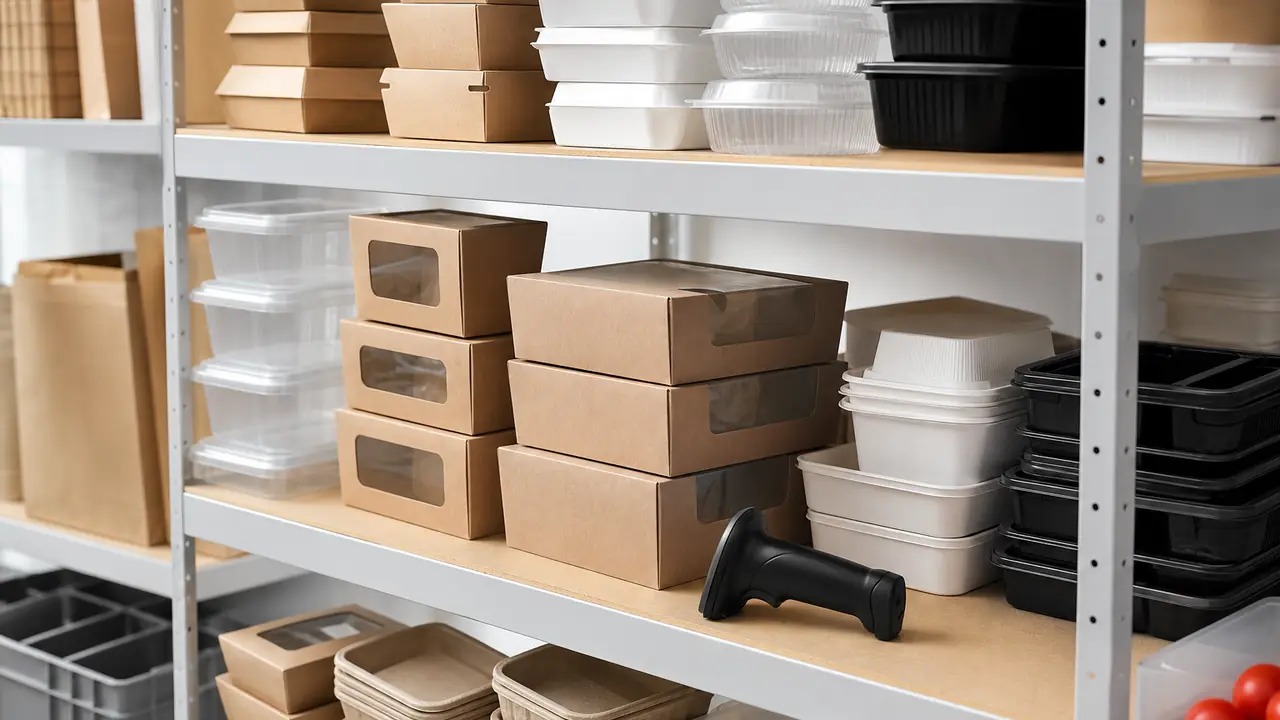
Why the carton matters as much as the container
A 750 ml PP box from a partner plant weighs 19.6 g. A carton of several hundred of them weighs a few kilograms and takes the same space as a carton of something ten times heavier. Ocean freight on light, bulky goods is charged by volume, so the number of containers per cubic metre, not per kilogram, decides the freight share of each piece. That number comes from two things: how well the containers nest and how the carton is specified.
The carton also protects the product. Thin-walled thermoformed PP and clear PET deform under load. A carton that is too weak, or a stack that is too tall, turns into crushed rims and lids that no longer fit. Wholesalers who break cartons for small customers also need inner bags that keep counts clean and goods hygienic after the outer carton is opened.
Typical pack counts
| Item type | Typical pack count | Note |
|---|---|---|
| Thermoformed PP boxes, soup cups, divided trays | 200-300 sets per carton | Set = base and lid |
| Starch-PP blend bowls and boxes | 200-300 sets per carton | Same packing logic as PP |
| Injection molded PP cups | 300-500 pieces per carton | Example: 500 pieces in a 41x32x48 cm carton |
| PET cold cups | About 1,000 pieces per carton | Nested in sleeves |
| Sauce and portion cups | 2,000-5,000 pieces per carton | Small, deep nesting |
| Partner plant PP takeout boxes, Foshan | 300 sets per carton | 650-1,000 ml boxes |
These are reference counts from partner plant literature. Each item's actual count, carton size and gross weight is confirmed at quote stage and fixed in the packing specification.
What a carton specification should fix
- Count and configuration. Pieces per carton, pieces per inner bag or sleeve, and whether bases and lids are packed together or in separate sleeves.
- Carton size and board. Outer dimensions, board grade and flute, and a compression target suited to the stacking height in transit and storage.
- Inner packing. Poly bags or sleeves, closed so dust and handling stay out after the outer carton is opened.
- Carton marks. Item number, description, capacity, colour, count, gross and net weight, carton dimensions, lot or production date and any market-specific marks.
- Weight range. A gross weight tolerance per carton, which makes short counts visible at inspection without opening every carton.
- Pallet pattern if goods are palletised: cartons per layer, layers per pallet and maximum height.
Nesting and freight volume
Thermoformed and tapered containers nest: each one drops into the one below, so a stack of 50 is only a little taller than one. The steeper the draft and the shallower the stacking lug, the deeper the nesting and the more pieces per carton. Lids usually nest more tightly than bases. Collapsible storage boxes do the same job by folding; a 30 L box at about 440x330x230 mm folds to about 47 mm. Rigid storage boxes and organizers that cannot nest ship mostly air, which is why their carton counts are lower and their cartons need more care.
If freight cost matters, ask the plant for a nesting pitch: the added height of each extra piece in a stack. Comparing two near-identical containers on that one number often explains a large difference in landed cost. More on the design side is in stackability and nesting.
Checks before the load
- Pack a sample carton at the plant to the agreed count and photograph each layer.
- Weigh and measure the packed carton and record the figures in the packing spec.
- Run a carton compression check suited to the planned stack height; for paper boxes, check board burst and edge crush as agreed.
- Do a drop check on a packed carton and inspect rims and lids for deformation.
- At pre-shipment inspection, check counts on random cartons, carton marks and gross weights against the range.
Paper and gift boxes follow a different logic. They ship flat and are folded at the point of use, so the count per carton is high and the risk is not crushing but corner damage and warping in humid holds. Flat boxes are best packed in shrink-wrapped bundles with board corner protection, and printed faces should sit against each other or against a separator sheet so ink does not rub. Click-lock takeout boxes from 350 to 2,880 ml and bakery boxes such as the 190x85x35 mm kraft reference model are all packed this way; a flat bundle that warps in transit will not fold square in a busy kitchen.
Test counts and pass criteria are a stated working default and confirmed per order. The inspection plan is set out on testing and inspection.
Common carton problems
Three problems account for most complaints. First, cartons that crush because the board was chosen for weight, not for stacking height: light goods are stacked high in containers and warehouses. Second, nested containers that stick together because they were packed warm or pressed too tightly, which slows down a kitchen line. Third, mixed or short counts, which hit wholesalers who resell by the carton. A gross weight tolerance and random count checks catch the third; the first two need the packing method itself to be agreed on the sample. See carton crush in transit.
Packing for wholesale and mixed loads
Wholesalers and distributors who ship mixed cartons to many small customers gain from a common pack logic across the range: similar counts, similar carton sizes and inner bags that make part cartons easy to sell. Stock molds can usually be ordered in mixed loads from about 1-10 cartons, and the desk consolidates items from different partner plants into one shipment. Ocean freight typically takes 15-25 days to the US West Coast and 30-45 days to Europe, by FCL or LCL; sample parcels go by courier in about 5-8 days. The details are on logistics and shipping, and the wholesale program view on wholesalers.
Typical starting quantities and lead times are on MOQ and lead time, confirmed in writing for each program. Send the item list and destination through the quote form and the desk will return pack counts and a loading estimate per item.