
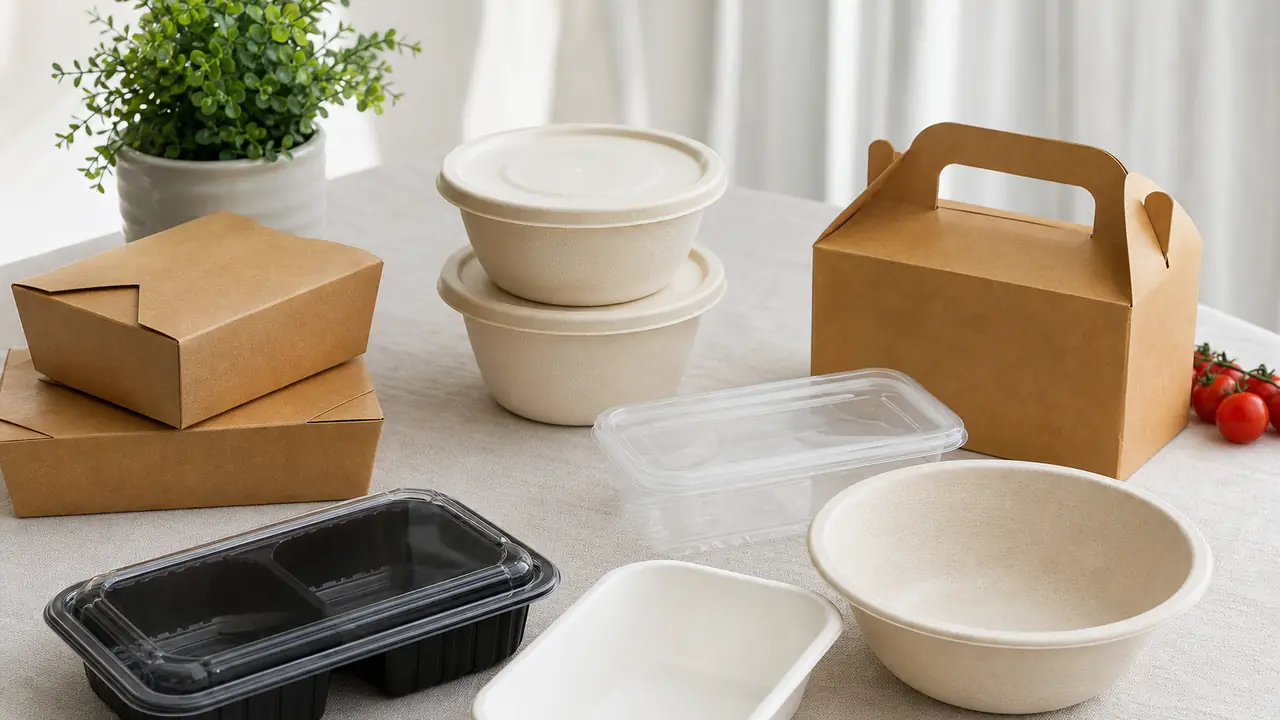
Start from the material, then the claim
Sustainability in containers is not one material. It may mean lower plastic content in a PP box, a paper box instead of a plastic one, molded fiber, a starch blend, reusable storage instead of single use, or recycled content. Each route has its own trade-offs in heat, grease, clarity and cost, and each supports only specific claims. The safe order is to choose the material for the use, then collect the evidence, and only then write the claim. Unqualified words such as green or sustainable on their own are hard to support and are avoided on Lidwell specs.
FTC Green Guides in the US
The FTC Green Guides, 16 CFR part 260, set out how environmental marketing claims are read by consumers and what evidence they need. Under 260.8, an unqualified degradable or biodegradable claim needs competent evidence that the entire item will break down and return to nature within a reasonably short time after customary disposal; items that go to landfill, incineration or recycling and will not break down within one year are treated as deceptive when sold with an unqualified claim. Under 260.7, a compostable claim must be qualified where municipal or institutional composting facilities are not available to a substantial majority of consumers where the item is sold. In practice, both claims need careful qualification on any US pack.
Compostable certification: EN 13432 and ASTM D6400
Compostable wording is used only when the exact item, in its final thickness and color, is certified to EN 13432 in Europe or ASTM D6400 in the US, and the certificate number is on file. Both standards test industrial composting conditions; home composting is a separate question. The starch-based containers in the Lidwell range are listed by the partner plant as corn starch in a PP thermoforming catalogue, so they are most likely starch blended with PP and are described as lower plastic content or starch-based, not as compostable. See starch-based food containers.
EU Single-Use Plastics Directive
Directive (EU) 2019/904 has banned single-use plastic cutlery, plates, straws and expanded polystyrene food containers and cups from the EU market since 3 July 2021. Chemically modified bio-based plastics such as PLA still count as plastic under the directive, so a PLA spoon is not a compliant substitute. For EU buyers the desk offers wooden or other compliant cutlery routes. See disposable cutlery sets and the note on the SUPD.
PFAS rules for paper and fiber
Paper and plant fiber packaging can use PFAS-based treatments for grease resistance. California AB 1200 has prohibited intentionally added PFAS in plant fiber food packaging since 1 January 2023, using a 100 ppm total organic fluorine screening level. At least 13 states restrict PFAS in food packaging, including New York, California, Washington, Colorado, Connecticut, Maryland, Minnesota, Hawaii, Oregon, Rhode Island, Vermont, Maine and New Hampshire; Vermont, Connecticut and Minnesota cover all food packaging materials. Scope differs by state and changes, so confirm the current text with counsel. For molded fiber and bagasse, the desk requests a supplier statement on intentionally added PFAS and a total fluorine test where the market requires it.
Claim wording the desk uses
| Route | Evidence needed | Wording used | Wording avoided |
|---|---|---|---|
| Starch-PP blend | Blend ratio from the plant | Starch-based, lower plastic content | Biodegradable, compostable |
| Certified compostable item | EN 13432 or ASTM D6400 certificate for the item | Compostable in industrial facilities where certified to EN 13432, certificate number | Unqualified compostable |
| Molded fiber or bagasse | PFAS statement, fluorine test where required | Plant fiber, no intentionally added PFAS per supplier declaration | Plastic-free unless verified for all parts |
| PP container, lighter wall | Gram weight comparison | Uses less plastic than the previous model, stated weight | Unqualified green |
| Recycled content | Content declaration and food contact status | Contains a stated percentage of recycled content, per declaration | Recyclable without qualification |
| Reusable storage | Durability checks per order | Designed for reuse | Absolute durability claims |
Recyclable claims and resin codes
A resin identification code is not a recyclable claim. Under the Green Guides, recyclable wording needs qualification where collection is not available to a substantial majority of consumers. Paper boxes with plastic windows or foil linings mix materials and may need separation instructions. See the material guide for material choices and the note on biodegradable claims.
Planning a lower-impact range
Send the current range, the markets and the claims you want to make through the quote form. The desk proposes material routes, collects the certificates and declarations issued to partner plants or your brand, and leaves final wording for review by your counsel.