
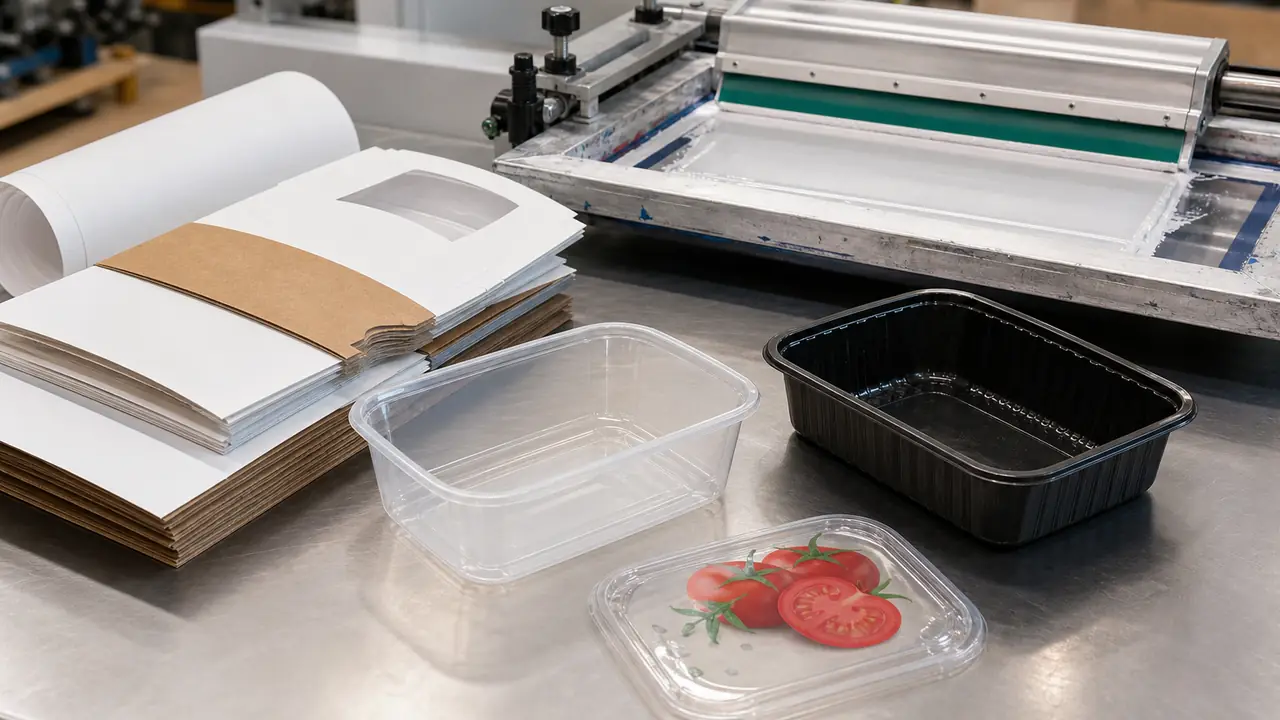
Four ways to put a brand on a container
A container carries a brand in one of four ways. It can be printed directly on the lid or the cup wall. It can carry a printed paper sleeve, band or label. It can have the brand molded into the part itself, as an embossed or debossed logo, or with an in-mold label fused into the wall. Or the brand can sit on the packaging around it: a printed paper box, a gift box or a retail card. Each route has its own quantity threshold, lead time, durability and food contact considerations, and many programs combine two of them: a plain PP base with a printed sleeve, or an embossed storage box in a printed retail carton.
The routes compared
| Route | Where it is used | Strengths | Watch points |
|---|---|---|---|
| Offset print on lids | PP and PET lids, cups | Full color, sharp at small sizes | Adhesion, rub resistance, ink on the outer face only |
| Printed sleeve or band | Takeout boxes, meal prep sets | Low entry quantity, no change to the container | Fit on the box, sleeve count per carton |
| In-mold label | Injection molded tubs, cups, storage boxes | Durable, photo-quality, part of the wall | Label material, mold and robot setup, recycling notes |
| Embossing or debossing | Lids, storage boxes, organizers | No ink, permanent, subtle | Needs a mold insert, low contrast on clear parts |
| Printed paper box | Gift, bakery and retail boxes | Large print area, finishes | Board grade, crease cracking, color across lots |
Offset print on lids and sleeves
Dry offset printing transfers ink from plates to a blanket and then onto the curved or flat surface of a lid or cup. It suits logos and simple artwork in a limited number of colors on PP and PET. The plant controls surface treatment before printing so the ink bonds to polyolefin, ink film, drying or curing, and registration between colors. Print sits on the outer face, away from the food contact side, and ink and varnish are covered in the supplier declaration where the market requires it. For takeout boxes, a printed paper sleeve or band is often the faster route: the container stays a stock model, and only the sleeve is printed. Printed lids or sleeves typically start at 10,000-50,000 pieces per item, confirmed in writing for each program.
In-mold labels and embossing
In-mold labeling places a pre-printed label in the open mold, usually by robot, before the plastic is injected. The melt fuses with the label so it becomes part of the wall: it does not peel or scuff like a sticker and can carry photographic print. It suits injection molded tubs, cups and storage boxes, and adds label stock, label handling and a setup on the mold. Embossing and debossing put a logo or text into the mold steel, often on an interchangeable insert, so every part carries it at no extra cost per piece. On clear parts the effect is subtle; on colored PP it is clear and permanent. Both routes are covered in injection molding and the note on in-mold labeling.
Paper boxes from Longgang
Printed paper boxes, bakery boxes with windows and folding gift boxes are sourced through the Longgang cluster near Wenzhou, which received the title China Printing City in 2002. Xinhua reported in 2024 that the cluster's printing and packaging output had grown from more than 11 billion yuan to about 20 billion yuan, over 60 percent of Longgang's GDP, and local reporting counted 894 licensed printers and more than 220 plants above the statutory size threshold. Boxes are printed on white card, kraft or white card with a foil lining, then die-cut, creased and folded or glued; clear windows are PET or PVC because they are not heated and do not hold hot food. Printed paper boxes typically start at 5,000-10,000 per design. See folding gift boxes.
Artwork, proofs and checks
- Artwork with dielines or lid outlines, spot color references and the copy for each market.
- Digital proof checked for size, position, legal marks and the resin code.
- Print sample in 7-15 working days, approved as part of the golden sample.
- Lot checks: color against the approved sample, registration, print adhesion and rub resistance, and for paper boxes burst and edge crush where agreed.
Print wording follows the documents: material, resin code and microwave use per supplier marking, with no claims the declarations do not support. Printed or custom orders typically run 15-30 days after approval, confirmed in writing on MOQ and lead time. Send artwork and quantities through the quote form.