
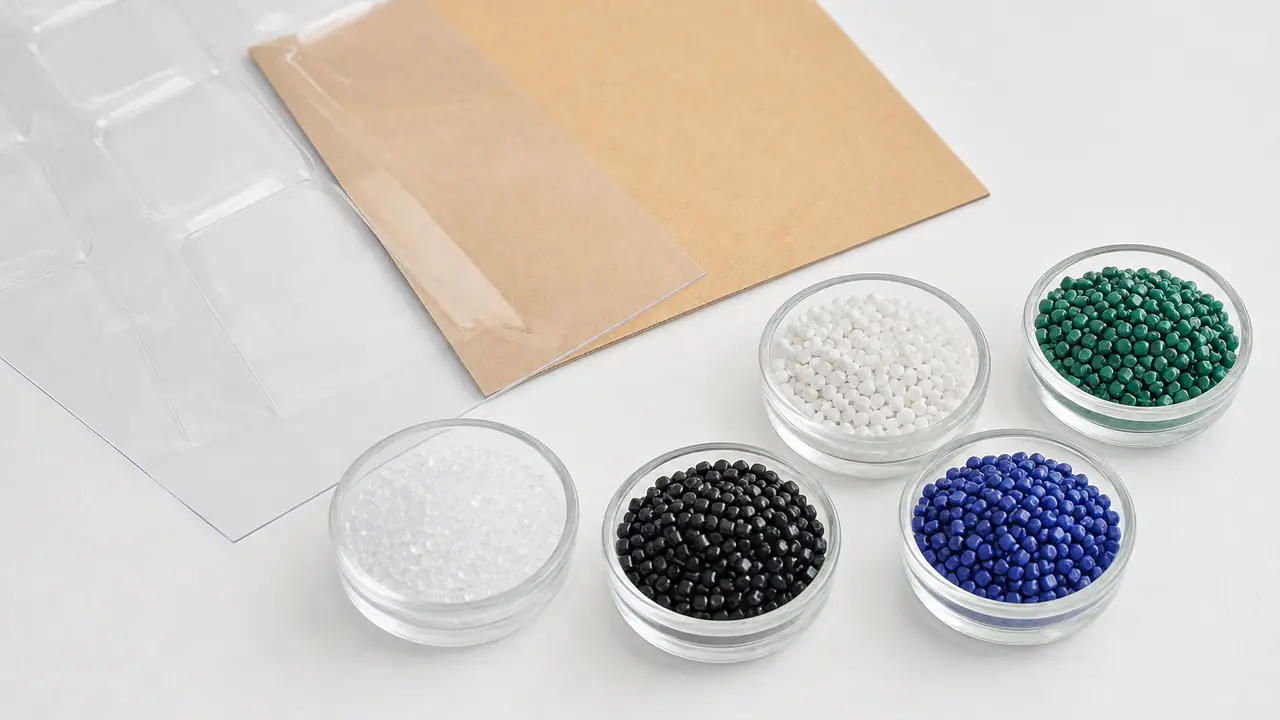
The short answer
If the food is hot, reheated or microwaved, use PP. If the food is cold and sells on how it looks, PET is usually the better choice. Almost every confusion between the two materials comes from a range that mixes hot and cold uses in one product family, or from a lid in one material on a base in the other. The rest of this note explains the reasons and shows how to plan a range that uses each plastic where it performs.
Two plastics, two personalities
PET, polyethylene terephthalate, carries resin identification code 1. It is the material of clear drink cups, clamshells and fruit punnets. It is stiff, glossy and close to glass clear, which is why it dominates cold display. It is not used for hot food or the microwave in this range.
PP, polypropylene, carries code 5. It is translucent rather than clear and slightly softer, but it keeps its shape with hot food. The FDA olefin rule, 21 CFR 177.1520, describes PP with a melting range of 160-180 degrees C; that is a resin property, and the heat use of a finished container is shown by testing and supplier marking, not by the resin number. See PP plastic for food containers for the detail.
Side by side
| Property | PET | PP |
|---|---|---|
| Resin code | 1 | 5 |
| Clarity | Glass-like, glossy | Translucent, slight haze |
| Hot food and reheating | Not used | Used, per supplier marking |
| Microwave | No | Per marking, lid removed or vented where marked |
| Feel | Stiff, crisp | Flexible, tougher at the hinge |
| Typical items | Cold cups, fruit clamshells, salad bowls, fridge bins | Takeout boxes, soup cups, meal prep, divided trays |
| US rule | FDA 21 CFR 174-178, polyester sections | FDA 21 CFR 177.1520 |
| EU rule | Regulation (EU) 10/2011 | Regulation (EU) 10/2011 |
Where PET belongs
PET is the right choice for food that is chilled, displayed and eaten cold. Supermarket fruit, cut melon, salads, sandwiches and cold desserts all sell through the lid, and a clear PET clamshell shows the product better than any PP box can. Partner plant literature includes a PET cold drink cup and bowl series on a 117 mm rim, with bowls from 230 to 700 ml, packed around 1,000 pieces per carton for cups. That series works as a matching cold line next to a PP hot range.
PET is also common in home organization. Clear fridge bins sized for a standard shelf, typically about 315x157x89 mm in public listings, are made in PET or PP; PET wins where shoppers want to see the contents at a glance. Because the bins are not heated, the material choice is about clarity and stiffness, not heat range.
Where PP belongs
PP carries everything that is hot or reheated. The rectangular takeout box, the round soup tub, the rice bowl and the meal prep tray are PP in almost every serious program. A partner plant in Huizhou makes a 750 ml box at 170x115x51 mm and 19.6 g, and export soup cups from a Guangdong plant run from 350 ml to 950 ml with the code 5 and a microwave marking molded in the base. PP also survives repeated flexing better than PET, so integrated hinges and snap lids on reusable boxes are usually PP.
The fruit box question
Divided fruit and snack boxes sit exactly on the line between the two materials. A clear PP three-compartment tray from a partner plant measures 218x188x42 mm at 1,000 ml, with a Microwave safe marking pressed into the lid by the supplier. A PET fruit clamshell of similar size would look clearer on a supermarket shelf. The rule the desk uses:
- If the box is only chilled and displayed, choose PET for clarity.
- If the box is reheated, reused or used for cooked food, choose PP.
- If the use is unclear, choose PP and accept a little less clarity.
The divided fruit containers page has the full series.
Mixed sets: a PET lid on a PP base
Some programs put a clear PET lid on a PP base to get a better display. That works for cold use and causes trouble when the set reaches a microwave. The lid will deform, and a consumer reading code 5 on the base may assume the whole set is microwavable. If you use a mixed set, mark each part with its own resin code, print the cold-only instruction on the lid or sleeve, and keep the set out of any hot food program. The lids and seals page explains fit across materials.
Recycling and claims
Both plastics carry a resin identification code, PET 1 and PP 5, molded in the base. The code identifies the resin; it is not a claim that the container will be recycled in a given area. Recycled-content versions exist for both, rPET and PCR PP, but food contact use of recycled resin needs its own documentation; see recycled content in containers. Avoid unqualified green wording for either material.
Cold, stiffness and cracking
The two plastics fail in different ways, and the test plan should follow the failure. PET is stiff, so a thin PET clamshell can crack at the hinge or the lock tab when it is opened many times or crushed in a carton. PP is tougher at the hinge but becomes more brittle in the freezer, so frozen meal lids can split at the corners. For PET lines the desk agrees a repeated opening check and a carton stacking check; for PP lines that go into the freezer, a check at -18 degrees C followed by opening and closing the lid. The numbers of cycles and the pass rules are stated working defaults, confirmed per order.
Documents and ordering
For both materials, buyers in the United States ask for a supplier declaration to the relevant FDA 21 CFR sections, and buyers in the European Union ask for a declaration of compliance to Regulation 1935/2004 and Regulation (EU) 10/2011 with a migration report on the finished item. For China, GB 4806.7-2023 applies to both. Documents are issued to the partner plant or your brand per project and verified by the desk. Typical starting points are a few mixed cartons from stock molds and 10,000-50,000 pieces per item for printing, confirmed in writing per program on MOQ and lead time. Send the foods and their temperatures through the quote form and the desk splits the range between PET and PP for you.