
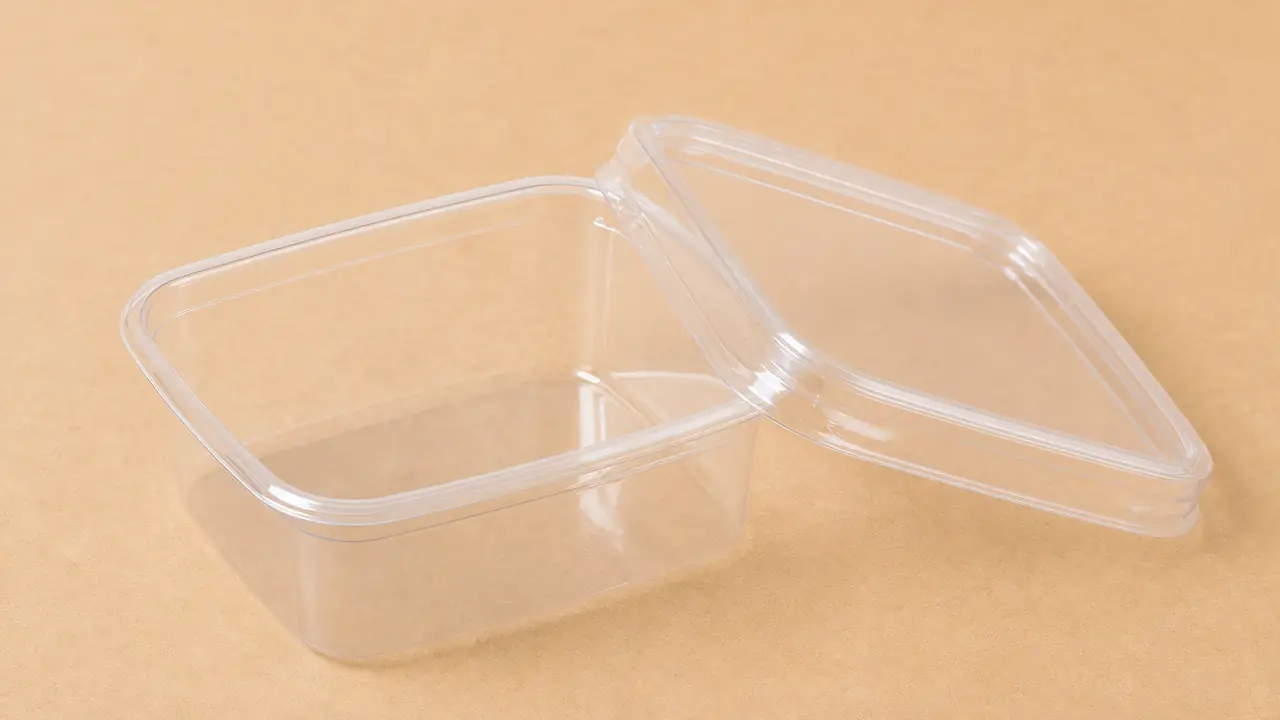
Nesting and stacking are different things
Nesting is how empty containers sit inside each other. A tapered base drops into the one below it, and only the nesting step, the height each extra piece adds, takes up space. Stacking is how closed or filled containers sit on top of each other: lid to base, without sliding or crushing. A design can be good at one and poor at the other. A deep, steeply tapered tub nests very tightly but may stack poorly when filled if the lid is domed; a straight-walled storage box stacks well but barely nests at all.
For single-use takeout, nesting is what matters most to cost, and stacking matters in the kitchen and the bag. For reusable storage boxes and organizers, stacking is the selling point, and nesting or folding decides how they ship.
Why nesting drives freight cost
Containers ship mostly air. Sea freight for light, bulky goods is charged by volume, so the number of pieces that fit in a carton, and the number of cartons in a container, decide the freight cost per piece far more than the weight. A shallow nesting step means more pieces per sleeve, more per carton and more per container. Partner plants typically pack thermoformed PP boxes, soup cups and starch-based bowls 200-300 sets per carton, injection molded cups 300-500 per carton, PET cold cups around 1,000 per carton and small sauce cups 2,000-5,000 per carton.
| Item | Process | Typical per carton |
|---|---|---|
| PP takeout boxes, soup cups | Thermoformed | 200-300 sets |
| Starch-based bowls and boxes | Formed | 200-300 sets |
| PP cups | Injection molded | 300-500 pieces |
| PET cold cups | Thermoformed | About 1,000 pieces |
| Sauce and condiment cups | Thermoformed | 2,000-5,000 pieces |
A set usually means a base and a lid. Lids nest separately, often more tightly than bases, so the packing count depends on how base and lid are packed. When comparing quotes, compare carton size and count together, not the count alone. The packaging and palletizing page covers carton specs and pallet patterns.
What sets the nesting step
- Draft angle. The taper of the side walls. More taper means a smaller nesting step and easier release, but less usable volume for a given footprint.
- Stacking lugs and ribs. Small features molded into the wall that stop pieces jamming together. They add a little height but prevent sticking.
- Rim profile. A wide flange or rolled rim sets how far one piece drops into the next.
- Wall thickness. Thicker walls add height per piece; thin thermoformed walls nest tighter than injection molded ones.
Denesting: getting them apart again
A tight nest is only useful if a kitchen worker or a filling machine can separate one piece quickly. Containers that stick together slow the line and lead to complaints, and the cause is usually a nesting step that is too shallow, no anti-stick lugs, static, or a slight vacuum between smooth walls. Separation is worth a simple check on the sample: take a sleeve and peel off pieces one by one. See nested containers sticking for causes and fixes.
Stacking filled containers
Once filled and closed, containers need to stack in the kitchen pass, the delivery bag and the customer's fridge. Good stacking comes from a flat or recessed lid that locates the base above it, a base footprint that sits inside the lid rim, and walls and a lid stiff enough not to buckle under the weight above. Rectangular boxes on a shared footprint stack in mixed depths, which is one reason ranges like the partner series at 170x115 mm in 500 to 1,000 ml are popular with delivery kitchens. Domed lids give salads room but stack less securely, so they are often limited to the top of a bag.
Storage boxes and organizers
For home storage, stackability is the product. Fridge bins, pantry boxes, shoe boxes and clothes boxes are sold on how well they stack and how stable the stack is. The features that matter are interlocking lids or base recesses, walls that do not bow under load, and front access, for example drop-front doors on shoe boxes so the bottom box can be opened without unstacking. A folding transparent shoe box from public listings measures 330x230x140 mm, around 10.6 L, and is designed to stack in columns.
Because rigid storage boxes do not nest well, many lines are designed to fold or to nest without lids. Collapsible crates are the extreme case: a 30 L folding box at about 440x330x230 mm folds to around 47 mm high, and folded heights of 4-9 cm are common across the category. That changes the freight per piece dramatically. See collapsible storage boxes and stackable storage load.
Cartons, pallets and the shelf
Containers inside the carton protect each other when they are well nested, but cartons themselves need to survive stacking in a container and a warehouse. Carton strength, the number of layers on a pallet and the way sleeves are oriented are agreed per order and checked in a carton stacking test. At the retail end, nesting and stacking also decide how many units fit on a shelf facing and whether a display stays tidy after customers pick from it.
What to agree with the plant
- Pieces per sleeve, sleeves per carton, carton size and gross weight, for base and lid.
- Nesting step and a separation check on the sample.
- Filled stacking check with the agreed load and duration, where relevant.
- Carton stacking and pallet pattern for the shipping route.
- Folded height and stacking load for collapsible and rigid storage lines.
Sea freight to the US West Coast typically takes 15-25 days and to Europe 30-45 days, and over that time a poorly nested or weak carton is the most common source of damage. Typical starting quantities run from a few mixed cartons from stock molds to 10,000-50,000 pieces per item for printed lids, confirmed in writing per program; see MOQ and lead time and logistics and shipping. Send your list through the quote form and the desk returns packing data with every model.