
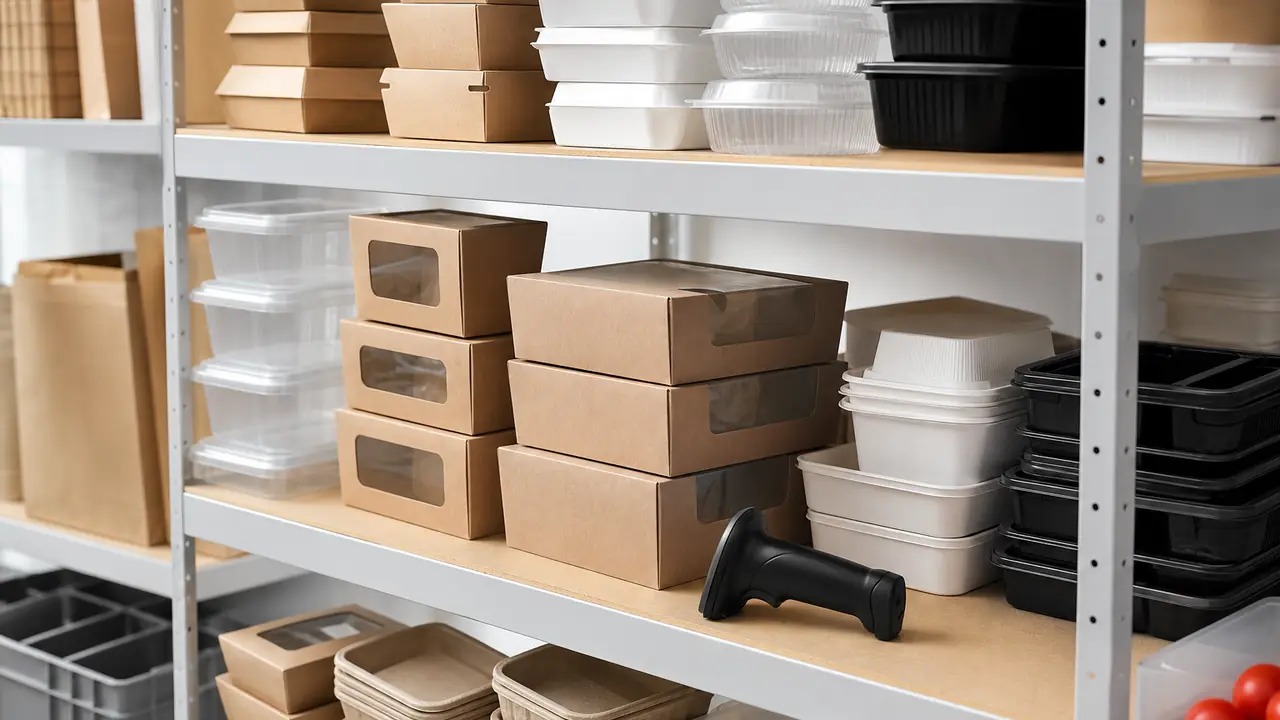
What a shelf asks of a storage box
A food container sells on a spec sheet to a kitchen manager. A storage box sells on a shelf to a person who has thirty seconds and a picture of their wardrobe in their head. That changes what matters. Clarity, visible size and a clear statement of what fits come first; the exact gram weight barely matters. The retail pack has to show the product, protect it from scratches and dust, carry a barcode that scans, and fit the fixture the retailer already has.
Retailers also care about what happens behind the shelf: how the outer cartons arrive, how quickly staff can fill a bay and how many units are damaged before sale. A storage range that looks good in a photo but arrives scratched in brown cartons with no case labels costs the store more than it earns.
Display formats by line
| Line | Reference size | Usual material | Common display format |
|---|---|---|---|
| Collapsible storage box | About 440x330x230 mm, 30 L, folds to about 47 mm | PP | Folded with a wrap label, one open unit on display |
| Shoe box, clear folding | 330x230x140 mm, about 10.6 L | PP, PET | Flat-packed sets, assembled unit on display |
| Cosmetic organizer, drawer type | About 318x213x92 mm | PS, acrylic, PET | Boxed with a window or a clear protective film |
| Desk organizer tray | About 359x232x52 mm, 7 compartments | PS, PP, acrylic | Sleeve or header card, stacked on shelf |
| Fridge organizer bins | About 315x157x89 mm | PET, PP | Multi-pack in a printed carton or sleeve |
These are public listing reference sizes for the category; partner plant drawings are confirmed per project.
Show the product, protect the surface
Clear PS, acrylic and PET organizers scratch in transit and on the shelf. A clear item with fine scuffs looks second-hand, even when it is new. Three measures cover most cases:
- Protective film on flat clear faces, peeled by the end customer.
- Separation between nested or stacked units: a sheet of paper or a poly bag between each piece so faces do not rub.
- A display window on boxed items. A clear window on a printed carton can be PET or PVC, which is acceptable here because the window is not heated and does not touch food.
Small clear PVC soft boxes are also used as the retail pack for small organizer items. Static is the other surface problem: clear plastic attracts dust on an open shelf, and packing in a closed sleeve or bag keeps the item clean until purchase. The causes and fixes are set out in scratches and scuffs on clear boxes.
Make size and fit readable
Most customers do not carry a tape measure. A retail pack should say what fits in words, not only in millimetres: shoes up to about 31 cm long and 13 cm high for the reference clear shoe box; fits a standard fridge shelf for bins about 10-12.5 inches long and 3-4 inches high. For collapsible boxes, state the open and folded size, and note that the inner size is typically about 2-4 cm smaller than the outer. Put the key size on the face of the pack that faces the aisle, and repeat it on the end panel for shelves where packs are stacked side-on.
Labels, barcodes and case marks
Every retail unit needs a scannable barcode in the retailer's required format and position, and every outer carton needs case marks: item number, description, quantity, carton count and gross weight. Retailers often specify label positions and quiet zones in their vendor manual. Send the manual to the desk with the brief, because label position is easiest to set before artwork is printed and hardest to fix at the warehouse. Barcode and case label checks are part of the pre-shipment inspection. The label and print options are covered in printing and labeling.
Plan the pack for the fixture
Shelf depth, bay height and peg or shelf display decide the pack. Measure the fixture first and work back:
- Note shelf depth, shelf spacing and whether items hang or stand.
- Choose the display format for each line: folded, flat-packed, boxed or sleeved.
- Set the retail pack size so a whole number of units fills the shelf depth.
- Set the inner and outer carton counts so a carton refills one facing or one bay.
- Add barcode and case label positions from the vendor manual.
- Agree a carton compression check, because storage packs are often stacked high in back rooms.
Collapsible and flat-packed items have a strong advantage here: a 30 L folding box that ships at about 47 mm high takes a fraction of the shelf and freight space of a rigid box. Rigid organizers need more careful carton design so they do not crush; see packaging and palletizing.
Materials honesty on the pack
Retail packs carry claims that buyers will be held to. Name the material of each part, for example PP box with PP lid, or acrylic organizer with PS drawers. Where storage items are meant for food, such as fridge bins, keep to the wording in the supplier declaration. Avoid unqualified green wording; recycled content or recyclability statements need evidence and should follow the FTC Green Guides for the US. The resin identification code on the item, such as 5 for PP or 1 for PET, should match the pack.
An illustrative retail program
An illustrative home goods retailer planned a 12-item organizer bay: drawer organizers, desk trays and folding boxes. The first samples were packed in plain poly bags, and the clear drawer fronts arrived scuffed after a transit test. The final specification added protective film on the drawer fronts, a printed sleeve with a size callout, and inner cartons of six units sized to one shelf facing. Case labels were set to the retailer's manual. The program view for retail buyers is on retailers.
Typical starting quantities for storage and organizer lines are about 1,000-3,000 pieces per item, depending on size and mold, and 5,000-10,000 per design for printed paper packs, confirmed in writing per program. Samples from stock take 3-7 working days and printed samples 7-15 working days. See MOQ and lead time, or send the fixture plan and the item list through the quote form.