
Why start from the menu
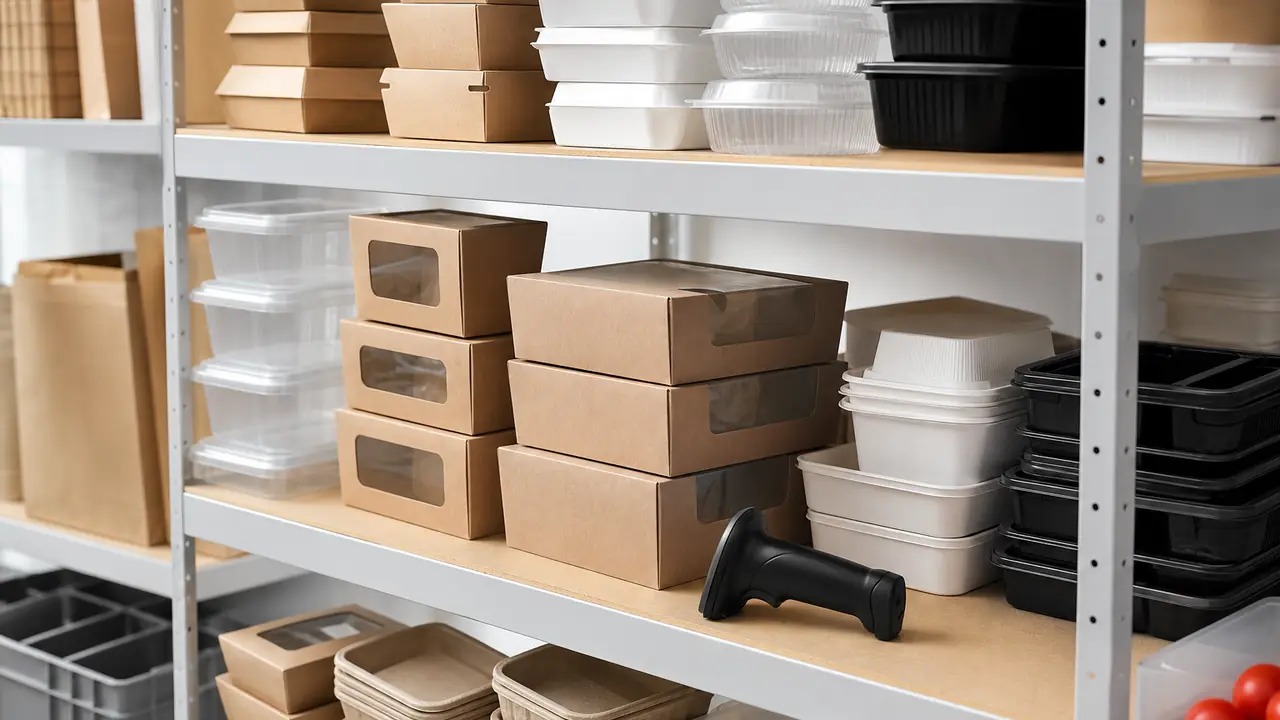
Restaurant groups often inherit their packaging: whatever the first supplier had in stock, plus a new item each time a dish was added. After a few years the stock room holds a dozen container types, several lids that only fit one base, and a cutlery kit nobody chose on purpose. A packaging program puts that right by going back to the menu and asking, for each dish, what the container has to do between the pass and the customer's table.
The answer has four parts: temperature, liquid content, portion and presentation. Hot, saucy dishes need PP and a round or well-sealed rectangular container. Cold salads and fruit can use clear PET. Fried food needs venting so it does not steam. Desserts and bakery suit paper boxes. Once each dish is assigned a type, the sizes follow from the portions.
Mapping dishes to containers
| Menu category | Container type | Material | Reference model |
|---|---|---|---|
| Rice and curry mains | Rectangular box, one or two compartments | PP base and lid | 750 ml, 170x115x51 mm, 19.6 g |
| Roast meats, family portions | Large rectangular box | PP | 1,500 ml, 217x149x71 mm, 39 g |
| Soups and noodles | Round soup cup or tub | PP | 350-950 ml soup cups; tubs to 2,000 ml |
| Rice bowls, poke, salads | Bowl with lid | PP, or starch-PP blend | 800 ml bowl, 175x125x56 mm |
| Set meals, bento | Divided tray | PP | Three compartments, 218x188x42 mm, 1,000 ml |
| Desserts and bakery | Paper box with window | Kraft or white card, PET or PVC window | 190x85x35 mm |
| Pizza | Paper pizza box | Corrugated or card | 6-12 inch, 20x20x4.5 to 32x32x4.5 cm |
Reference models come from partner plants; sizes are measured by hand at the plant and confirmed on the physical sample.
Temperature and reheating
Hot food and reheating are the reason most restaurant containers are PP. PP holds its shape with hot rice and soup and tolerates the microwave where the supplier marking allows it, usually with the lid removed or vented. One partner plant's literature states a heat range for its injection molded PP cups; claims like that are supplier statements and are checked in a heating test on the sample, not taken at face value. Clear PET lids look better on cold dishes but are used cold only. PVC is not used for food containers in this range; it appears only as a window on paper boxes that are not heated.
Starch-based bowls and boxes are an option where a restaurant wants lower plastic content and a different look. Partner plant literature describes them as corn starch, filed under PP thermoforming, so the desk treats them as a starch and PP blend and describes them that way, without biodegradable or compostable wording unless a named certification applies. See starch-based food containers.
Liquids, sauces and delivery
Delivery adds movement. A soup cup that is fine on a counter may spill on a scooter. The container plan should name which dishes travel with liquid and assign them round cups or containers with a tight rim fit, then test those items in a tilt and inversion test agreed per order. Results are described as leak-resistant in that test, confirmed per order, never as an absolute. Sauce cups in the 2,000-5,000 pieces per carton class keep dressings separate and reduce spills in the main container.
Cutlery, bags and paper by market
The rest of the program depends on where the restaurant trades:
- European Union. The Single-Use Plastics Directive 2019/904 has banned single-use plastic cutlery and plates since 3 July 2021, and PLA counts as plastic. EU restaurant programs use wooden cutlery kits or other compliant routes.
- United States. Plastic items need a supplier declaration to FDA 21 CFR, with 21 CFR 177.1520 for PP. Paper and plant fibre packaging falls under state PFAS rules; California AB 1200 has applied since 1 January 2023 and at least 13 states restrict PFAS in food packaging in some form. Some local rules also govern when cutlery may be offered; confirm locally.
- China and other markets. GB 4806.7-2023 covers plastics and GB 4806.8 covers paper; other markets have their own rules, confirmed with your counsel.
The disposable cutlery sets page sets out PP and wooden kit options. The full document list per market is in the food contact compliance guide.
Branding without exploding the stock list
A restaurant brand wants its name on the packaging, but printing every item multiplies minimum quantities. The usual answer is to print where the customer looks: the lid of the main container footprint, the paper bag and the dessert box. A printed lid on a shared 170x115 mm footprint brands four depths with one printed item. Printed lids and sleeves typically start at 10,000-50,000 pieces per item and printed paper boxes at 5,000-10,000 per design, confirmed in writing per program.
Stock, reorders and multi-site supply
Restaurant groups with several sites or a central kitchen need continuity more than novelty. Three habits keep a program stable:
- Keep the item list short and give each item a code used on every order.
- Hold a golden sample of each item and inspect each lot against it before shipment.
- Set a reorder point per item from weekly use and the typical lead time: 7-15 days from stock, 15-30 days for printed items, plus ocean transit of 15-25 days to the US West Coast or 30-45 days to Europe.
The desk consolidates items from different partner plants, such as PP boxes from Guangdong and paper boxes from Longgang near Wenzhou, into one shipment with one document file per market. More on reorder timing is in inventory and reorder planning.
An illustrative program
An illustrative group of casual dining restaurants started with 14 packaging items. Mapping the menu reduced it to seven: four PP boxes on one footprint with a printed lid, one large box, one PP soup cup and one kraft dessert box with a PET window. EU sites switched to wooden cutlery kits; US sites asked for PFAS statements on the paper box. Reorders now go out monthly as one consolidated shipment. The program view for this buyer is on foodservice and project buyers.
Send the menu, the markets and estimated weekly use through the quote form; typical quantities and lead times are on MOQ and lead time.