
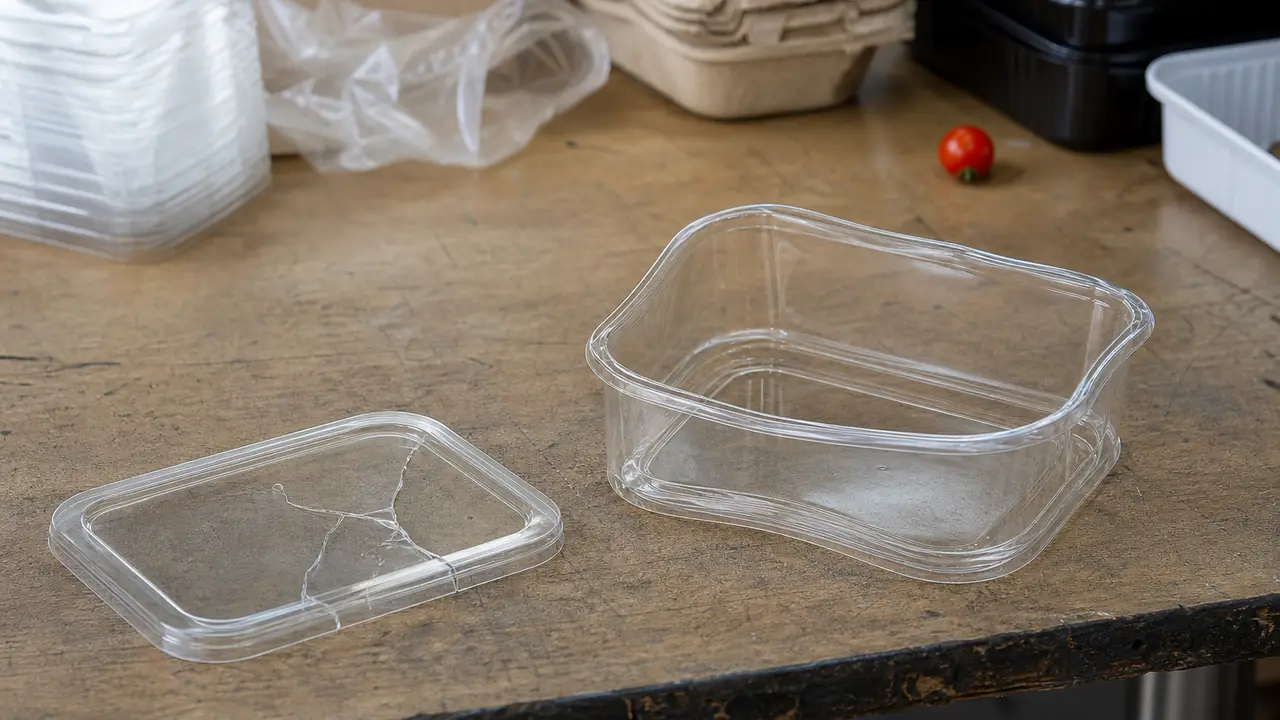
The pattern behind the complaint
The typical story runs like this. The golden sample fitted well. The pre-shipment inspection checked lid fit on random cartons and passed. Weeks later the buyer reports that lids are too tight, too loose or will not close at one corner. Nobody did anything wrong on purpose, but the plastic kept changing after it left the mold, the cartons spent weeks in conditions nobody measured, and lids and bases from different days met for the first time in the buyer's store room.
The fix is to plan for these changes: give the parts time to settle before inspection, protect them in transit, and keep lids and bases matched by batch.
Post-mold shrinkage
Plastics shrink as they cool, and part of that shrinkage happens after the part leaves the mold. PP is a semi-crystalline resin, and its structure keeps settling for some time after molding, so dimensions can move slightly over the following days. A lid and base checked within hours of molding can fit well and then drift apart if one shrinks more than the other. Thick and thin parts settle at different rates, and lids are usually thinner than bases.
Plants that run lids and bases regularly know their own settling time. The desk asks for lid fit to be checked on parts that have rested, not straight from the machine, and for the golden sample to be kept and rechecked alongside production. The injection molding and thermoforming pages explain how cooling and cycle time affect dimensions.
Heat and cold in transit
A container load spends weeks at sea: typically 15-25 days to the US West Coast and 30-45 days to Europe, plus time in ports and warehouses. The temperature inside a steel container can swing widely between day and night and between climate zones. Heat softens thin-wall parts slightly, and under pressure from the cartons above, rims can take on a small permanent set. Cold makes PP stiffer, so lids that are slightly tight become hard to close and may crack at the rim when forced.
Parts that arrive cold should be allowed to reach room temperature before anyone judges lid fit. Many complaints disappear once the cartons have stood indoors for a day. If they do not, the problem is real and the batch needs checking.
Stack pressure and nesting
Thin-wall containers are nested in sleeves and packed tightly to keep the carton count down; partner plants pack PP takeout boxes, soup cups and starch-based bowls at 200-300 sets per carton. Nesting is efficient, but a tall stack under heavy cartons can press bases slightly oval or flatten lid rims. A round rim that has become slightly oval will not seat on a round base. Rectangular lids pressed flat lose the spring that holds them on.
Carton strength, stack height and how lids and bases are packed all matter here. Lids packed separately from bases, in sleeves of a sensible height, keep their shape better than lids forced onto bases for shipping. See packaging and palletizing for carton and pallet options.
Mixed batches and molds
The most common real cause is a lid from one production run meeting a base from another. A larger order may run on two machines, two mold cavities or even two partner plants. Each is within tolerance on its own, but the combination of a large lid and a small base, or the reverse, falls outside the fit window. Shared lids across several depths make this more likely, because the depths may be molded on different days.
Batch matching solves most of this: lids and bases marked with the same production code, shipped and used together, and a fit check across cavities at inspection rather than on a single carton.
Storage at the buyer's end
The journey does not end at the port. Containers often sit for months in a distributor's warehouse, a restaurant's back room or a fulfilment center before they are used. A warehouse roof in summer, a storeroom next to a kitchen or a pallet left in the sun on a loading dock can repeat the effects of a hot transit. Store cartons flat, away from heat sources and direct sun, and do not stack other heavy goods on top of packaging cartons. Use older stock first, and keep lid and base cartons from the same production code together on the same pallet so staff do not mix them when they open a new carton. These are small habits, but they protect a fit that the plant worked to set.
Diagnosis table
| Symptom | Likely cause | Check | Fix |
|---|---|---|---|
| Lids too tight on arrival, cold weather | PP stiff when cold | Rest cartons indoors, recheck | Allow parts to warm before judging fit |
| Lids too tight after rest | Different shrinkage of lid and base | Measure rim against golden sample | Fit check on rested parts at the plant |
| Round lids will not seat | Bases pressed oval in tall stacks | Check bottom cartons for distortion | Lower stacks, stronger cartons |
| Lids loose and flat | Rims flattened by load or heat | Compare lid profile with sample | Pack lids in separate sleeves, load plan |
| Fit varies carton to carton | Lids and bases from different runs | Read production codes on cartons | Batch matching and cross-cavity fit check |
What to write into the order
- Record lid opening force and rim size on the golden sample, and keep one at the plant and one with the buyer.
- Ask for lid fit checks on parts that have rested after molding, not straight from the machine.
- Require production codes on lid and base cartons, and ship matched batches together.
- Agree carton grade, sleeve height and stack limits for the container load.
- At inspection, test lid fit across several cartons, cavities and depths, not one carton only.
- On arrival, let cold cartons reach room temperature before judging fit.
Test counts and pass criteria are a stated working default and are confirmed per order. The quality control page shows where these checks sit in the program.
Next step
If a shipment has arrived with fit problems, keep samples from several cartons and send photos with the codes through the quote form. For new programs, lead times and starting quantities are on MOQ and lead time, and transit options on logistics and shipping.