
Three forms of one plastic
Polystyrene carries resin identification code 6 and shows up in three quite different forms. Buyers often treat them as one material, and the rules treat them differently, so it helps to separate them first.
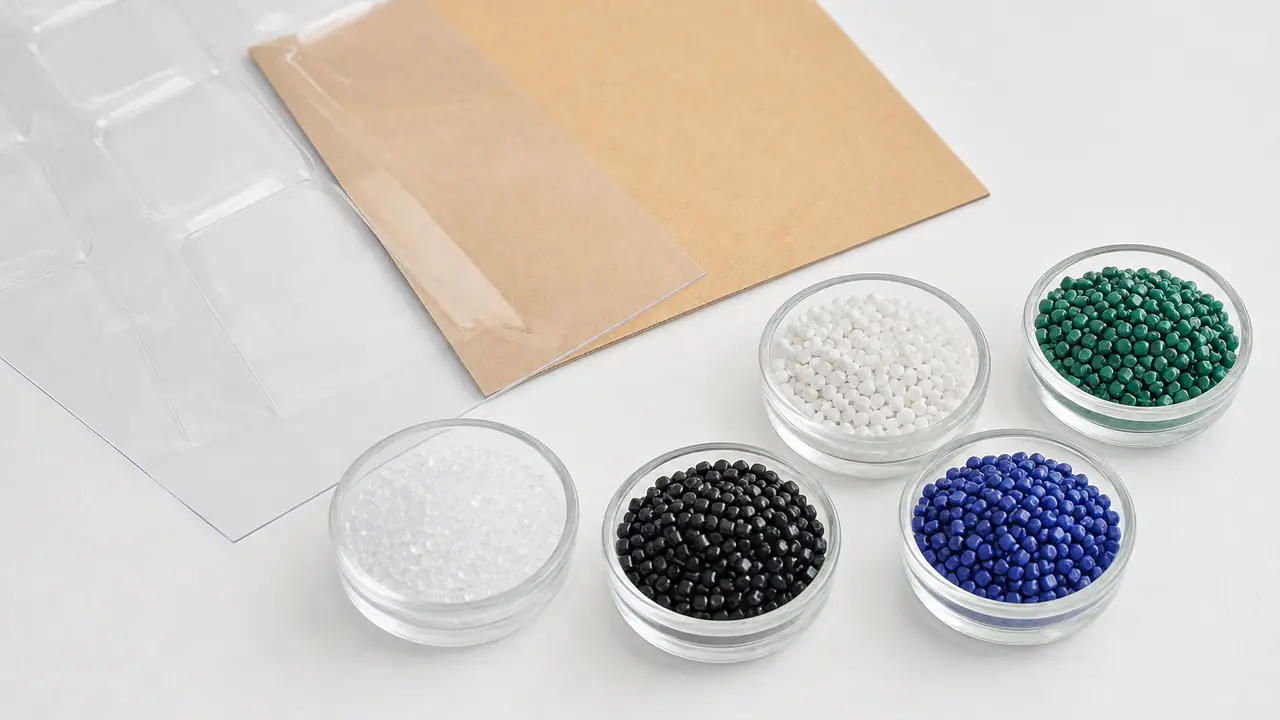
- General purpose PS (GPPS). Glass clear, stiff and brittle. Used for clear cups, lids, display boxes and many clear organizers.
- High impact PS (HIPS). PS modified with rubber to make it tougher. It is opaque, usually white or colored, and thermoforms well into trays, lids and inserts.
- Expanded PS (EPS). Foamed beads or sheet, very light and insulating. This is the foam clamshell and cup format that many markets now restrict.
Why PS fell out of takeout ranges
PS was popular for takeout because it is cheap to form, stiff for its weight and, as foam, keeps food warm. Three things pushed it out of most programs. First, regulation: the EU Single-Use Plastics Directive 2019/904 has, since 3 July 2021, banned food containers and cups made of expanded polystyrene from the EU market, alongside single-use plastic cutlery and plates. Second, heat: PS softens at lower temperatures than PP, so it is not the material for hot food that will be reheated, and clear PS is not used in the microwave. Third, brittleness: clear PS cracks rather than flexes, which shows up as split lids and broken hinges in delivery bags.
For these reasons the takeout and food storage lines Lidwell coordinates are PP for hot food and PET for clear cold packaging. The partner plant literature for takeout ware is PP, including the 750 ml reference box at 170x115x51 mm and 19.6 g. See PP plastic for food containers.
Market limits at a glance
| Form | Typical packaging use | Main limit | Usual alternative |
|---|---|---|---|
| EPS foam | Foam clamshells, cups | Banned as food containers and cups in the EU since 3 July 2021 | PP, paper, molded fiber |
| Clear GPPS | Cold cups, lids, display boxes | Brittle, not for hot food or microwave | PET for cold, PP for heat |
| HIPS | Trays, inserts, lids | Not for hot food reheating in this range | PP |
| Clear PS organizer | Cosmetic and desk organizers | Scratches, brittle if dropped | Acrylic, PET, PP |
For markets outside the EU, rules on polystyrene foodservice items vary by country, state and city. The desk does not give legal conclusions; confirm the rules for each destination with your counsel before a PS food item enters a range. The EU position is set out in the EU Single-Use Plastics Directive.
Where PS still fits
Outside hot food, PS has real strengths, and the desk uses it where they matter.
Clear organizers
Clear GPPS gives sharp clarity, crisp edges and a glossy surface at a lower material cost than acrylic. A drawer-style cosmetic organizer of about 318x213x92 mm in public listings is a typical PS or acrylic item, and a 7-compartment drawer tray of about 359x232x52 mm is often PS or PP. These items are not heated and do not hold food, so the material choice is about clarity, stiffness and scratch behaviour. See cosmetic organizers and desk organizer boxes.
HIPS inserts and trays
HIPS is easy to thermoform and takes color well, which suits inserts in gift boxes and trays for non-food goods. For food inserts that are reheated, the desk moves to PP.
Cold-only lids and cups
Some markets still use clear PS lids on cold drinks and desserts. Where a buyer has a reason to keep PS here, the desk asks for the food contact declaration and checks the destination rules; in most new programs PET or PP replaces it.
Recycling codes and labeling
PS items carry resin code 6 where the mold allows it, and the code should match the actual material of each part. Mixed products are common: a PS lid on a PP base, a HIPS insert in a PET tray, a PS drawer in a PP frame. Each part needs its own code and its own line in the specification. The code identifies the resin; it does not say that the item will be collected or recycled in a given area, so avoid wording that implies it. If a range moves away from PS, describe what changed, for example a PP tray instead of a HIPS tray, rather than using a broad green claim. See recycling codes on containers.
PS against acrylic and PET in organizers
Clear organizers are where most PS questions come from today. PS is cheaper and very clear, but more brittle and more prone to cracking if dropped. Acrylic (PMMA) is clearer and tougher in feel, at a higher material cost. PET sheet suits folded and thermoformed organizers. The full comparison is in acrylic vs PS organizers. In all three, surface scratches are a common complaint, so packing matters: individual film or paper between nested pieces, and cartons that stop movement.
Documents and checks
Where PS is used for food contact, the documents follow the same pattern as other plastics: a supplier declaration to the relevant FDA 21 CFR 174-178 sections for the United States, a declaration of compliance to Regulation 1935/2004 and Regulation (EU) 10/2011 with a migration report for the European Union, and GB 4806.7-2023 for China. For organizers, the checks are physical: clarity, scratches, edge finish, drawer fit and drop behaviour on the sample, plus carton stacking. Test counts and pass rules are stated working defaults, confirmed per order.
Planning the change away from PS
- List every PS part in the range by form: EPS, clear PS or HIPS.
- Mark which ones hold food, which are heated and which ship to the EU.
- Replace foam food containers for the EU with PP, paper or molded fiber.
- Move hot and reheated items to PP and clear cold items to PET.
- Keep PS where it serves non-food organizers well, and protect it in packing.
A change of material on a stock footprint usually avoids a new mold; a new mold typically starts from 50,000-100,000 pieces per item, confirmed in writing per program on MOQ and lead time. Send the list of PS items through the quote form and the desk returns a replacement material and reference model for each.