
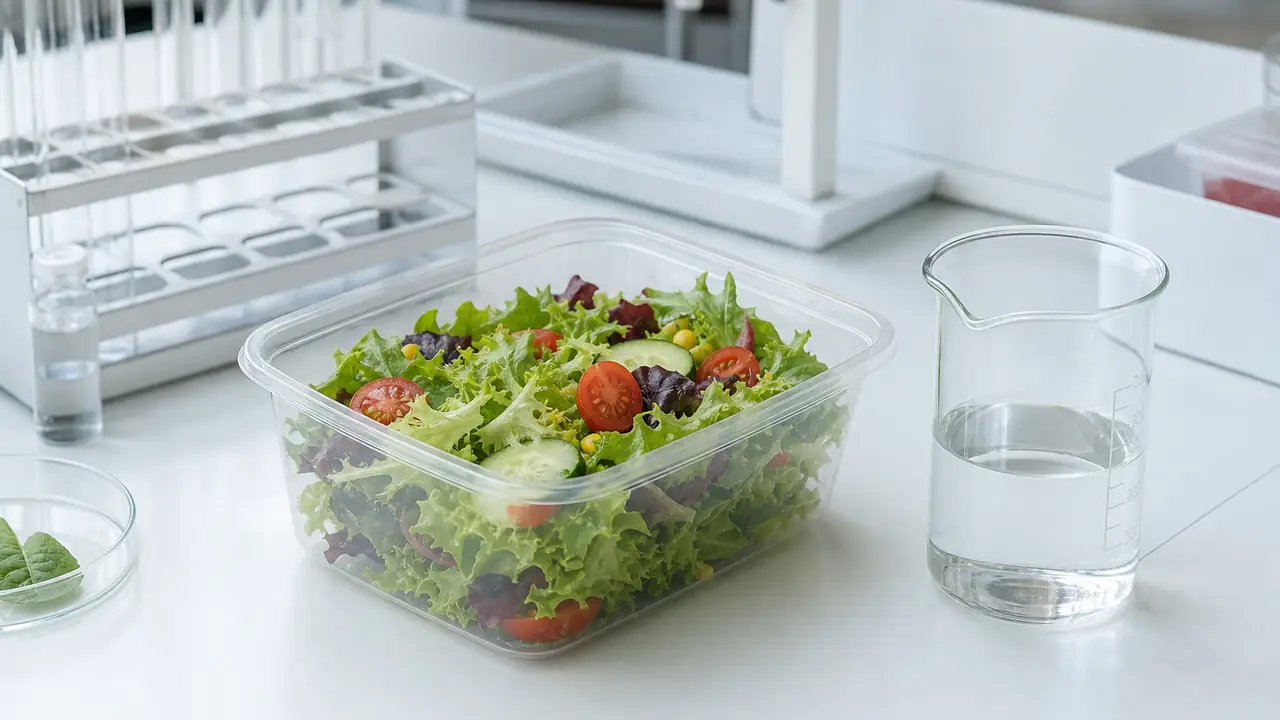
Why hygiene belongs in the specification
A takeout box is filled with hot food minutes after it comes out of its bag. A divided fruit tray goes from the carton to a cutting table. Restaurants and supermarkets do not wash disposable containers, and many consumers do not wash new storage containers before first use. That makes the packing step at the partner plant the last point at which cleanliness is controlled. Dust, fibres, hair, insects, grease from machines or flakes of plastic that enter the bag there are delivered straight to the food.
Food contact documents do not cover this. A declaration and a migration report describe the material; they say nothing about whether the container was packed in a clean area. Hygiene is set in the order specification, checked in the factory audit and verified at inspection.
Where contamination enters
| Route | Example | Control |
|---|---|---|
| Airborne dust | Dust drawn to clear parts by static | Enclosed packing area; static control |
| Trim and flakes | Thermoforming trim, flash from molds | Trim removal at the press; visual check |
| Machine grease and oil | Marks from ejectors, conveyors, stackers | Maintenance routine; wiping; reject marked parts |
| Hands and clothing | Hair, fibres, skin contact | Gloves, hair covers, work clothes |
| Cartons | Board dust, loose fibres | Parts bagged before they enter the carton |
| Storage | Damp, insects, open bags | Closed bags, dry raised storage, pest control |
| Rework and floor contact | Dropped parts put back | Rule that dropped parts are scrapped |
Clear PP and PET parts make the problem visible. The thermoformed clear trays in the reference range, such as the three-compartment tray at 218x188x42 mm, show every speck of dust and every fingerprint. Static draws dust to clear plastic as soon as it leaves the machine, which is why clear lines need static control as well as a clean room; see static and dust on plastic boxes.
What a clean packing area looks like
A clean packing area for food containers is not a medical clean room, but it is clearly separated from the press hall and from carton making. In an audit, the desk looks for a set of plain signs:
- A packing area that is enclosed or screened from the presses and from raw material handling.
- Floors and tables that are cleaned on a routine, with no loose trim or board dust.
- Packers wearing gloves, hair covers and clean work clothes; no eating or drinking in the area.
- Parts moving from the press to bagging without touching the floor, on clean trays or conveyors.
- Bags sealed or closed before they go into cartons.
- Pest control in place, with a record.
- Finished goods stored dry, off the floor and away from chemicals and fuel.
The factory audit checklist covers these points alongside capacity and quality systems; see factory audit.
Bagging and nesting
Nesting is good for freight and for hygiene, because the inside of each container is shielded by the one above it. The outer surface of the top and bottom pieces in each stack is the exposed part. Partner plants typically bag nested stacks in poly bags and pack 200-300 sets per carton for PP thermoformed boxes, soup cups and starch-PP blend containers, 300-500 pieces per carton for injection molded PP cups, about 1,000 per carton for PET cold cups and 2,000-5,000 per carton for small condiment cups. Bag counts per carton should match the way the end user takes stock off the shelf: a restaurant pulls one sleeve at a time, so smaller sleeves keep the rest of the carton closed and clean.
Two packing details matter more than they seem. Parts should be cool before bagging, because warm parts sealed in a bag trap moisture and volatiles. And the bag should be closed, not folded over, so dust cannot enter in the warehouse. The packing standard is set out in packaging and palletizing.
Writing hygiene into the order
Hygiene expectations work best when they are written down with the rest of the specification, in plain operational terms rather than general wording. A short clause list covers most of it: packing in an enclosed area separate from the presses; gloves and hair covers for packers; parts cooled before bagging; nested stacks in closed poly bags of an agreed count; no reuse of dropped parts; cartons stored dry and off the floor; and a retained sample per lot. For programs going to supermarkets or large foodservice groups, buyers often add their own customer requirements, such as a written cleaning schedule or a foreign body policy, and the desk checks during the audit that the partner plant can follow them in practice, not only on paper. Repeat orders carry the same clauses, and the inspection report records whether each one was met.
Storage and transit
Cleanliness can also be lost after the goods leave the line. Cartons that wait in an open yard, or in a damp warehouse near the coast, pick up moisture and dust. A sea container to the US west coast spends about 15-25 days in transit and one to Europe 30-45 days, so cartons should be sealed, the bags inside closed, and pallets wrapped where the program uses them. Damaged cartons found at loading are opened and checked before they go in. The details sit with logistics and shipping.
Paper boxes
Paper and board boxes, such as the kraft bakery box at 190x85x35 mm or click-lock boxes from the Longgang cluster, are usually shipped flat and folded at the point of use. Board dust from cutting and creasing is the main hygiene issue. Die-cut sheets should be cleaned of loose fibres and stripped waste before packing, and printed sheets should be dry. Flat boxes are packed in wrapped bundles so the inner surfaces, which become the food side, stay covered until use.
Checks at inspection
- Open cartons from different positions in the lot and check that bags are closed and intact.
- Check sample stacks for dust, fibres, hair, insects and trim, inside and outside.
- Look for machine grease, black marks and ejector marks on food contact surfaces.
- Check count per bag and per carton against the packing specification.
- Record findings with photos against the lot number.
Hygiene defects are classed in the inspection criteria; a hair or insect inside a bag is normally a critical defect for food contact items. The criteria are agreed per order and set out in quality control; see also pre-shipment inspection.
To include packing hygiene requirements in a new program from the first order, send the items, pack counts and market through the quote form.