
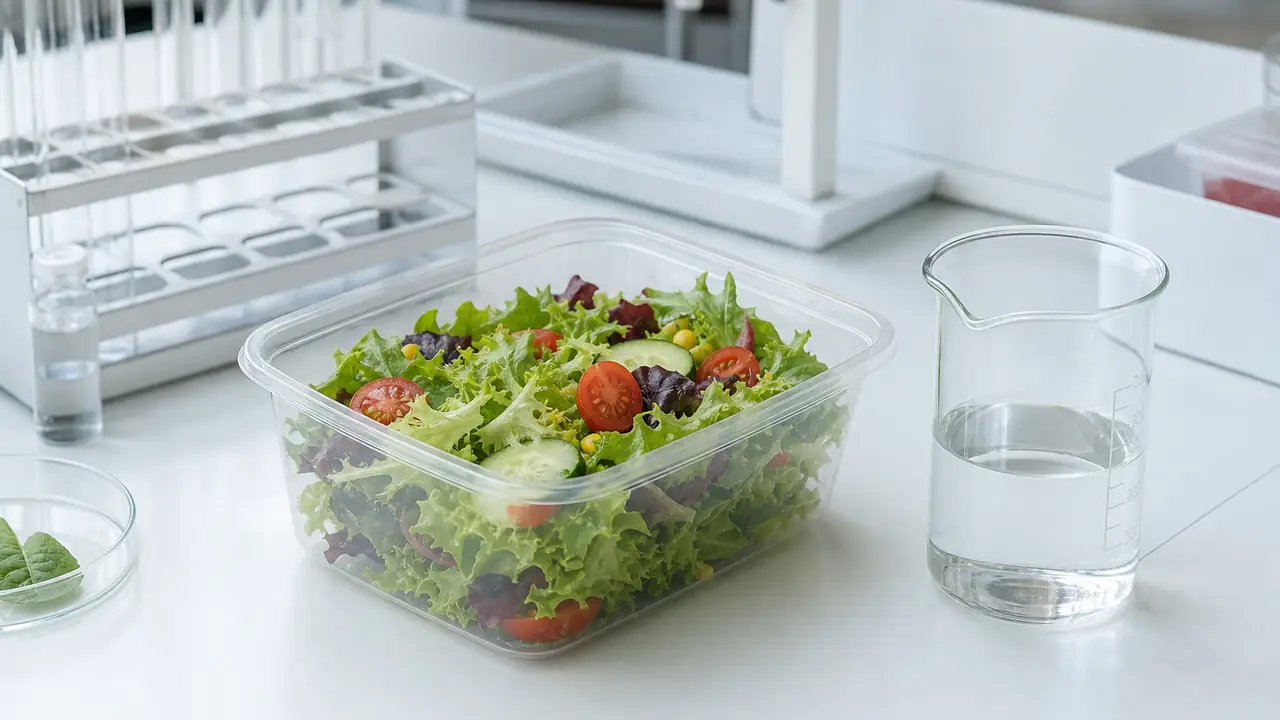
Odor and taint are not the same
Odor is a smell from the container itself, noticed when a carton is opened or a lid is lifted. Taint is a change in the smell or taste of the food caused by the container. A container can have a faint odor that never reaches the food, and a container with no noticeable smell when empty can still taint a delicate food stored in it for days. Both matter. Under Regulation (EC) 1935/2004, food contact materials must not bring about a deterioration in the organoleptic characteristics of food, its smell and taste, so taint is not only a quality issue but part of the food contact framework in the EU.
Taint shows up most with foods that carry flavour easily: water, rice, dairy, fruit, cakes and anything fatty. It shows up least with strongly flavoured hot dishes, which is why an odor problem can pass unnoticed in a takeout trial and then surface in a meal prep or bakery program.
Where smells come from
| Source | How it happens | Control |
|---|---|---|
| Resin grade | Residual volatiles in the base resin | Fixed grade per spec; written notice of changes |
| Recycled content | Traces of the material's previous use | Approved source, grade and percentage; smell check per lot |
| Masterbatch and additives | Carriers and additives with their own smell | Approved masterbatch, fixed dosage |
| Processing heat | Overheated melt or long residence time | Process settings recorded at sample approval |
| Print and inks | Residual solvent on lids, sleeves or boxes | Drying time before packing; smell check of printed parts |
| Packing and storage | Warm parts sealed in bags; cartons near odorous goods | Cooling before packing; clean, dry storage |
| Transit | Heat inside a container on a long sea route | Packing plan and odor check on arrival samples |
Resin, recycled content and color
Most odor problems start with the material. A change of PP grade, a cheaper batch or an unapproved substitute can bring a different smell, even when the dimensions and weight stay the same. Recycled content adds a further variable: recycled PP and recycled PET carry traces of their previous life, and the cleaning process of the recycler decides how much remains. If a program uses recycled content, the source, grade and percentage belong in the specification, and the smell check is run on every lot. See recycled content in containers.
Color can contribute too. Black bases are common in hot takeout, and the masterbatch used to color them has its own carrier and additives. A natural PP box and the black version of the same box are different items for odor, just as they are for migration testing.
Process and print
On the line, overheating the melt or leaving material in the barrel too long breaks down polymer and additives and creates smell. The settings that produced an approved sample should be recorded and repeated; a change of machine, mold or cycle on a repeat order is a reason to recheck. Printed parts add solvents. Lids printed by offset or screen, printed paper sleeves and printed boxes from the Longgang cluster need enough drying time before they are stacked and packed, or the smell is sealed into the carton with them. The printing note covers the print routes.
Packing, storage and shipping
Nested containers are packed in poly bags, often 200-300 sets per carton for thermoformed PP and starch-PP blend items. If parts are bagged while still warm from the line, volatiles stay trapped and concentrate. Cartons stored next to solvents, fuel, rubber or strong-smelling goods can absorb those odors through the board and the bag. A sea freight container to Europe spends 30-45 days in transit, often in heat, which intensifies any smell present when the doors closed. The packing plan is set out on packaging and palletizing.
Checks that catch odor
Odor is subjective, so the check has to be consistent. A practical routine, agreed per order, looks like this:
- Keep a retained approved sample, sealed, as the reference for smell.
- At inspection, open cartons from several positions in the lot and smell the parts on opening.
- Close a few containers with a little warm water, hold them for an agreed time, then smell the water and the inside of the lid.
- For sensitive foods, run a simple taint check with the real food against the reference sample.
- Record the result against the lot, the resin lot and the masterbatch lot.
Where a program needs more than a panel check, a third-party lab can run sensory and migration tests on the finished item. The checks are part of the menu on testing and inspection and the lot routine on quality control.
Writing odor into the specification
Odor is rarely mentioned in a container brief, and that is why it is hard to enforce later. A few lines in the order specification change that. Name the resin grade and the masterbatch for each colour. State whether recycled content is allowed and, if so, how much and from which source. Require written notice before any change of material or print system. Set a minimum cooling time before parts are bagged and a drying time for printed parts before packing. Ask for cartons to be stored away from fuel, solvents and rubber goods. And define the inspection criterion against the retained approved sample. None of this adds cost to a well run line, and it gives both the partner plant and the buyer a clear standard. For repeat orders on the same mold, the same lines carry over, so the first order sets the pattern for the life of the item.
When a complaint arrives
If end users report a smell, the first step is to compare retained samples from the same lot with the approved reference. That shows quickly whether the lot differs from what was approved, or whether the smell was picked up later, in storage or in the buyer's warehouse. The lot records then point to the resin, masterbatch or print batch. Airing parts out of their bags often reduces a light packing odor, but a material odor needs a corrective action at the plant.
To set odor checks into a new program from the first order, send the items and foods through the quote form.