
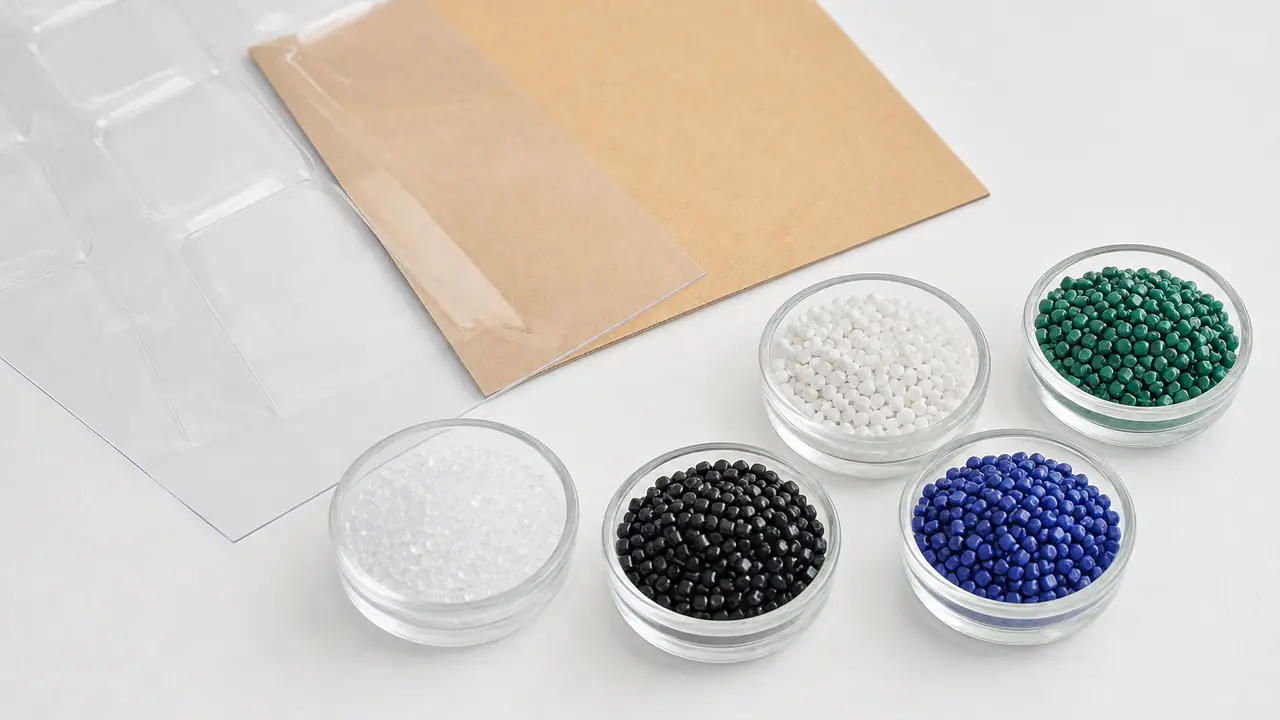
What molded fiber and bagasse are
Molded fiber containers are formed from wet pulp on a shaped screen, then pressed and dried in a heated mold. The pulp can be wood fiber, recycled paper, bamboo or sugarcane bagasse, the fibrous residue left after the juice is pressed out. The result is a rigid, matte, slightly textured container: clamshells, plates, bowls, compartment trays and cup lids. Unlike a starch blend, a fiber container has no plastic in its body unless a coating or additive is added, and that last condition is where most of the questions sit.
Where fiber works well
- Dry and moderately moist food. Burgers, fried food, sandwiches, bakery and rice dishes without a lot of sauce.
- Hot holding. Fiber insulates and does not soften like thin plastic sheet when hot food goes in.
- Plastic-free positioning. Where the brand wants to avoid plastic in the body of the container, fiber is the direct route.
- Markets restricting plastic. In the EU, single-use plastic plates and cutlery have been banned since 3 July 2021 under Directive 2019/904, and expanded polystyrene food containers too, which pushes many programs toward fiber and paper.
Where fiber struggles
Plain fiber absorbs water and oil. Without help, a curry or a soup will soak through the wall, soften the box and mark the bag. Manufacturers have traditionally solved this with grease and water barrier chemistry, and for years some of that chemistry was based on PFAS, per- and polyfluoroalkyl substances. That solution is now restricted in a growing number of US states. Other limits are practical: fiber lids do not seal as tightly as a snap-fit PP lid, fiber is not clear so the food is hidden, and fiber boxes are thicker and nest less tightly than thin plastic, which costs carton space.
Freight and packing
Fiber changes the freight calculation. Thin PP boxes nest tightly; a partner plant in Guangdong packs PP takeout boxes at 200-300 sets per carton. Fiber walls are thicker and the draft angles are different, so fewer pieces fit in the same carton and a container load carries fewer units. Takeout ware is light and bulky, so freight is charged by volume and nesting decides the cost per piece more than weight does. Fiber is also sensitive to humidity on a long sea journey: cartons should be sealed, palletised away from container walls and checked for moisture on arrival. Ask for the pieces per carton and the carton size with every fiber quote, and compare freight per thousand pieces, not just the price per piece. See stackability and nesting.
The PFAS rules buyers must check
California AB 1200 has, since 1 January 2023, banned intentionally added PFAS in plant fiber food packaging, using a total organic fluorine screening line of 100 ppm. At least 13 states restrict PFAS in food packaging in some form: New York, California, Washington, Colorado, Connecticut, Maryland, Minnesota, Hawaii, Oregon, Rhode Island, Vermont, Maine and New Hampshire. Vermont, Connecticut and Minnesota cover all food packaging materials rather than fiber alone. Each state's scope and dates differ and change, so the current text is the reference; confirm the rules for your channels with your counsel. The PFAS in paper food packaging note goes further.
Fiber, starch blend and PP side by side
| Point | Molded fiber or bagasse | Starch and PP blend | PP |
|---|---|---|---|
| Body material | Plant fiber, plus any barrier | Corn starch blended with PP | Polypropylene, code 5 |
| Saucy and oily food | Needs a barrier | Good | Good |
| Lid seal | Loose fit, clamshell flap | Snap lid | Snap lid, tilt tested per order |
| Clarity | None | None, cream color | Translucent or clear |
| Main US rule to check | State PFAS rules | FDA 21 CFR for plastics | FDA 21 CFR 177.1520 |
| Compostable wording | Only with EN 13432 or ASTM D6400 | Only with certification, rarely applies | No |
The starch route is covered in starch-based containers explained, and the full comparison in starch-based vs molded fiber.
Compostable and other claims
Fiber containers are often marketed as compostable. In the United States, the FTC Green Guides at 16 CFR 260.7 require compostable claims to be qualified where composting facilities are not available to a substantial share of consumers, and at 260.8 they treat unqualified degradable claims as deceptive without evidence of complete breakdown within a reasonably short time after customary disposal. A compostable claim should rest on certification of the exact item to EN 13432 or ASTM D6400, with the certificate number shown. A barrier coating can change the result, so the certificate must cover the coated item. Without a certificate, describe what the item is: molded bagasse fiber, plastic-free body if that is true, with the barrier named.
Food contact documents
Fiber items fall under paper and board rules rather than plastic rules. For the United States, the relevant FDA 21 CFR provisions for paper and paperboard components apply, plus the state PFAS rules above. For the European Union, the framework Regulation 1935/2004 applies, and Regulation (EU) 10/2011 is written for plastics, so buyers agree the test reports for fiber items with their test lab, including for any plastic-based barrier. For China, GB 4806.8 covers paper and board food contact materials. Documents are issued to the partner plant or your brand per project and verified by the desk.
Sourcing fiber through the desk
Lidwell does not hold a fixed fiber reference series on file the way it does for PP and starch blend lines, so fiber items are quoted per project: the desk shortlists partner plants for the shape, collects the PFAS statement and lab result, checks the barrier claim and confirms sizes on the sample. Checks agreed per order typically include a hot oil and hot water hold on the sample, lid closure, carton stacking and a moisture check after transit. Starting quantities and lead times are confirmed in writing for each program; see MOQ and lead time. Send the menu and the destination states through the quote form.