
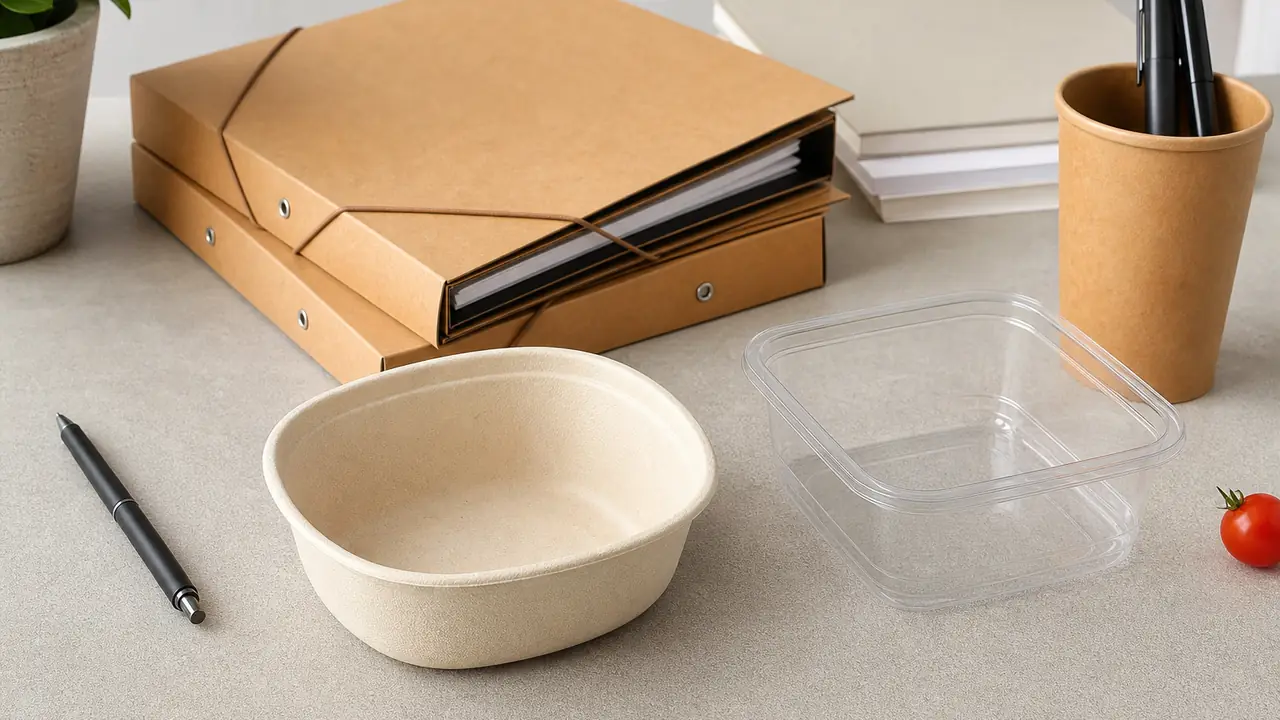
Why classification needs care for containers
The Harmonized System classifies goods by what they are and, for many plastic articles, by what they are used for. A PP box that a household uses to keep leftovers, a PP box a restaurant uses to send out a meal, and a PP box that holds goods for shipment can look almost identical and still be argued under different headings. Customs authorities make the final decision, national tariffs add digits beyond the international six, and rates change with trade policy. Everything below is a planning reference; confirm the classification of each item with your customs broker before the first shipment.
Classification also has a commercial side. Duty is part of the landed cost, and plastic housewares are a large and closely watched trade. OEC data put world trade in plastic housewares, HS 3924, at about 25.6 billion US dollars in 2024, with China exporting about 15.4 billion, roughly 60 percent of the total. The largest importer was the United States at about 8.32 billion, followed by Germany at about 1.24 billion and Canada at about 814 million. Volumes like that are why customs pay attention to how these goods are declared.
The reference headings
| Heading | Description | Lines usually planned here |
|---|---|---|
| 3924.10 | Plastic tableware and kitchenware | PP food containers, food storage boxes, vacuum containers, divided fruit containers, fridge bins, plastic cutlery |
| 3924.90 | Other plastic household articles | General storage boxes, collapsible boxes, shoe and clothes boxes, cosmetic and desk organizers |
| 3923 | Plastic articles for the conveyance or packing of goods | Plastic packaging containers where the item is packing for goods rather than a household article |
| 4819 | Cartons, boxes and cases of paper or paperboard | Folding gift boxes, bakery boxes, click-lock takeout boxes, pizza boxes |
3924.10: tableware and kitchenware
Food storage boxes are usually classified under 3924.10, the heading for plastic tableware and kitchenware. That covers the core of this range: the 750 ml PP box at 170x115x51 mm, round tubs and bowls, divided trays such as the 218x188x42 mm three-compartment tray, vacuum containers and fridge bins. OEC-based industry reporting, a secondary source, put world trade under 3924.10 at about 14.1 billion US dollars in 2024, with China at about 62 percent. Pet food bins are a judgement call: they hold food, but not for people, and brokers sometimes treat them as general household articles. Ask before you book.
3924.90: other household articles
General storage boxes that are not used for food sit more naturally under 3924.90: collapsible boxes such as a 30 L box at about 440x330x230 mm, clear shoe boxes, clothes boxes, cosmetic organizers and desk trays. The material does not move the heading within chapter 39; a PP collapsible box and a PS desk tray are both plastic household articles. What moves it is use, and occasionally construction, for example an organizer with metal parts.
3923 versus 3924 for takeout packaging
Single-use takeout containers sit on the line between two headings. Heading 3923 covers plastic articles for the conveyance or packing of goods, and heading 3924 covers tableware and kitchenware. A container that leaves a restaurant with a meal in it can be argued either way, and practice differs between importing countries. The desk plans takeout boxes under 3924.10 by default, flags the 3923 question on the program file and asks the buyer's broker to confirm before the commercial invoice is drafted. Describing the goods precisely on the invoice, material, capacity, use and whether the item is single-use, helps the broker and the customs officer reach the same answer.
4819: paper and board boxes
Paper boxes leave chapter 39 altogether. Folding gift boxes, kraft bakery boxes such as the 190x85x35 mm box with a clear lid, click-lock takeout boxes and pizza boxes are usually classified under 4819. A paper box with a small PET or PVC window is still essentially a paper box. Wooden cutlery and bamboo items in a kit are outside chapter 39 as well, and a mixed kit may be classified by its main component or as a set; that is a question for the broker.
Duty, rates and documents
Duty rates are set by each importing country and can change quickly with trade policy, including for goods shipped from China into the United States. The desk does not quote duty as part of an offer and does not promise a rate; the broker calculates it on the confirmed heading at the time of import. Some customs authorities also ask for food contact documents for kitchenware, so the declarations and test reports in the program file, issued to partner plants or to your brand per project, should travel with the shipment paperwork where needed.
Common classification mistakes
- One heading for a whole mixed order, when the lines include food containers, storage boxes and paper boxes.
- Invoice descriptions such as plastic box or packaging, which leave the use open to argument.
- Copying the heading a partner plant uses for export from China, which follows Chinese tariff practice and may not match the import country.
- Forgetting that a kit of PP spoon, chopsticks and napkin is a set with mixed materials.
- Changing a line from food storage to general storage, or the reverse, without updating the heading.
What to send your broker
- The item name, material of each part and resin code.
- Outer size, capacity and gram weight from the specification.
- The intended use: food storage, takeout, household storage or packing.
- Whether the item is single-use or reusable, and whether it is sold as a set.
- Photos of the sample and the planned commercial invoice description.
Freight and consolidation are covered in logistics and shipping, packing counts in packaging and palletizing, and typical batch lead times on MOQ and lead time, all confirmed in writing per program. The compliance checklist lists the documents by market. Send the item list with your destination country through the quote form, and the desk will return each model with a reference heading for your broker to confirm.